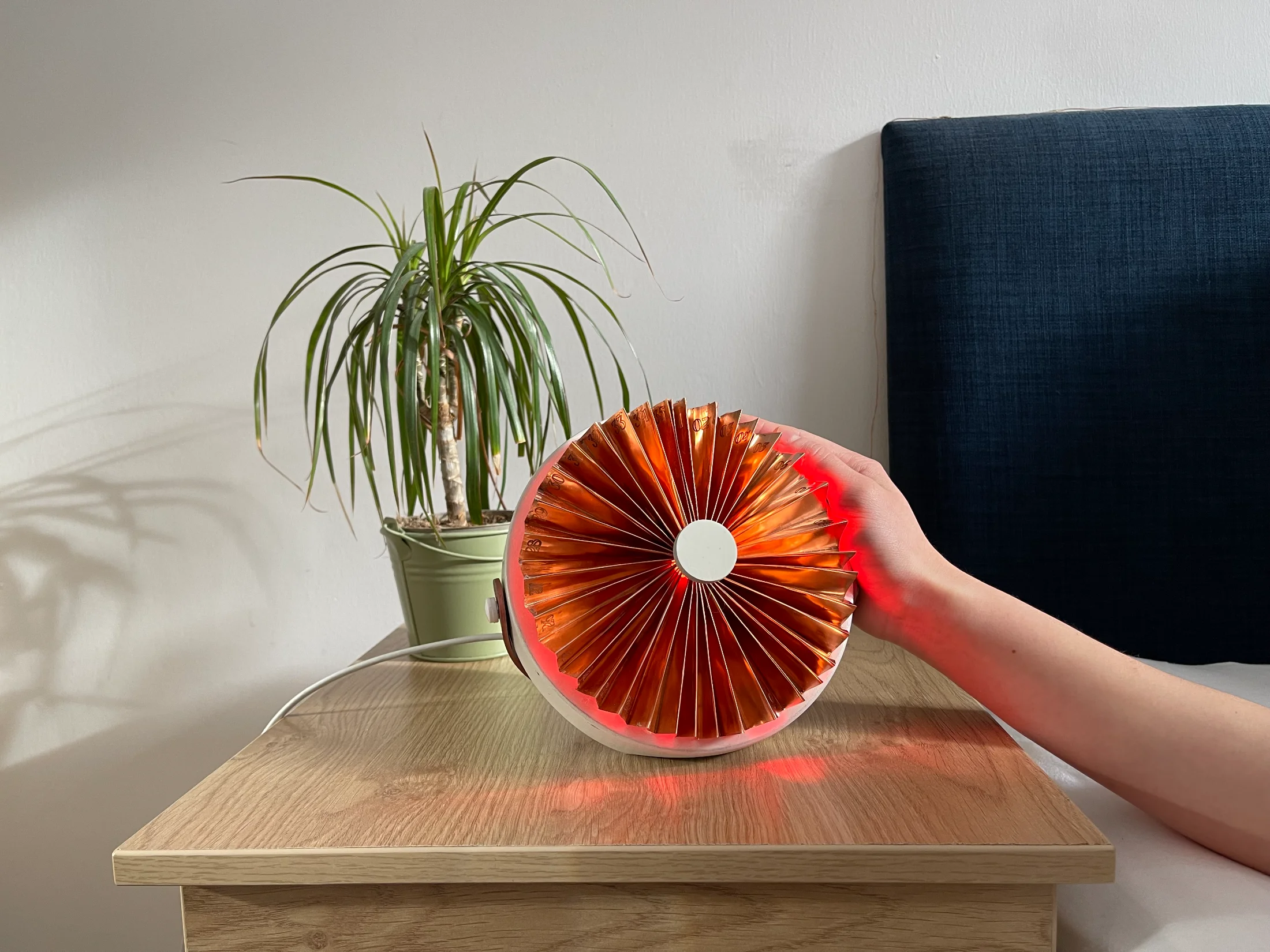
A smart period calendar and companion app, designed together. Cycle tracking as a calmer, more educational ritual, anchored to a beautiful object, not a notification.
Period tracking feels like data entry: pink interfaces, symptom checklists, ignored notifications. It rarely helps women understand their bodies, and it's easy to forget.
"I keep forgetting to input my period, and to check the app."Survey participant · Edinburgh, 2024
HCI research on self-tracking, feminist design, and the identity gap in existing apps.
Defining "woman-centred design"; plasticine forms that feel calm and trustworthy.
Medical view on what to track; research view on visualising bodily data.
QR posters in campus toilets for private completion, tracking habits and wishes.
What women would and wouldn't want from an AI assistant.
"AI for understanding, not diagnosis. Doctors stay the doctors."Synthesised from gynaecologist interview & AI probe (33 responses)
Six moments, three on the device, three on the app. The hand-off between them is the design.
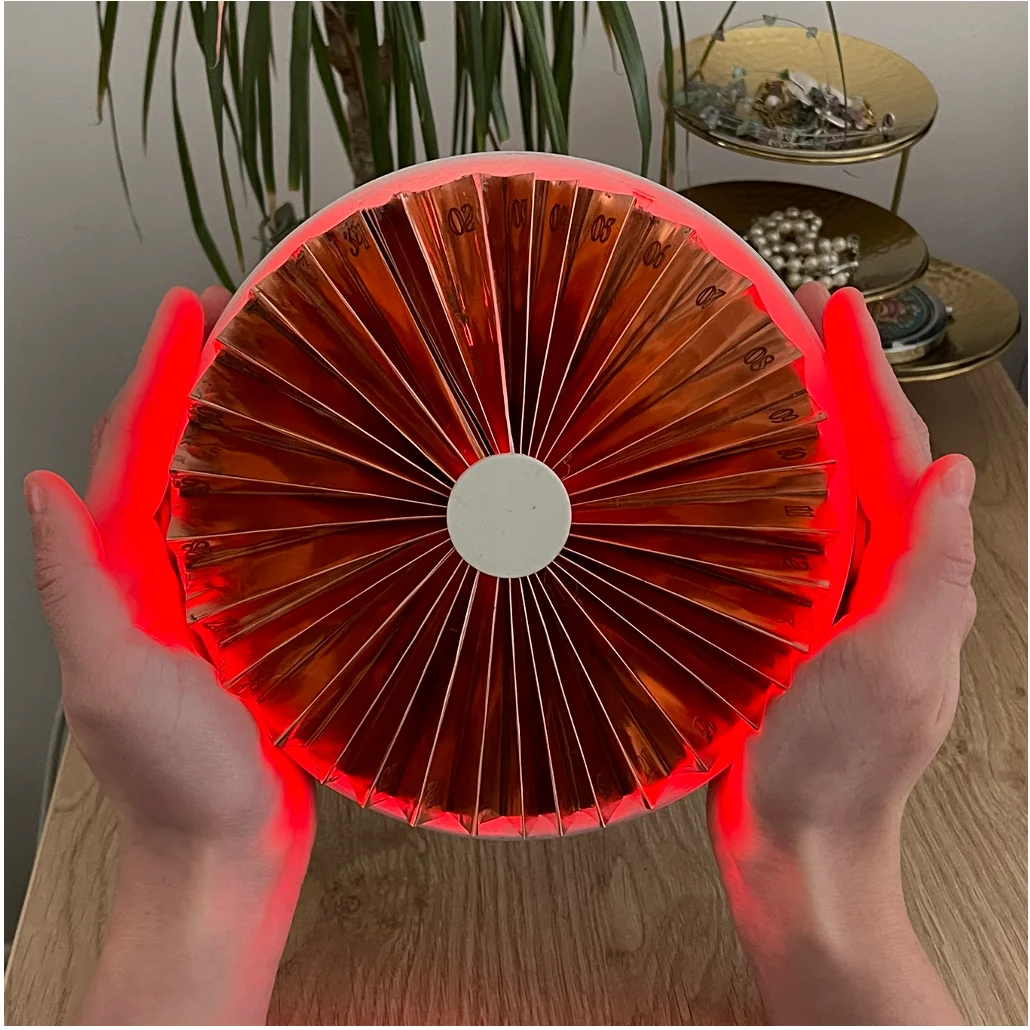
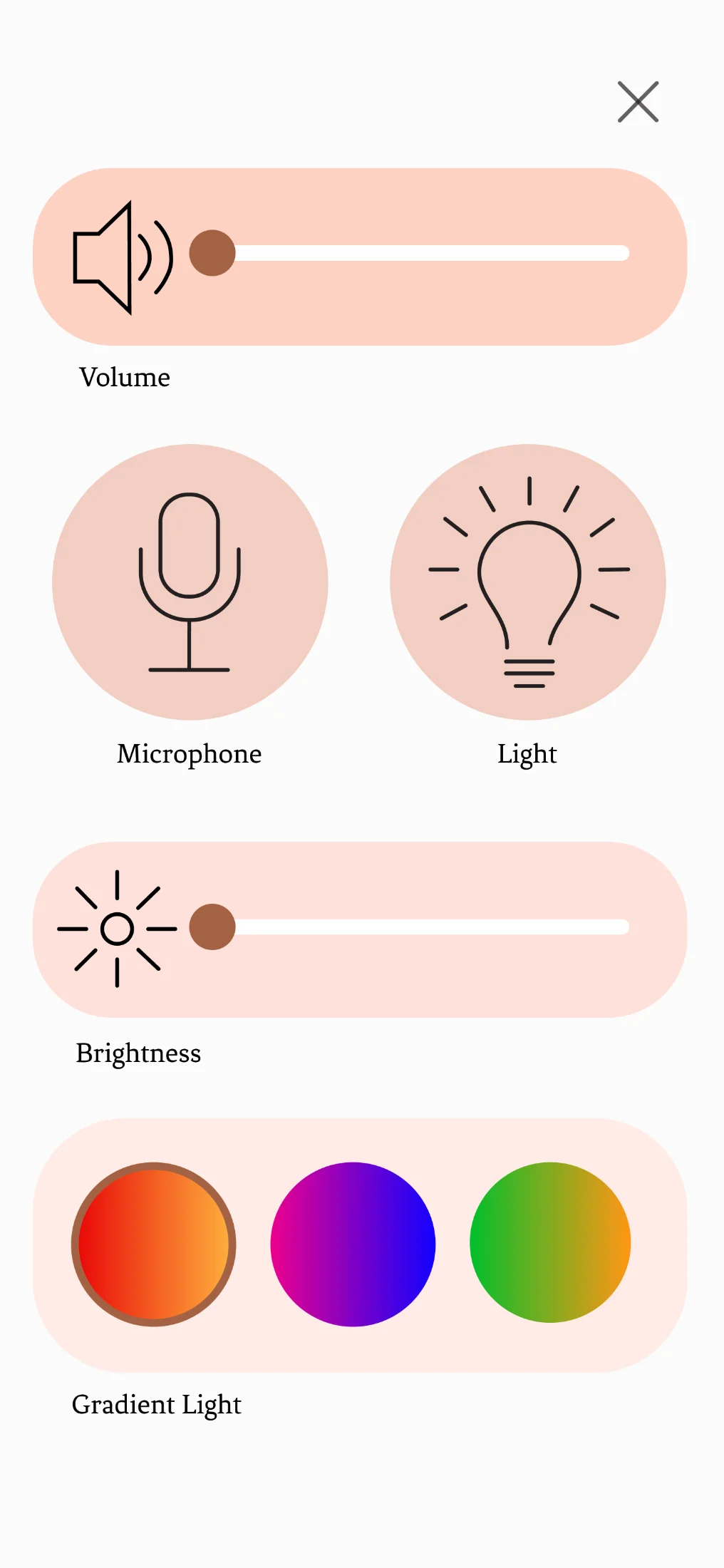
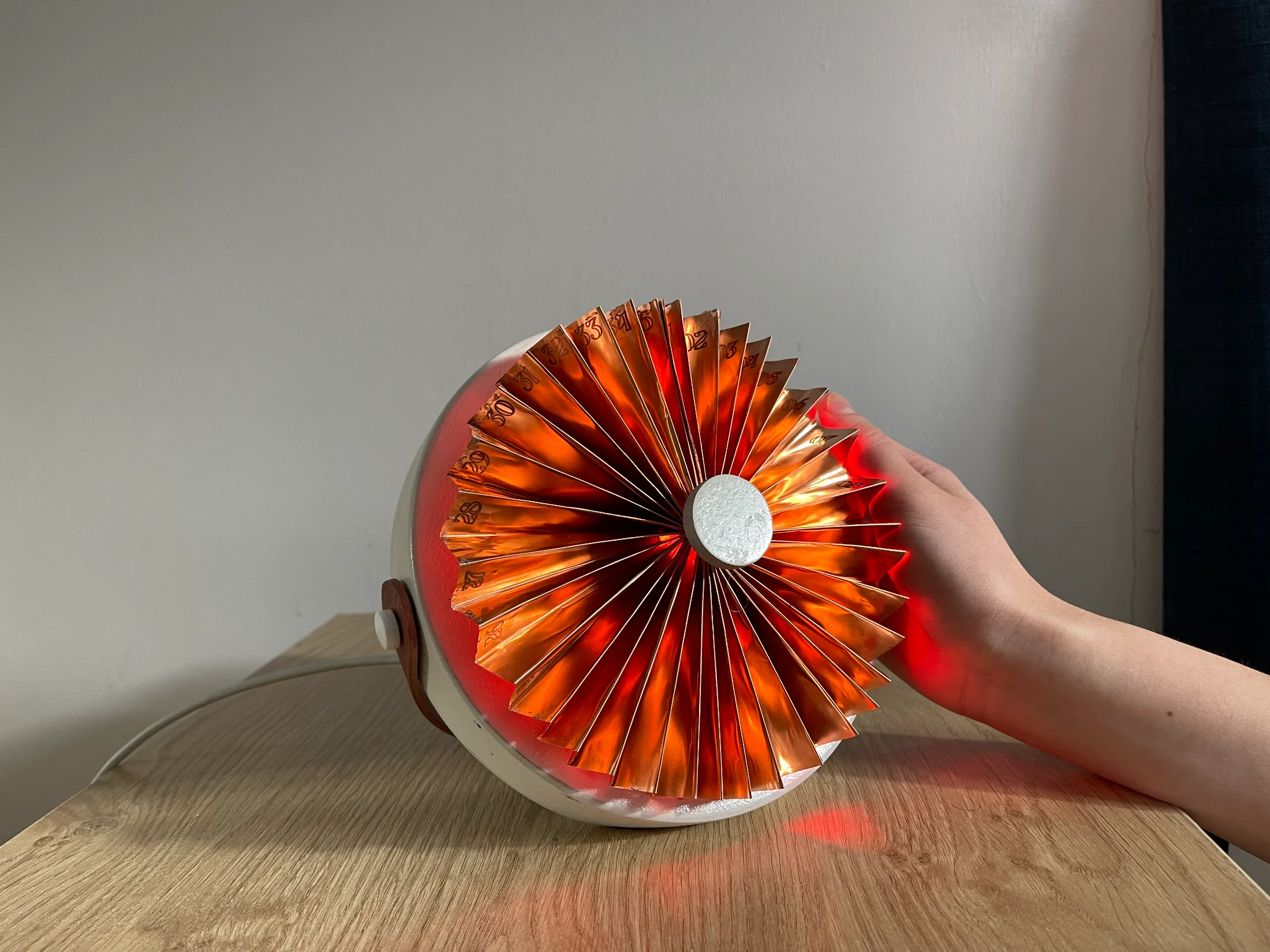
Colour shifts daily, readable across the room.
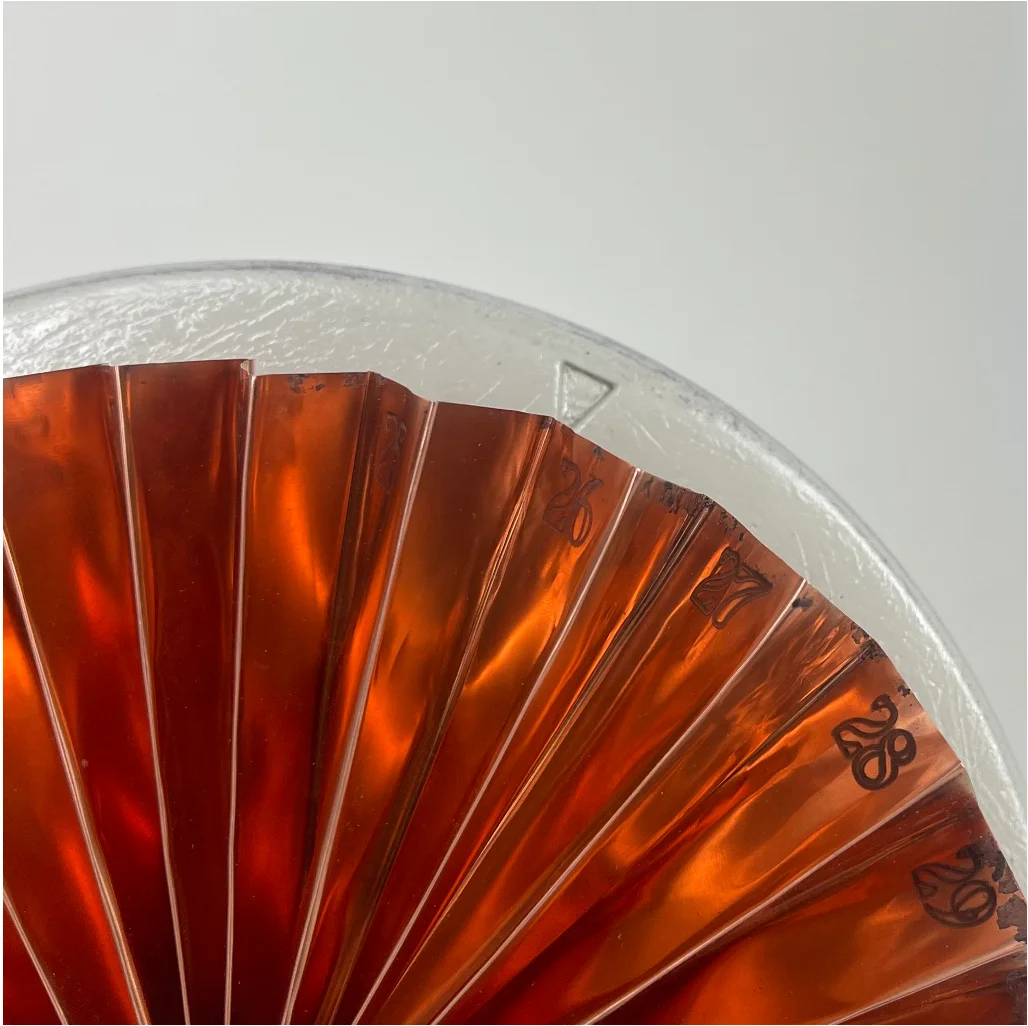
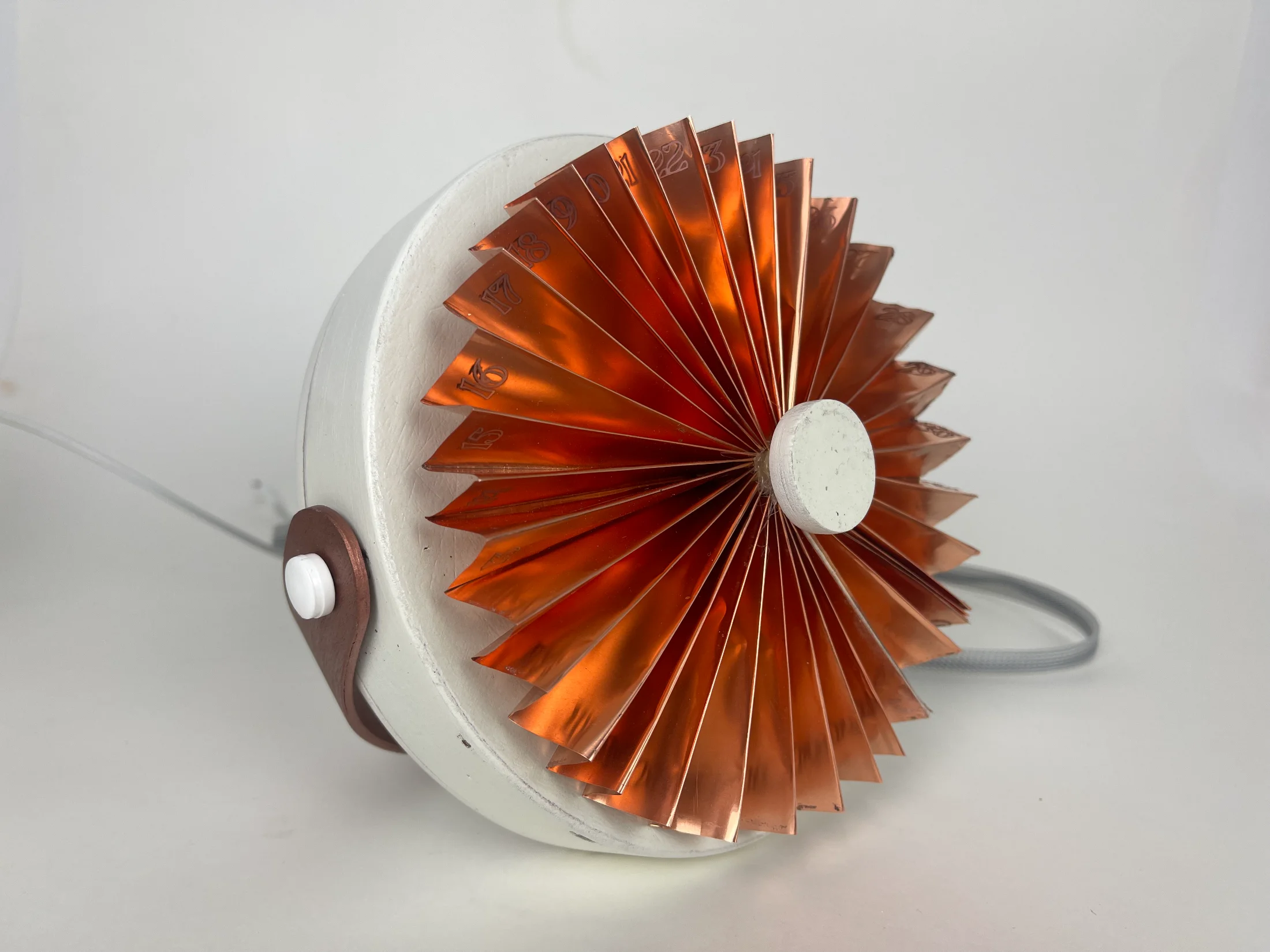
Each fold is one day, tucks to fit any 21–35 day cycle.
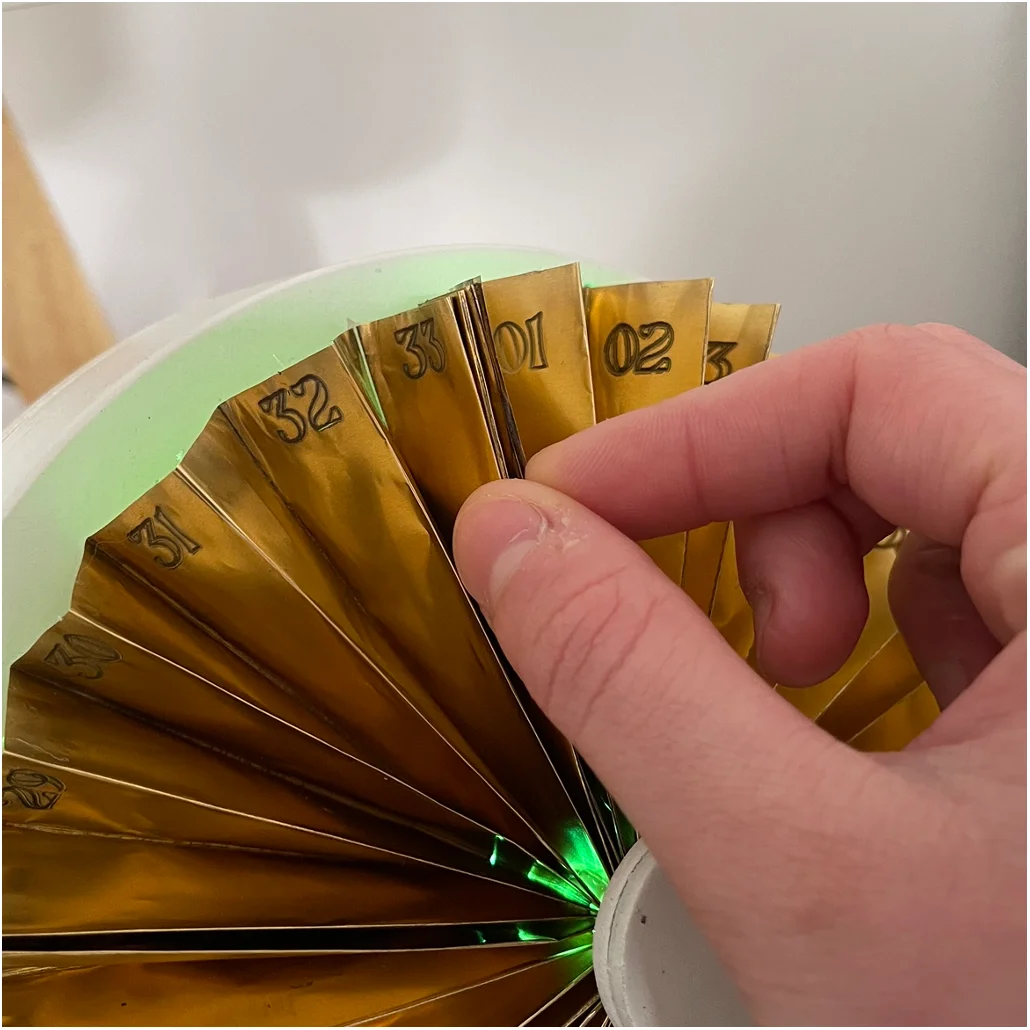
Turns one fold at midnight, stays current even when forgotten.
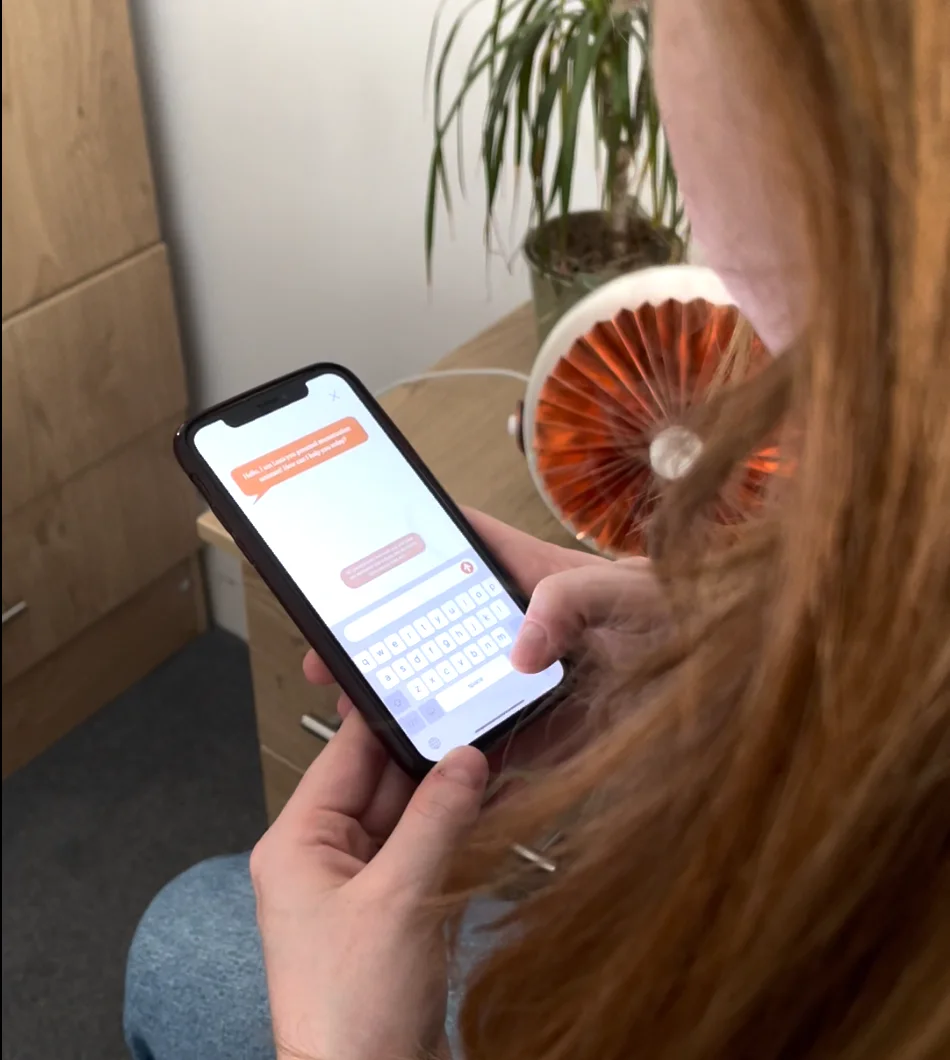
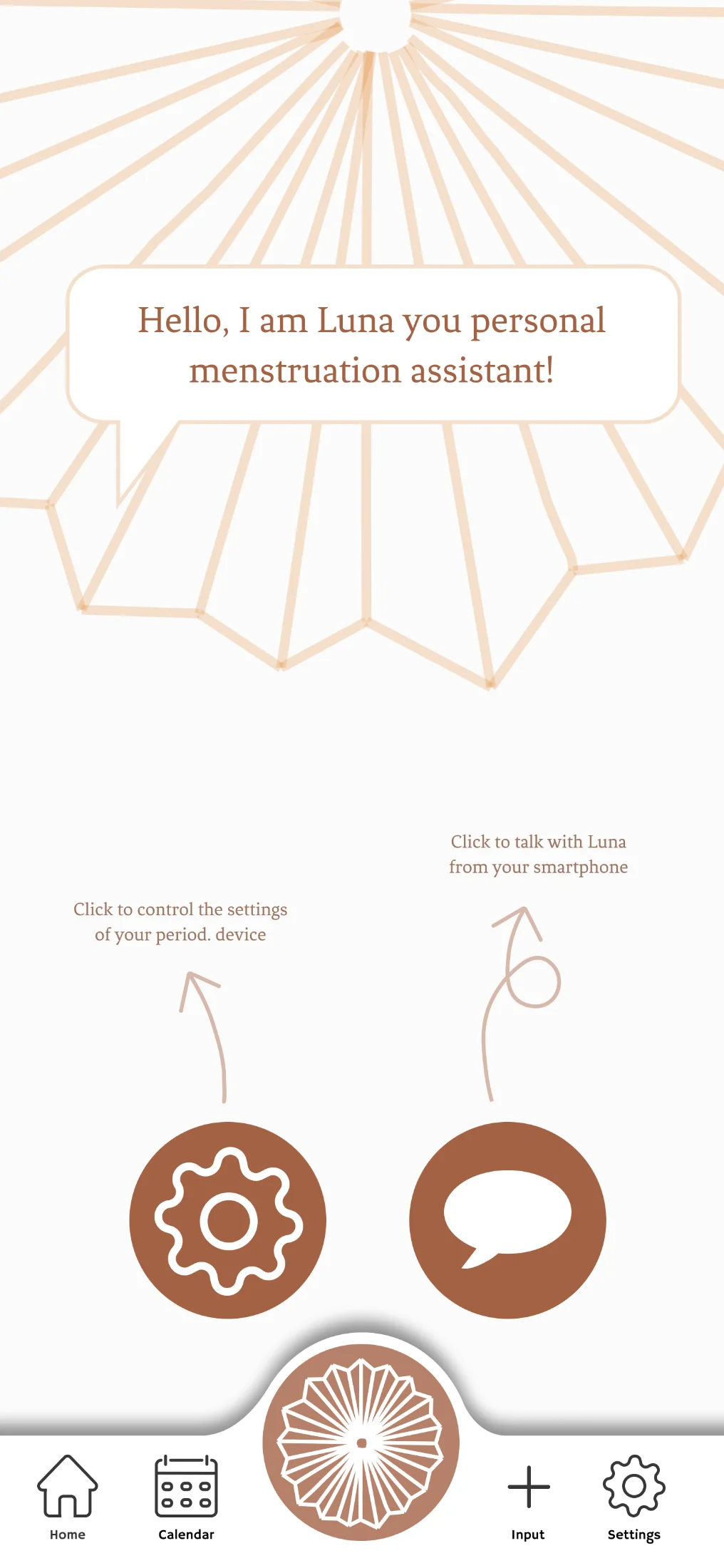
Luna answers cycle questions: voice at the bedside, text in the app.
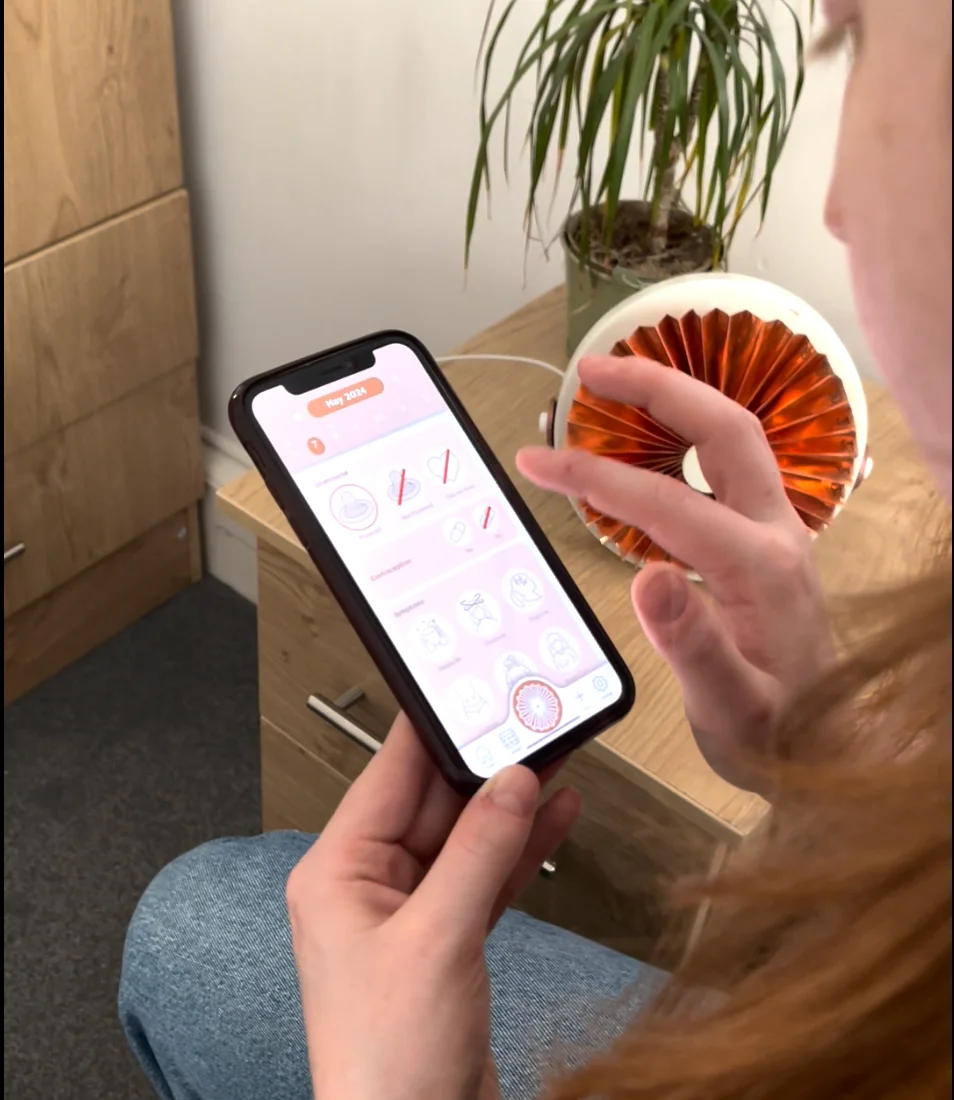
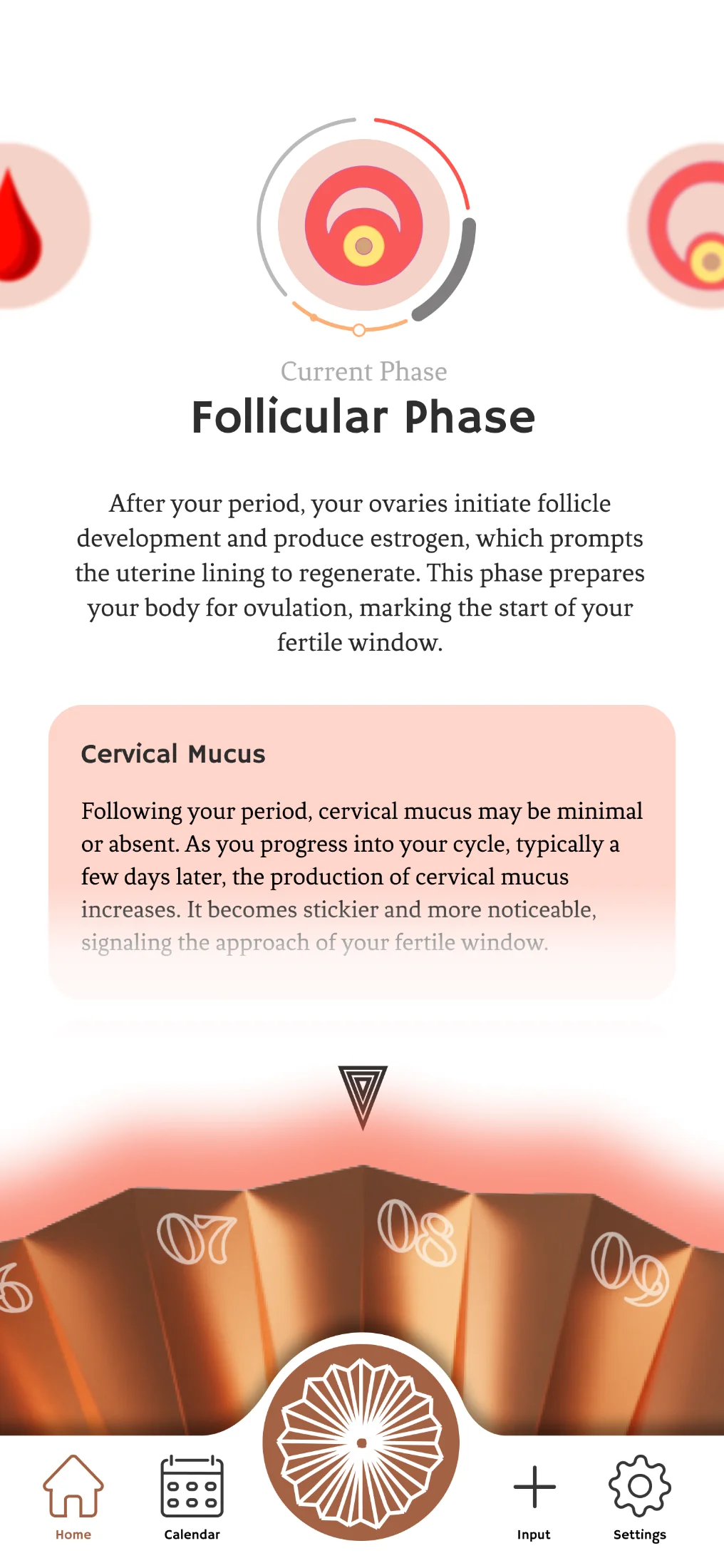
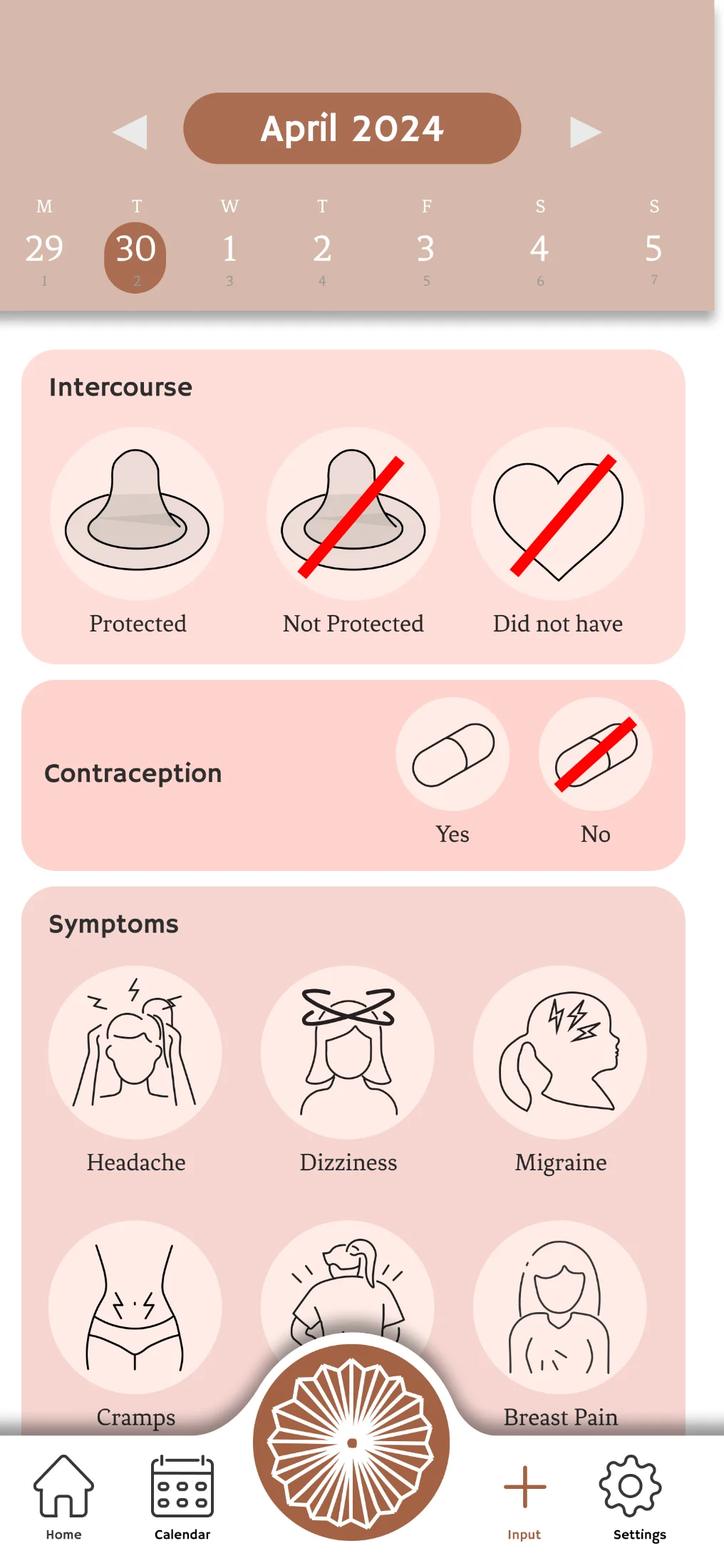
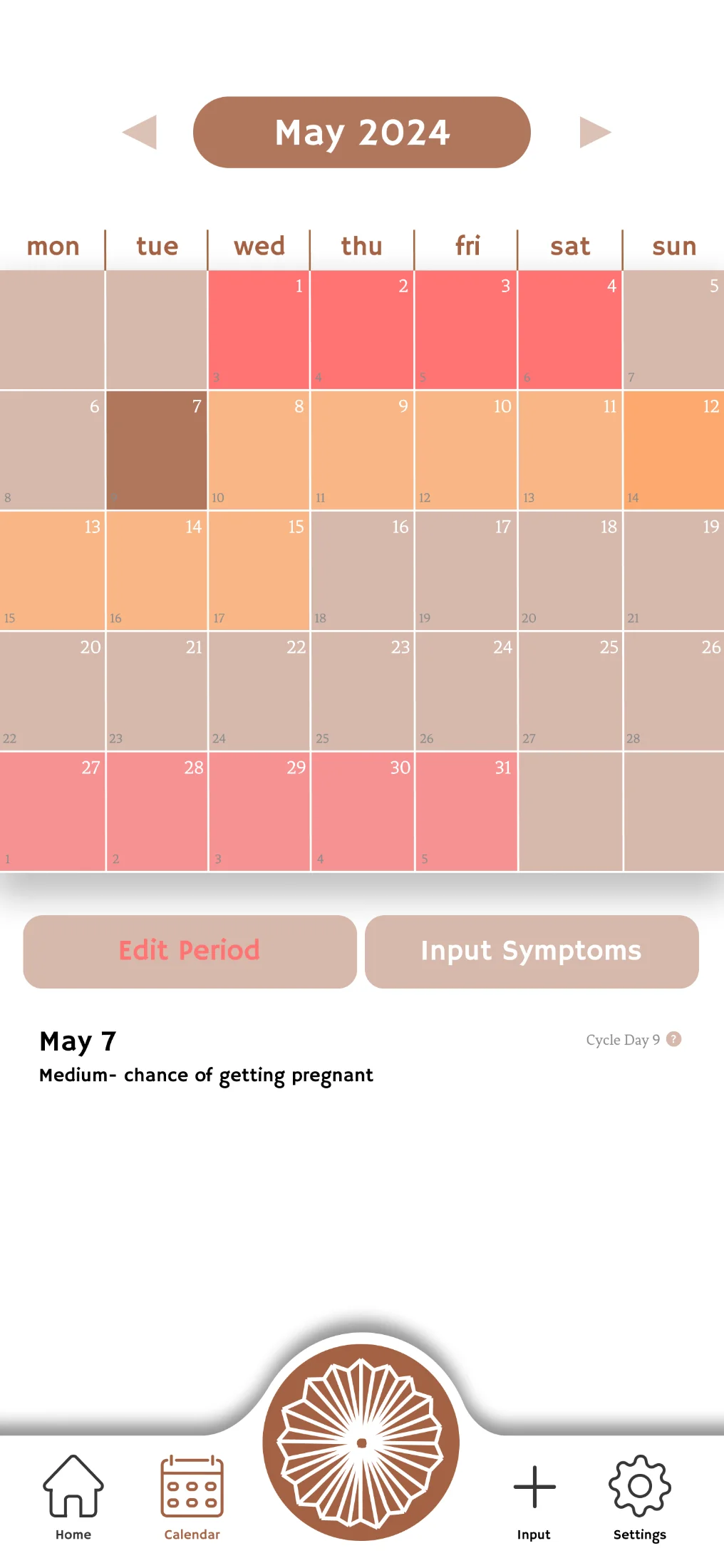
Log symptoms, read what the phase means.
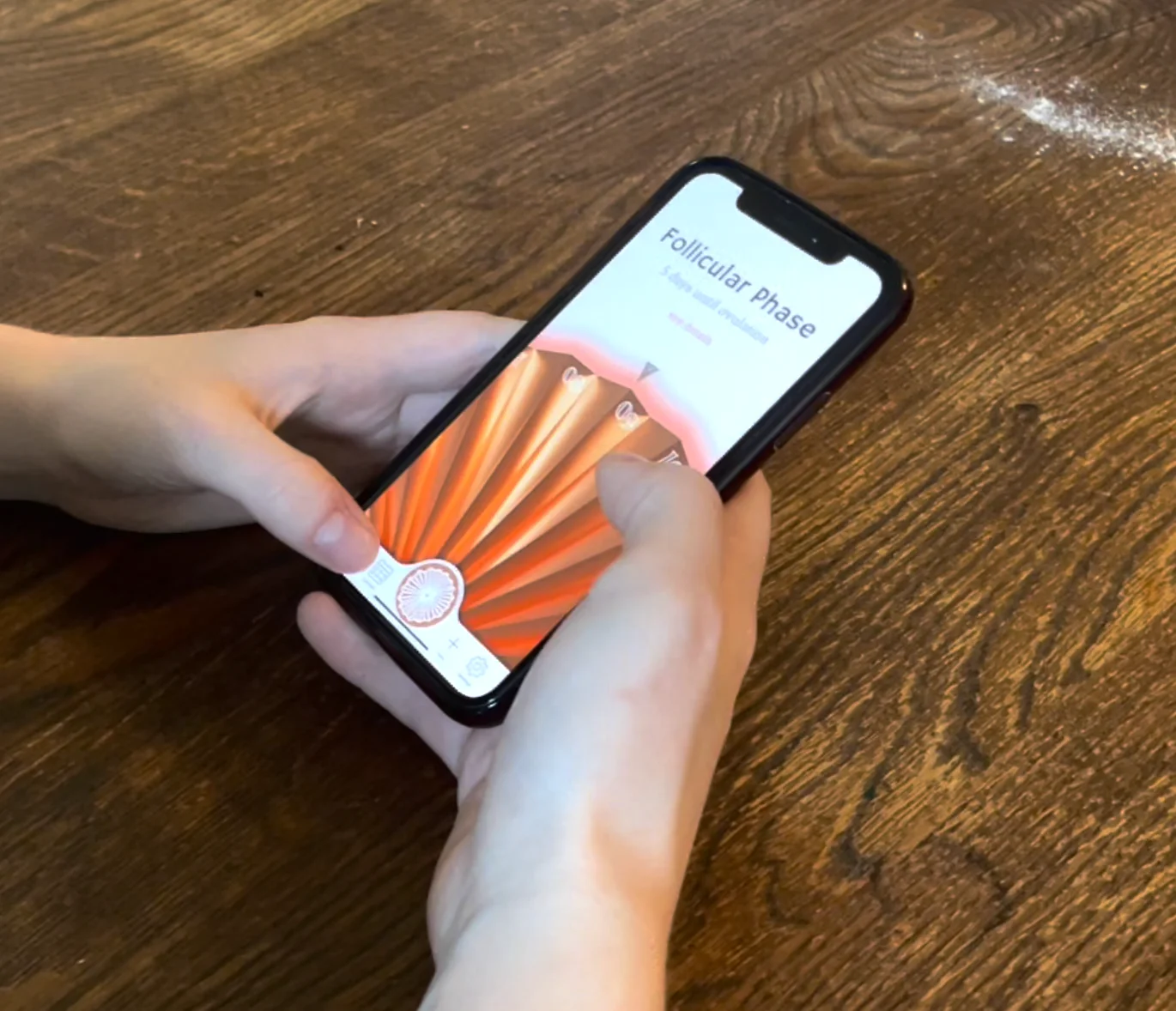
Away from the bedside, the cycle goes with you.
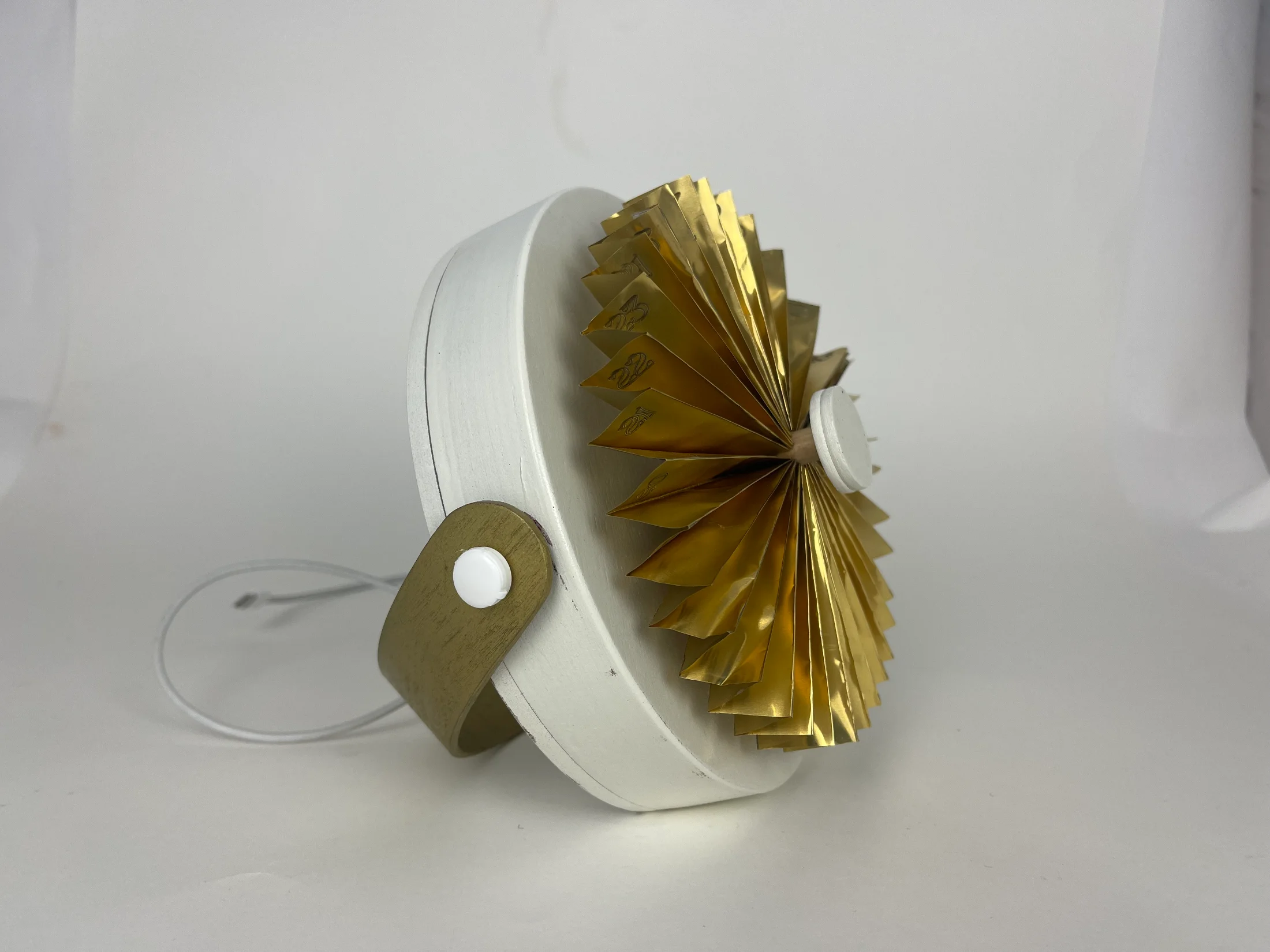
A fan-shaped calendar that visualises the cycle through colour, motion, and light.
Every existing tracker is app-first. The research said that's exactly why women forget to log.
The fastest, cheapest, most fundable answer: better notifications, friendlier copy, fewer pink hearts.
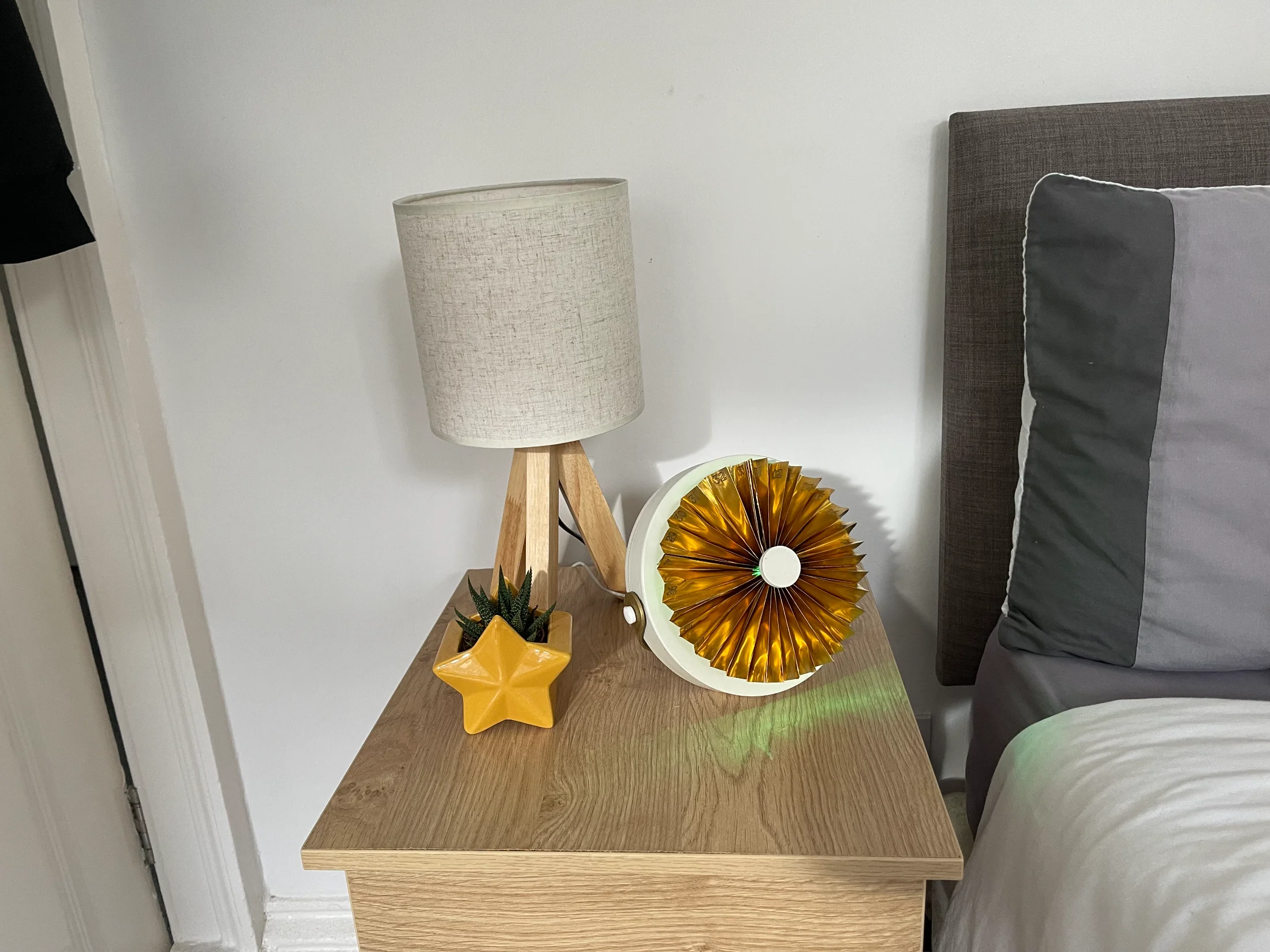
The device sits where forgetting is hardest: the bedside. The app carries what an object can't: depth, history, portability.
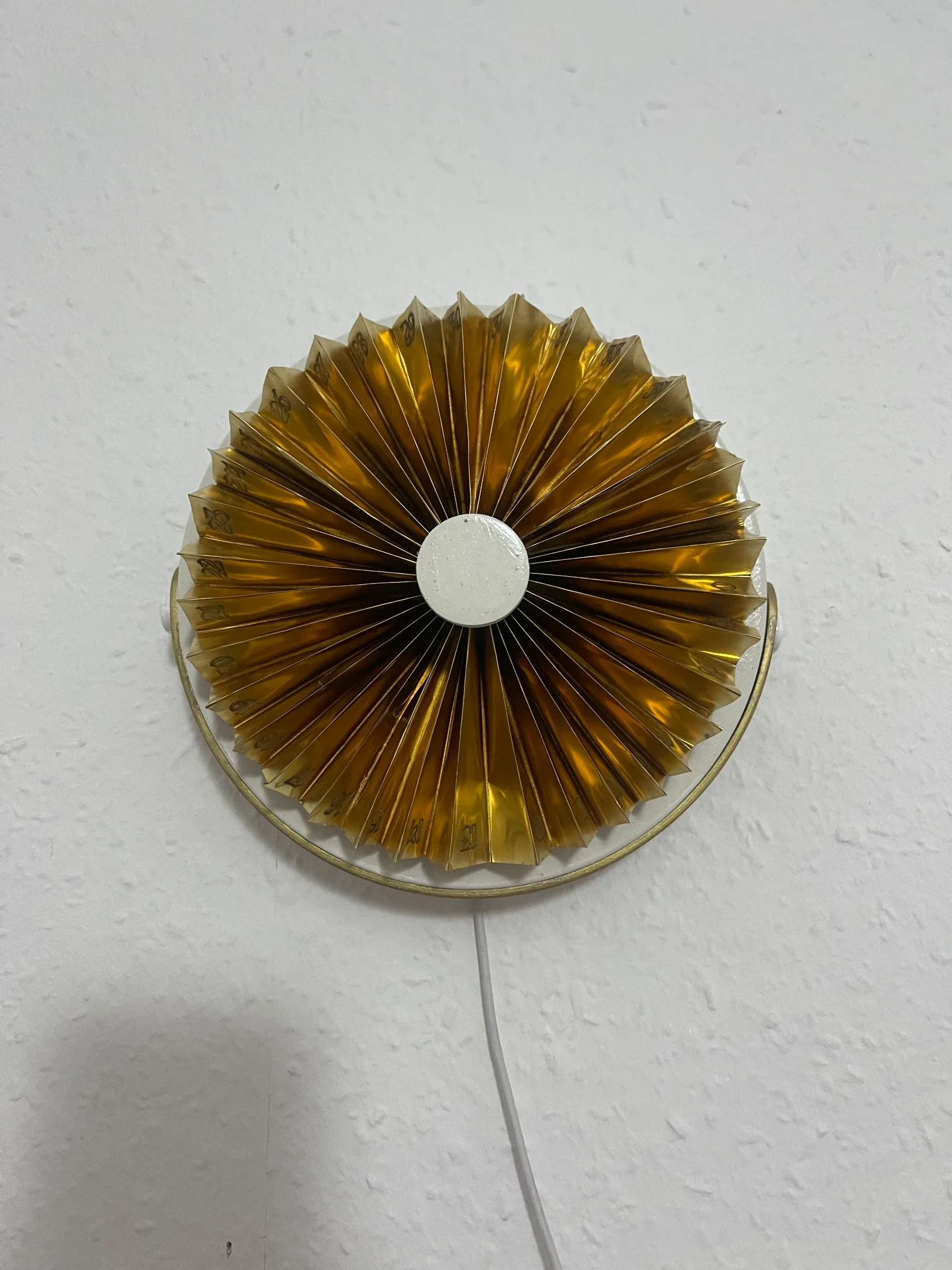
Fourteen concepts, three prototype stages to copper. One rule: it has to look at home on a bedside or a wall.
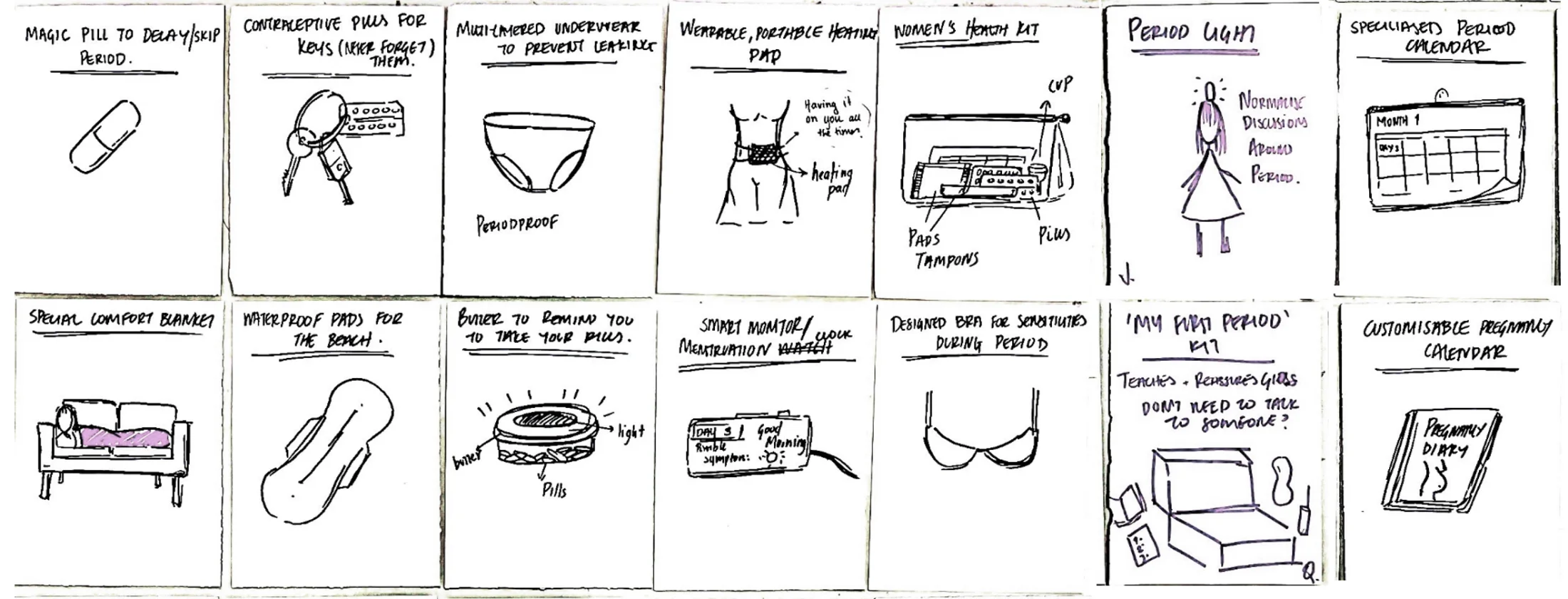
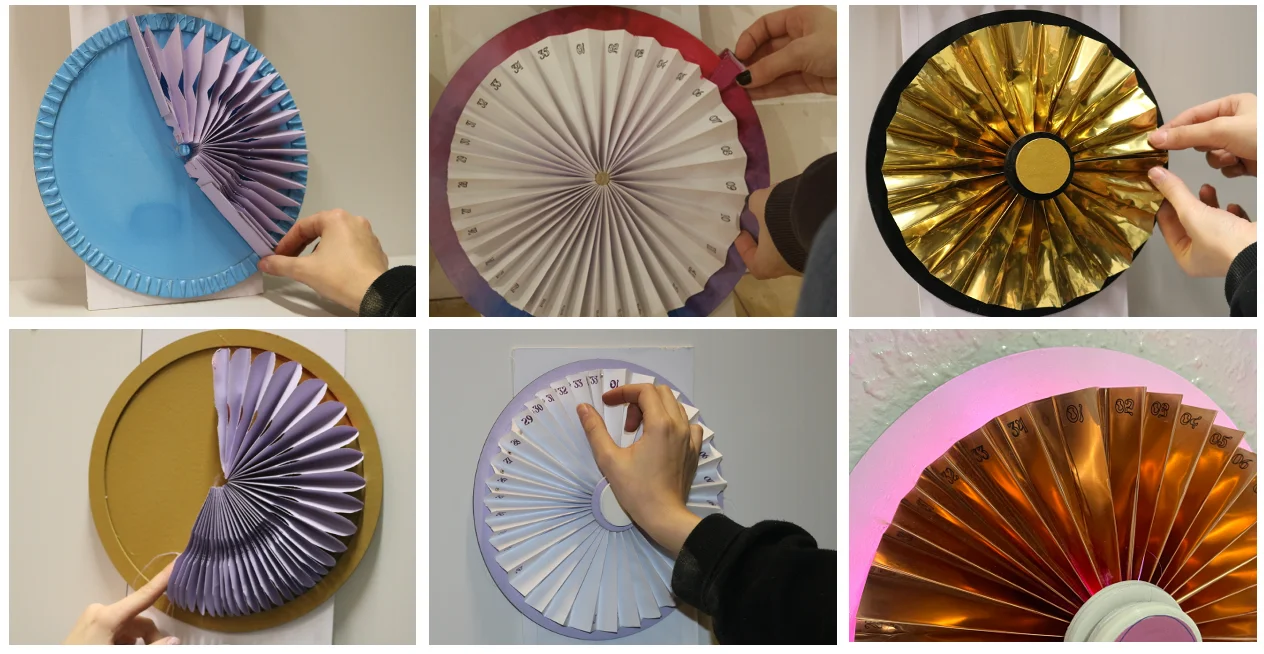
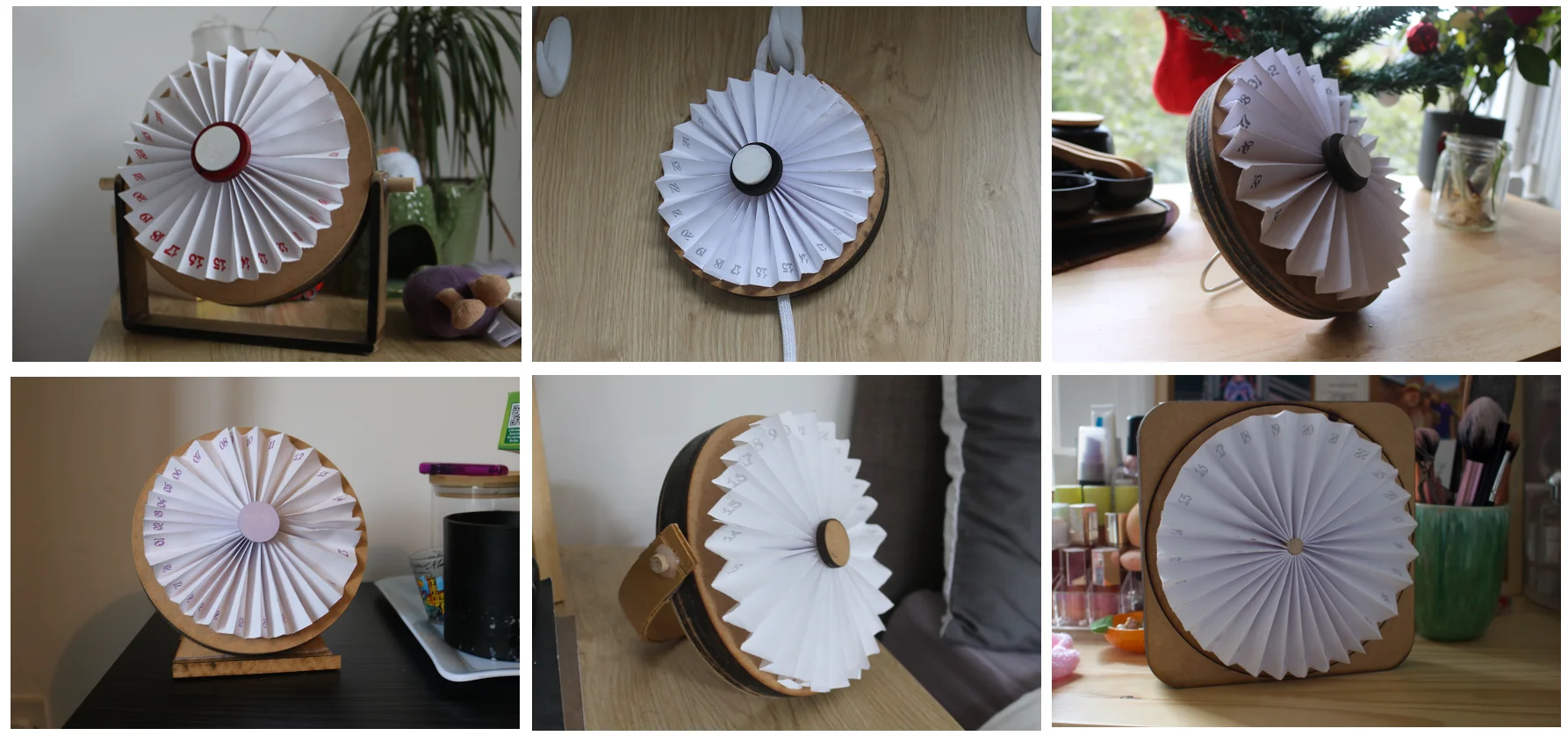
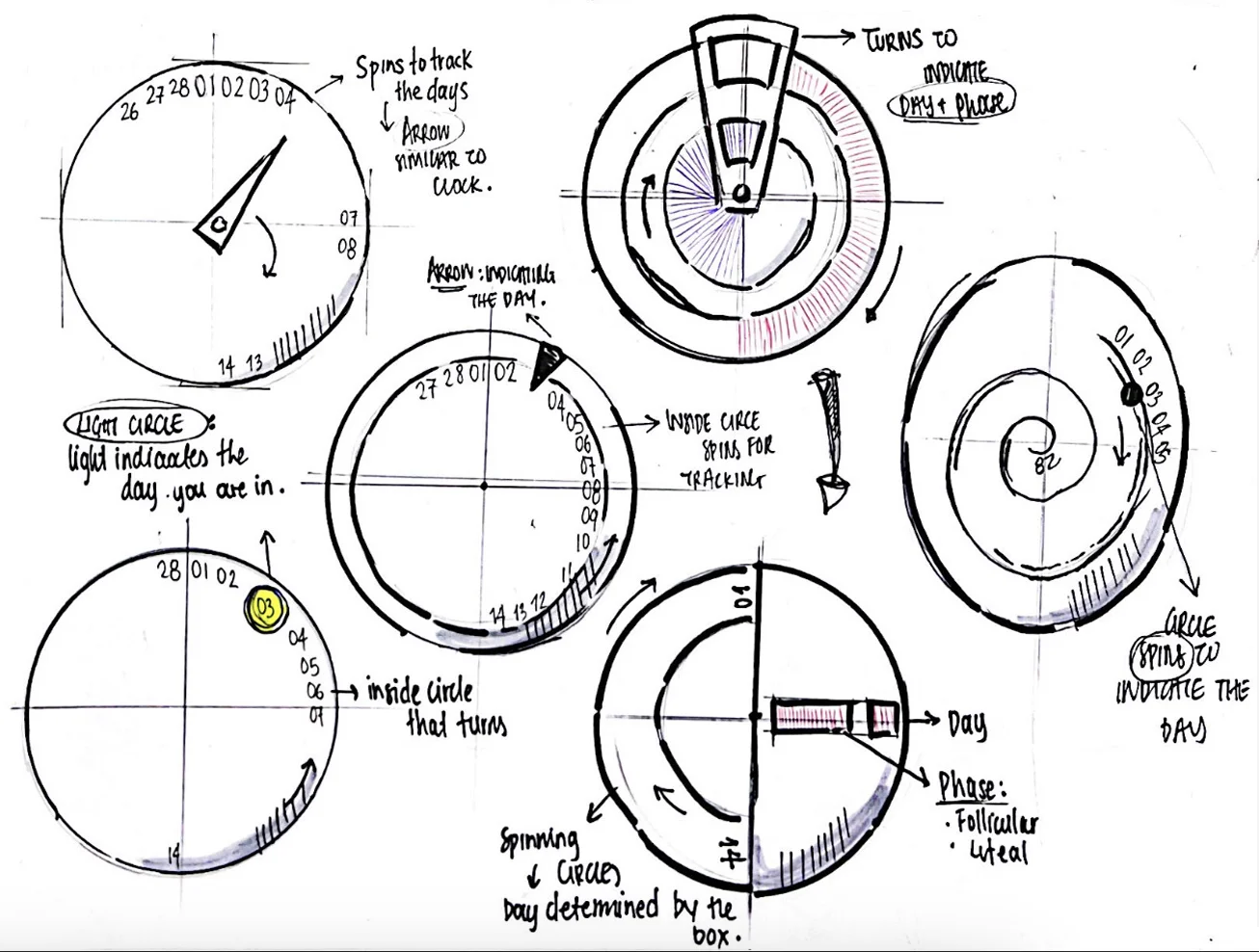
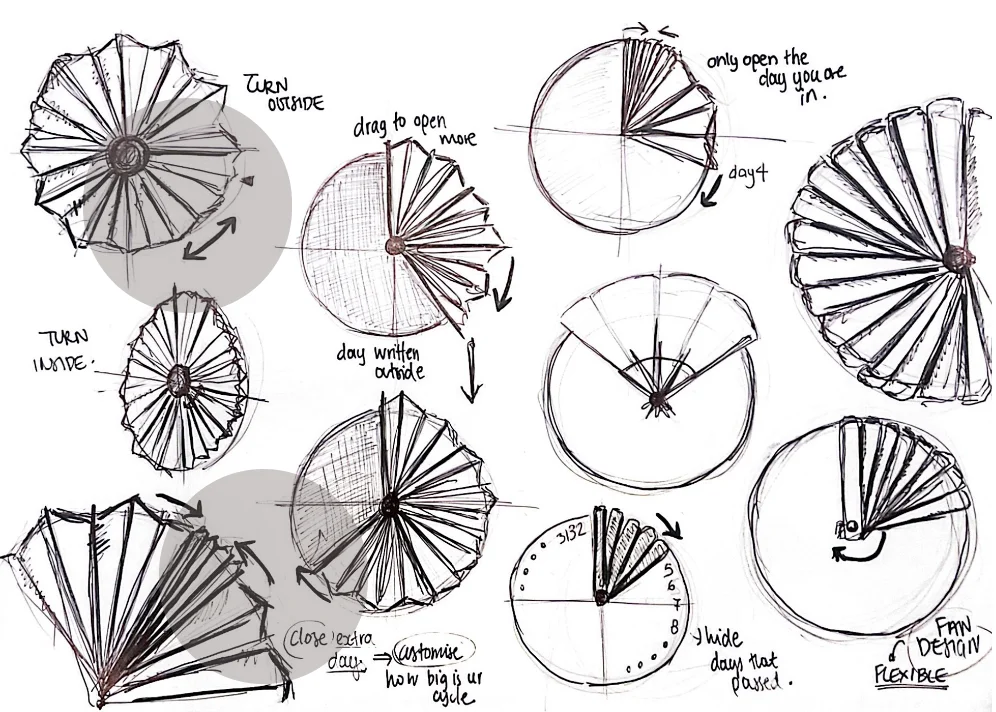
Cycles run 21 to 35 days; any rigid calendar erases someone.
Date strips, spinning discs, axis cards, each broke the moment a cycle ran short or long.
An accordion of 35 magnetised folds. The form adapts to the body, not the other way round.
Two tracks: a Raspberry Pi prototype that genuinely works, and a manufacturing plan with a costed bill of materials.
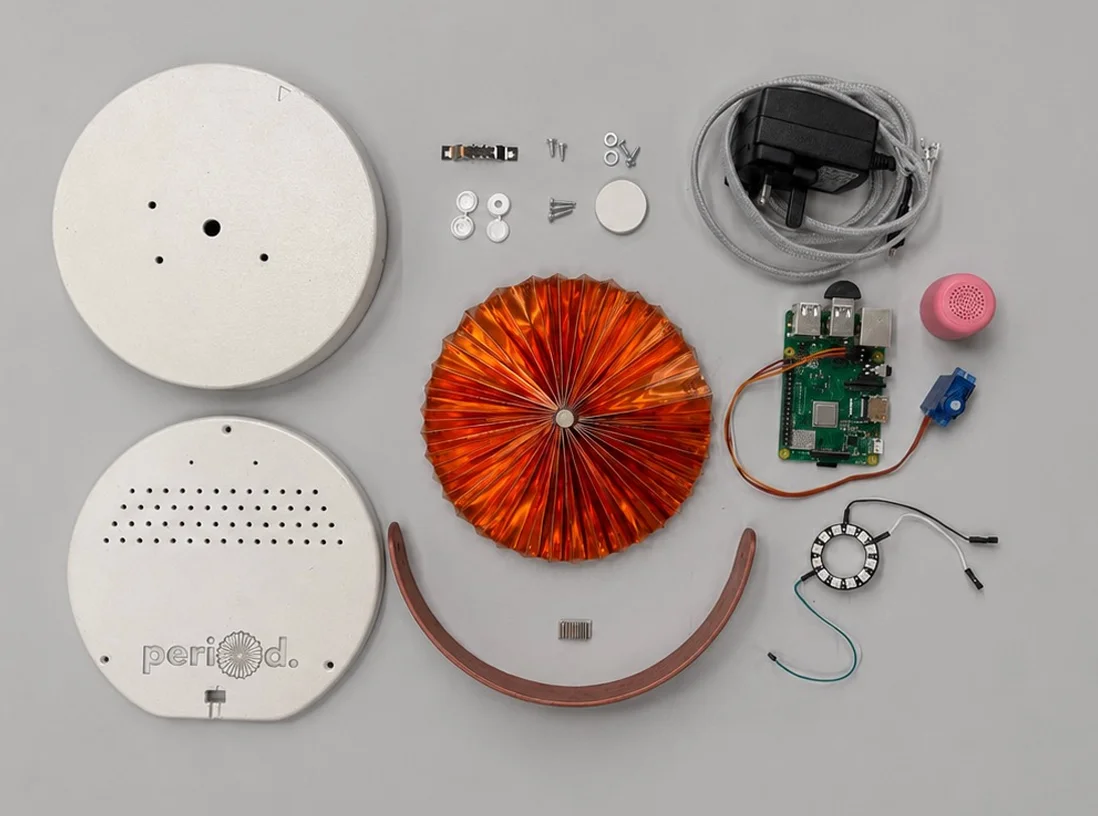
Built in Python. Tracks cycle day, drives a NeoPixel gradient, turns the fan via servo, takes voice input, replies via GPT-3.5, scoped to health, never diagnosis.

Birch plywood base (CNC-machined). Copper or brass fan, engraved and press-folded. Custom PCB, modelled on the Echo Dot teardown.
What a bedside object can't carry: depth, history, and portability.
One sheet of dense iteration. Margins hold self-critique: is it too busy, does home need a calendar, where should Luna live.
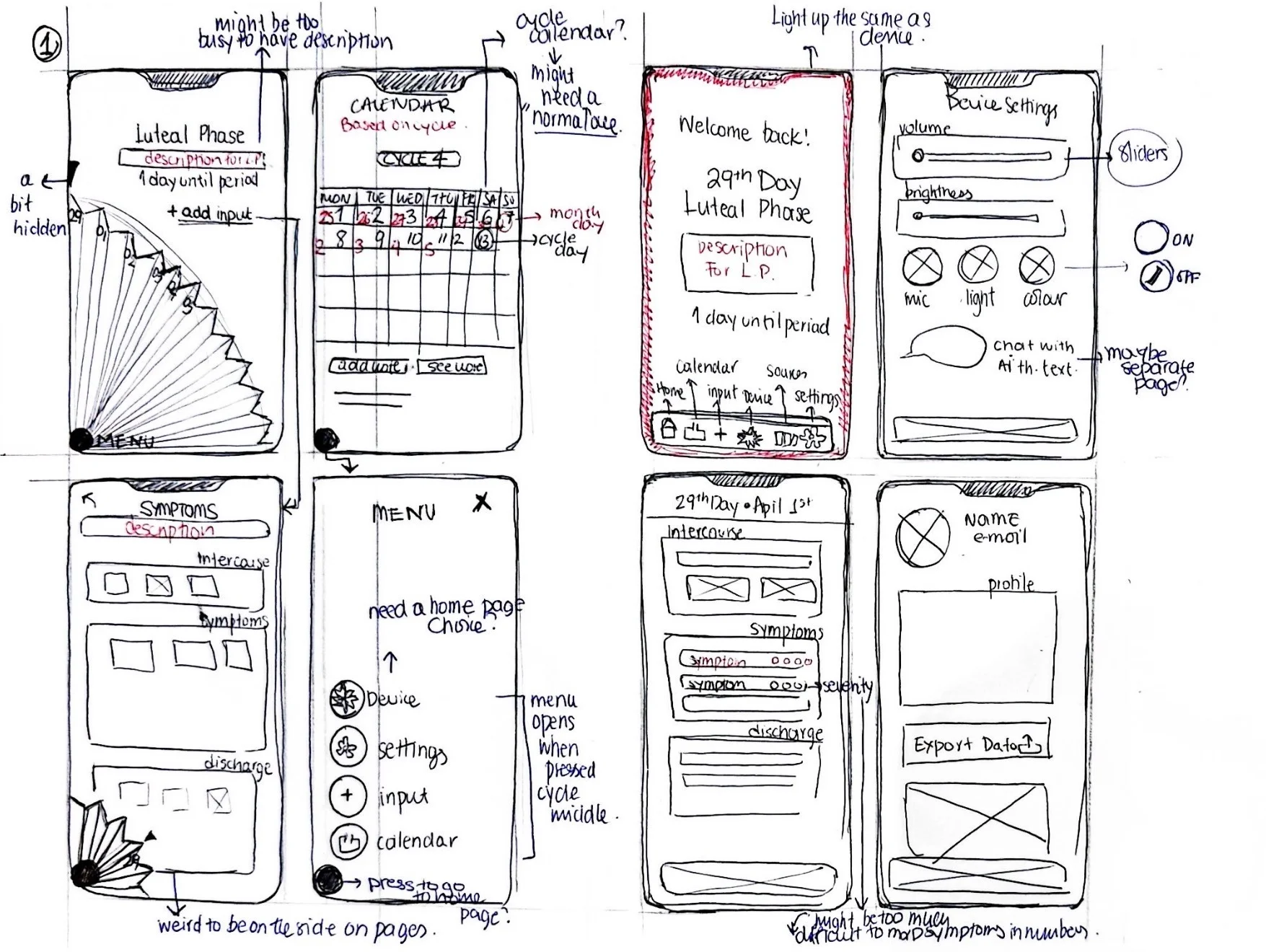
"Might be too busy to have description"
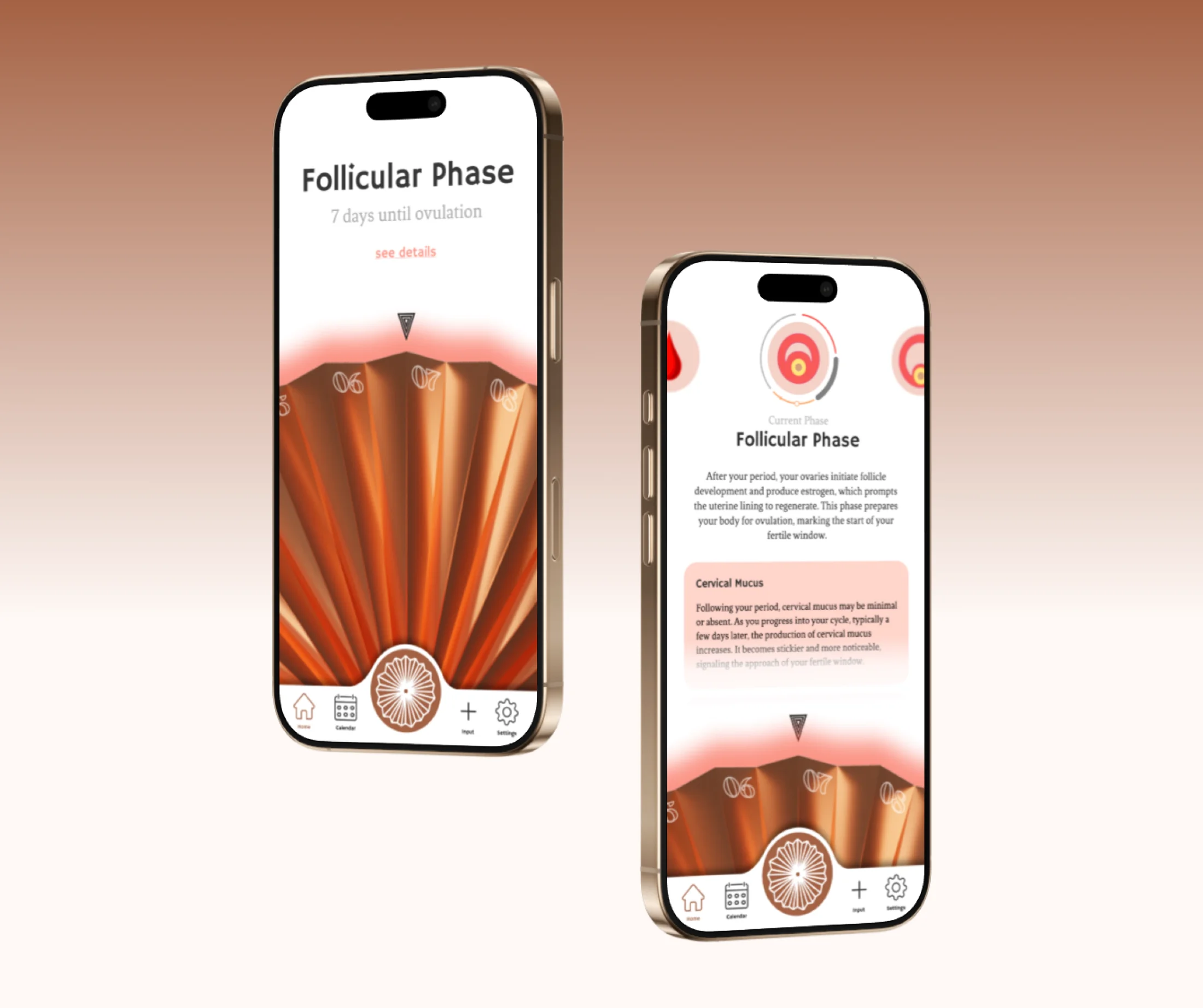
Resolved Phase descriptions move to a detail page, via a "see details" link."Need a home page choice"
Resolved Home is cycle status; the menu opens from the central fan button."Light up the same as the device"
Resolved App background tints to the user's gradient, syncing with the device.The question wasn't which navigation was cleaner. It was which was honest: a device with a companion app, not an app with an accessory.
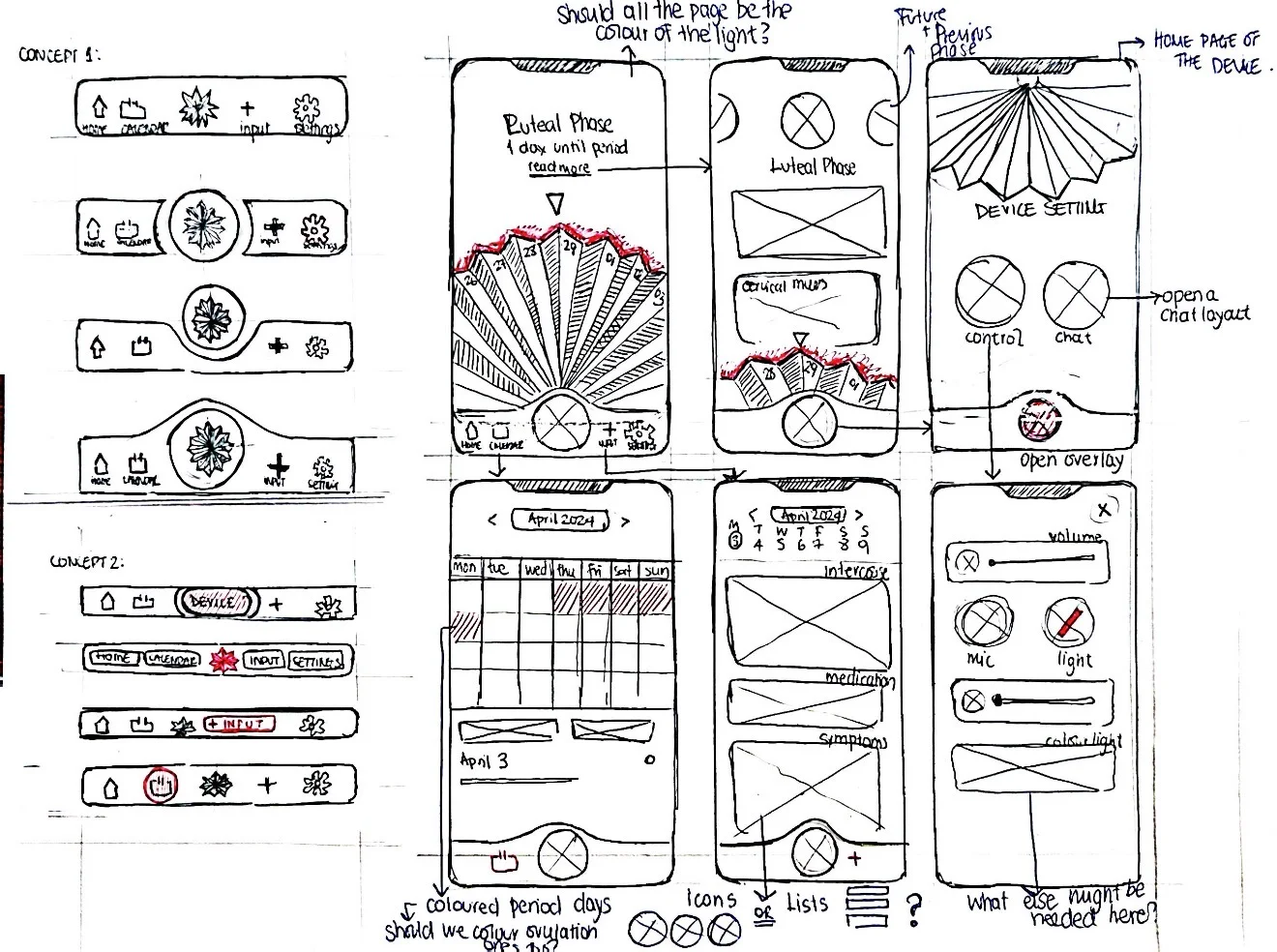
This concept won because the geometry told the story: the fan-shaped button anchors every screen, placing the AI assistant at the literal centre of the app.
The NeoPixel ring offers three gradients that tint every screen to match. Pink is one option, never the default.
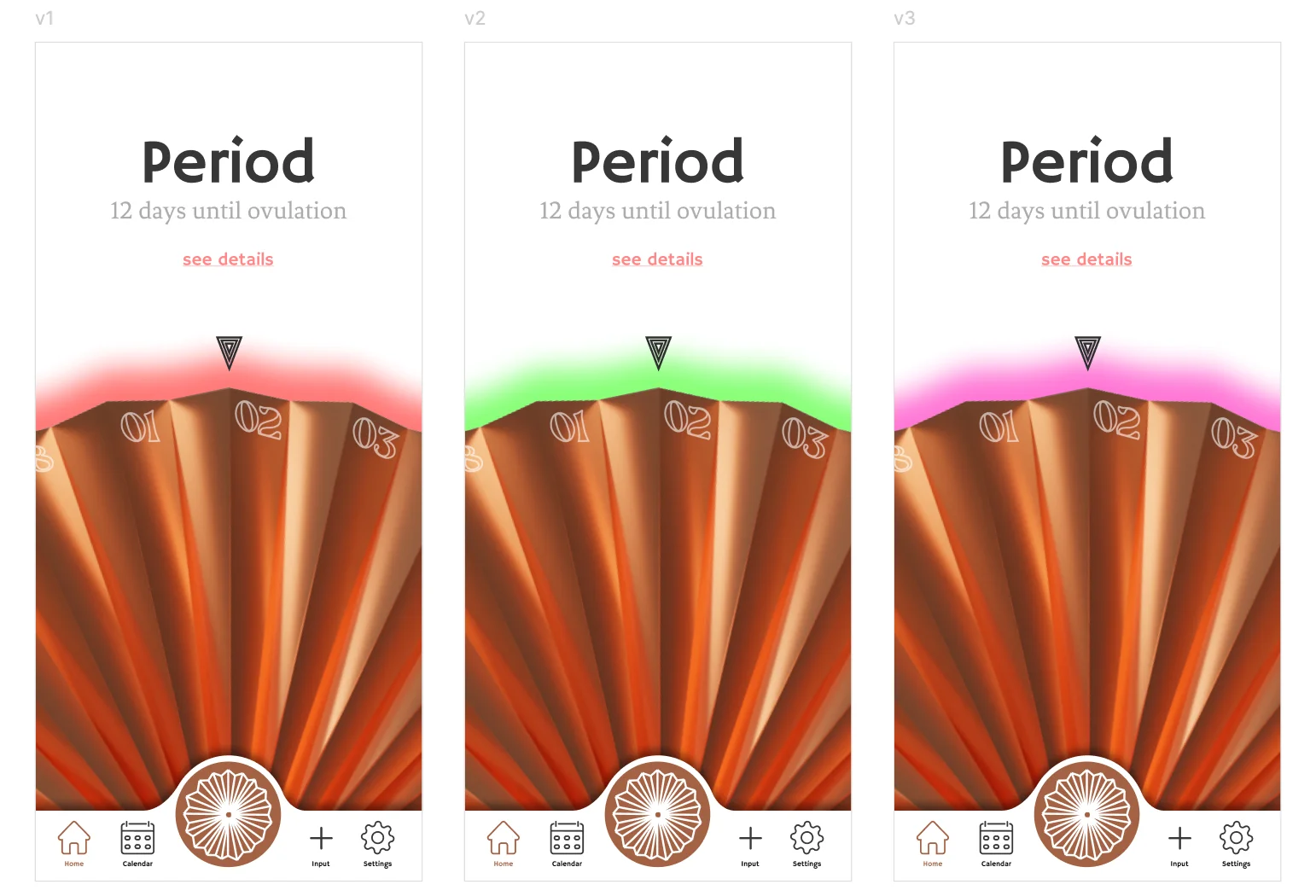
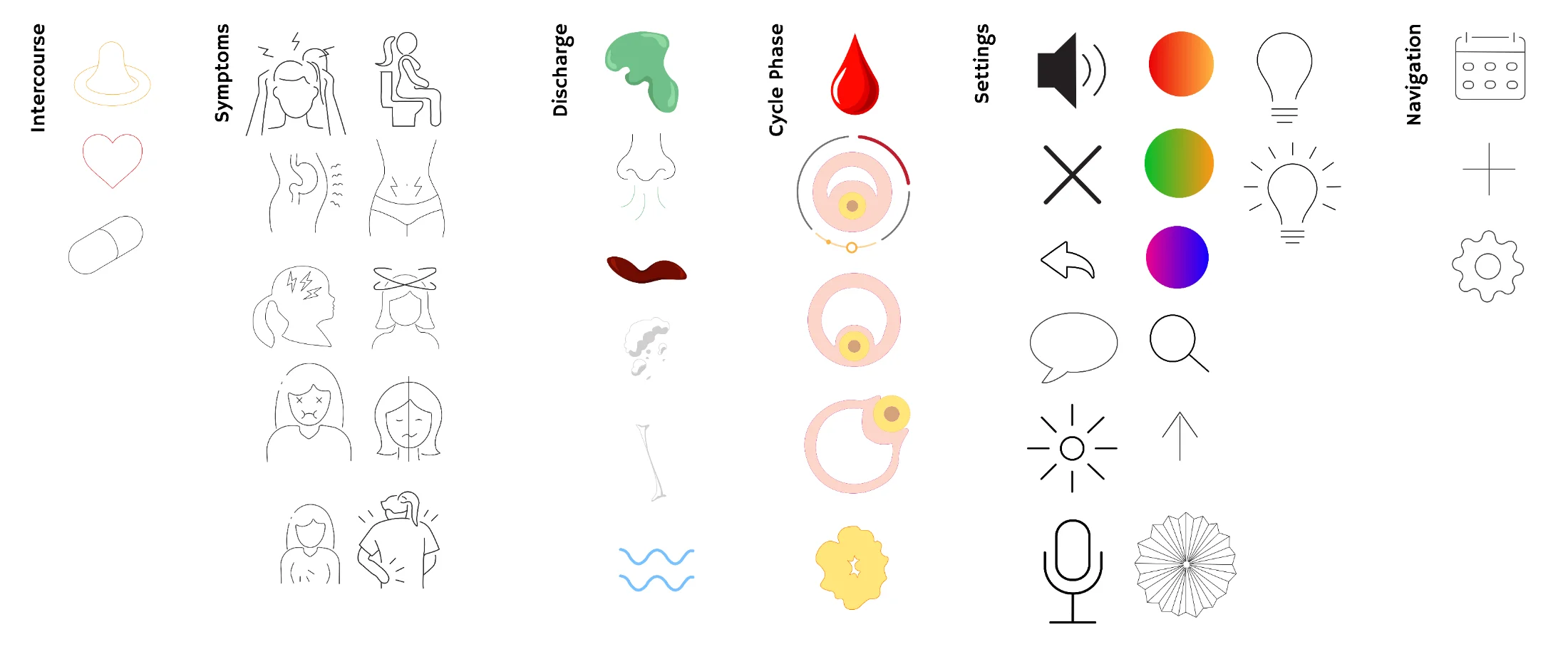
Drawn line by line, not from a stock pack: forty-plus marks across symptoms, cycle states, and controls, one consistent stroke weight.
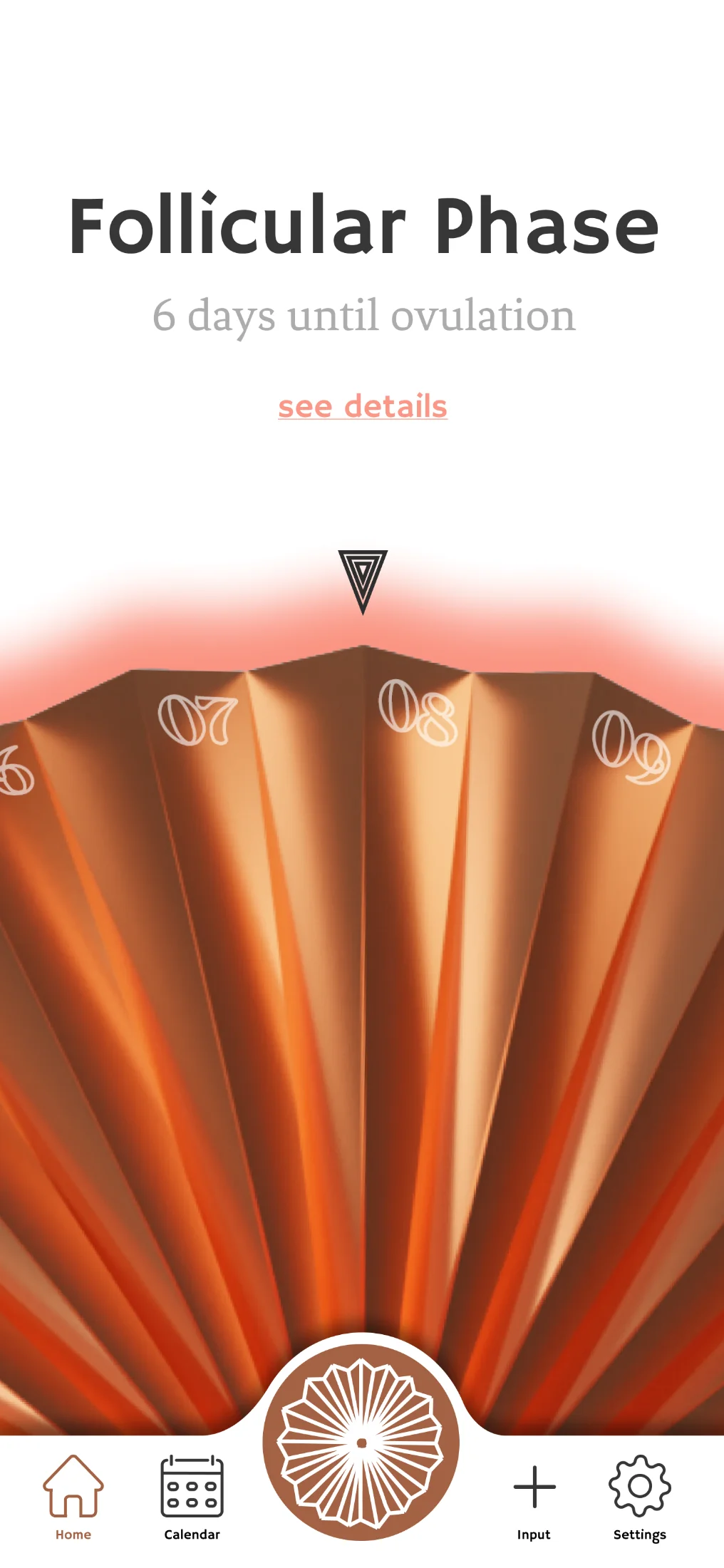
Copper and brass, so the device fits any bedroom palette, and the first decision is the user's.
"Aesthetic that doesn't compromise functionality."Workshop synthesis on woman-centred design