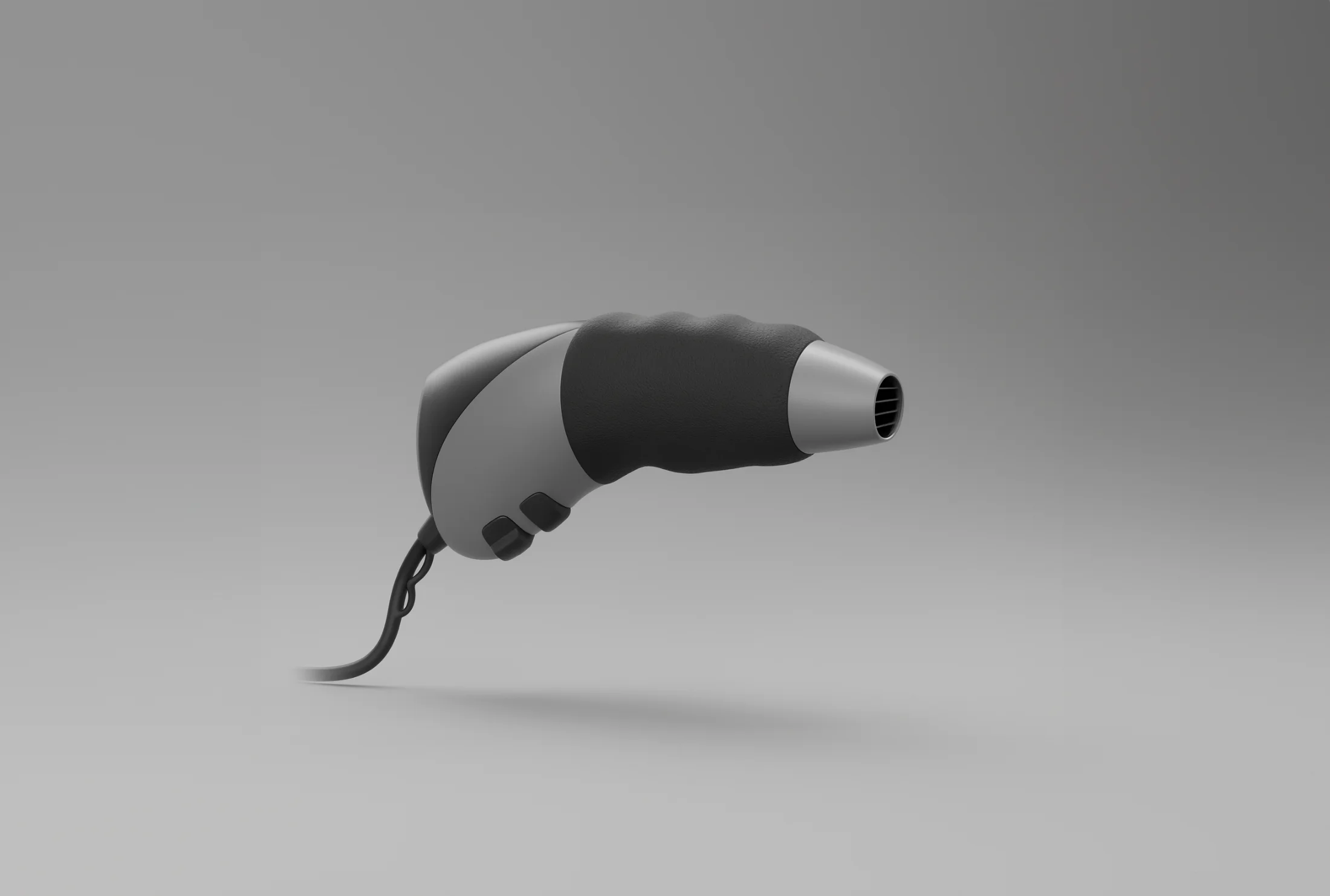
A redesign of the Remington dryer that removes the bulky handle, lets the user grip the air tube directly, and reopens for repair.
A 1939 Bakelite Princess and a 2021 Remington sit on the same arc: same handle, heater, form, shortcomings. A teardown showed how much was inherited, not designed.
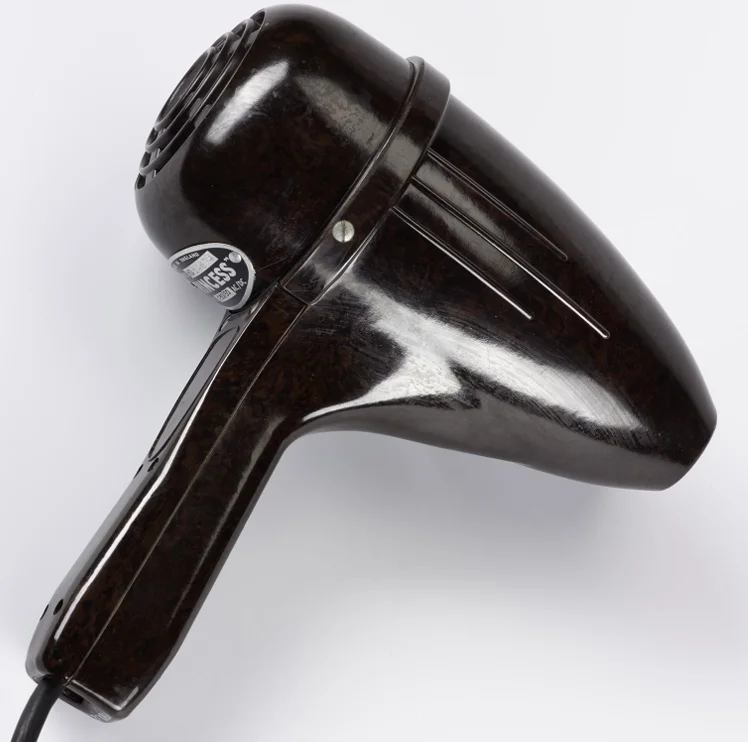
In the National Museums Scotland collection.

The teardown subject.
Take it apart, label every component, identify materials and process, let the findings drive the brief.
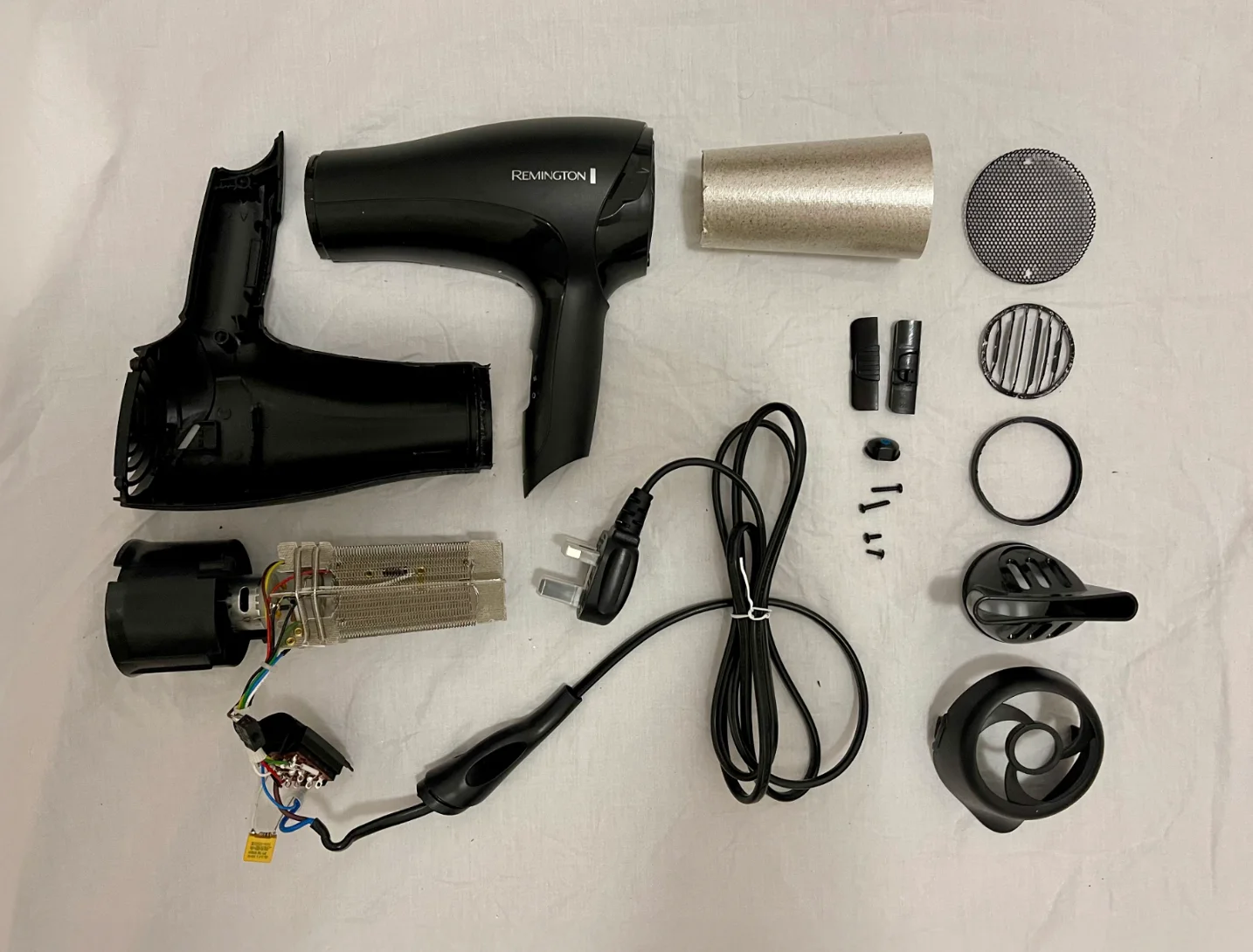
The case holds together with adhesive, not screws. Once it breaks, you replace it.
Dominates the form, accounts for most bulk and weight.
Walls thicker than needed. The weight tires the wrist in minutes.
Motor, fan, heater, wiring, insulation, grills, packed into a casing that hides them.
Unchanged since 1939. Nobody asked if it still earns its place.
The handle makes the dryer heavy, bulky, locked to one grip. Cut it, and four findings collapse into one move. The fifth: the case is glued shut, unreachable when broken. Swap glue for screws, and it's repairable again.
Three concepts tested via semantic differentials. Handle-free won decisively: most comfortable, most inviting. That form is AirFlux.
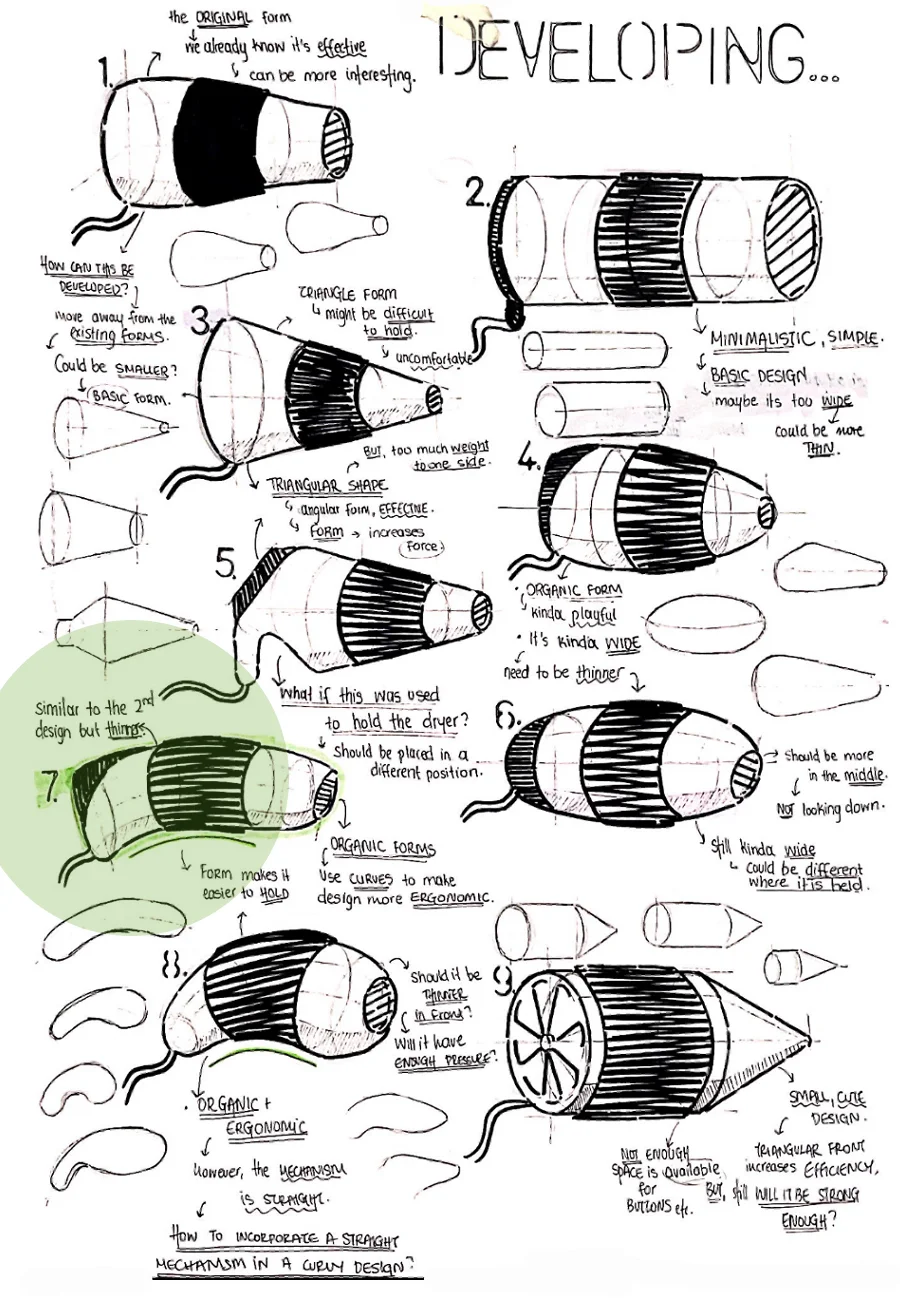
Everything below the air outlet tube is removed. Motor, fan, heater sit in line, no detour through a grip.
Holding the air outlet directly: smaller footprint, lighter, and the grip rotates freely.
Ten users compared three concepts. Handle-free scored highest on comfort, intuitiveness, likelihood of use.
The outlet gets hot, so you can't grip it bare. A changed form meant a changed casing, the chance to make one the user could open.
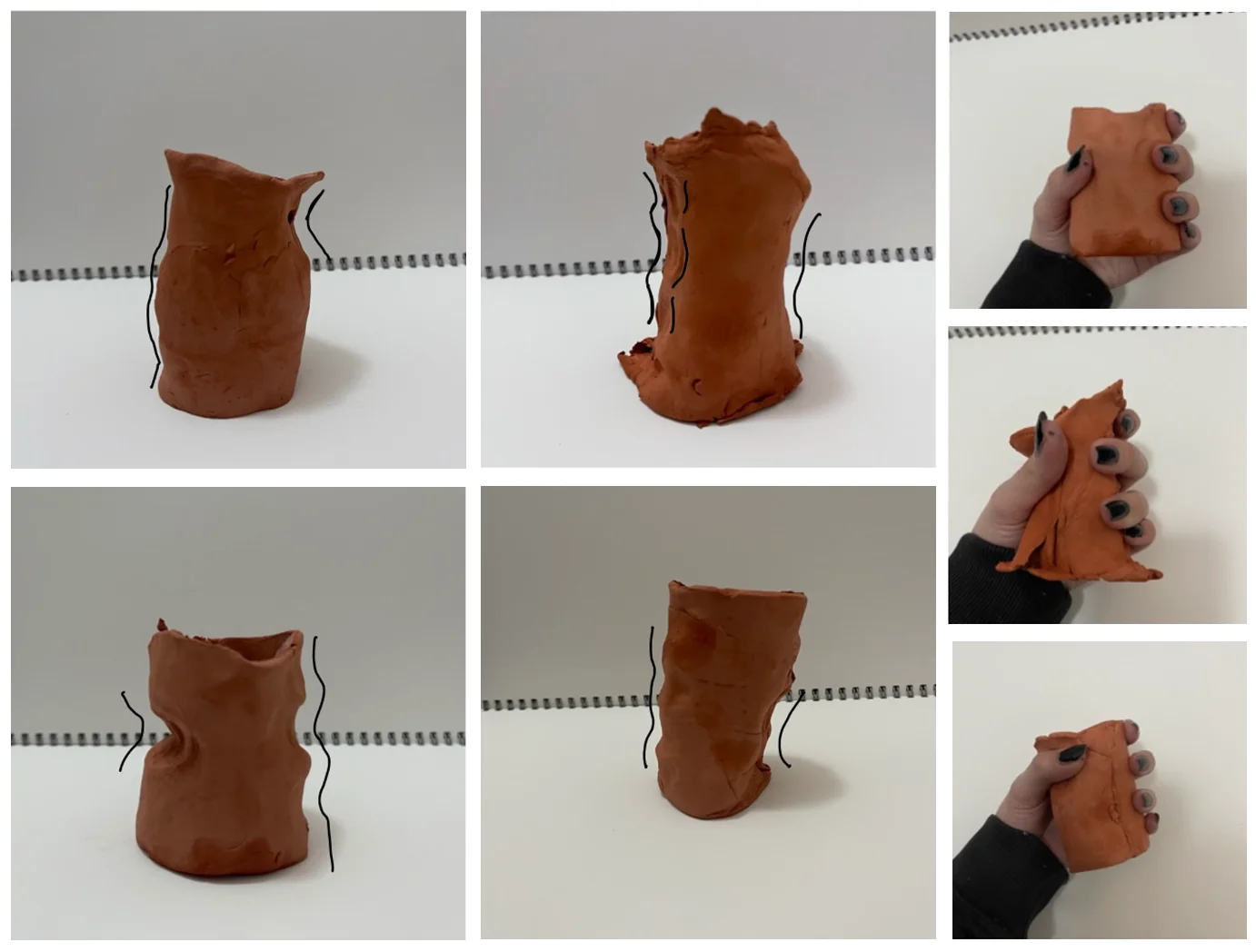
Thermal-insulating silicone wraps the part the user grips. Multiple prototypes were tested for a profile that's safe and rests naturally in the hand.
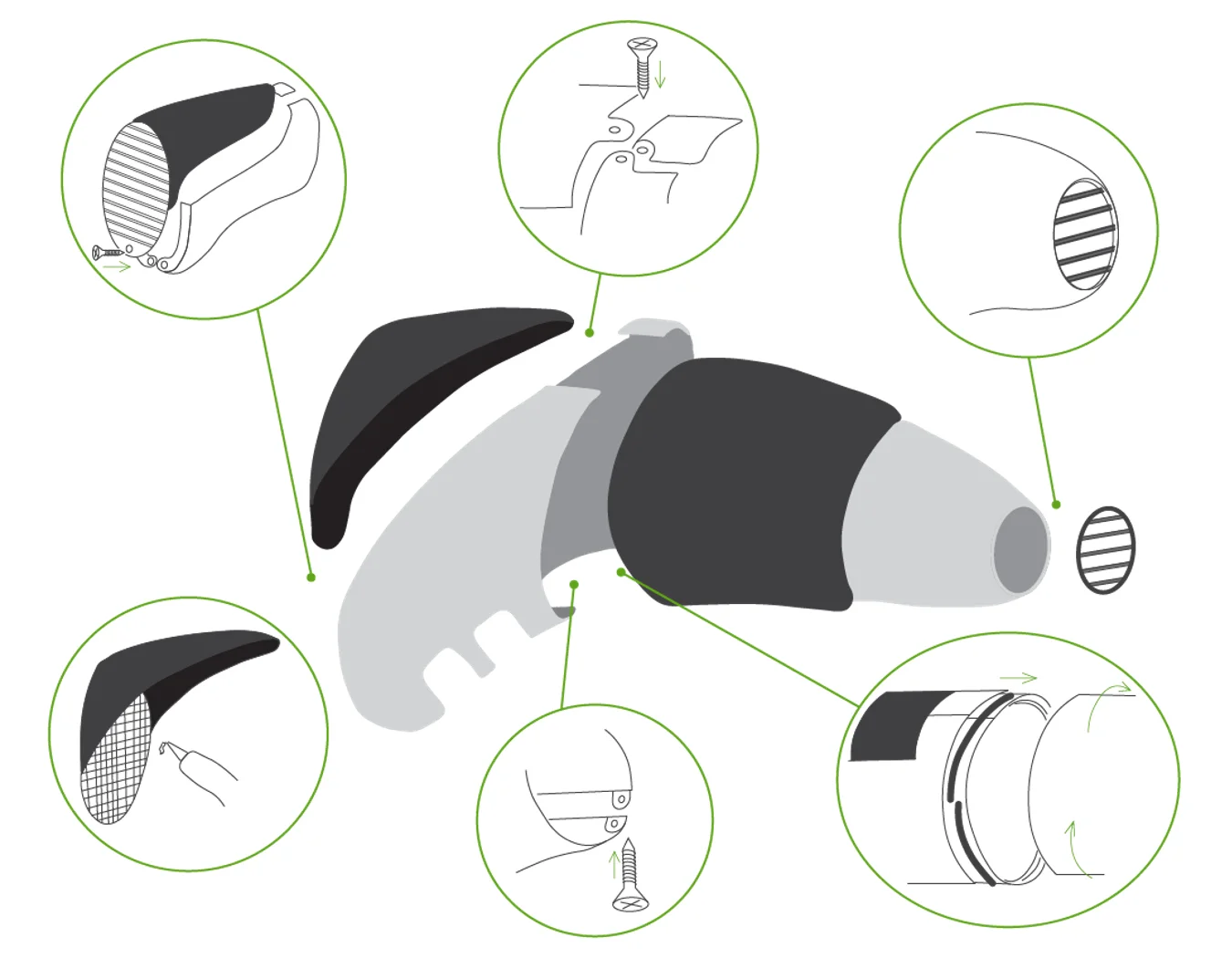
Standard screws hold the case together, so the user can open it, replace a heater or fan, and close it back up.
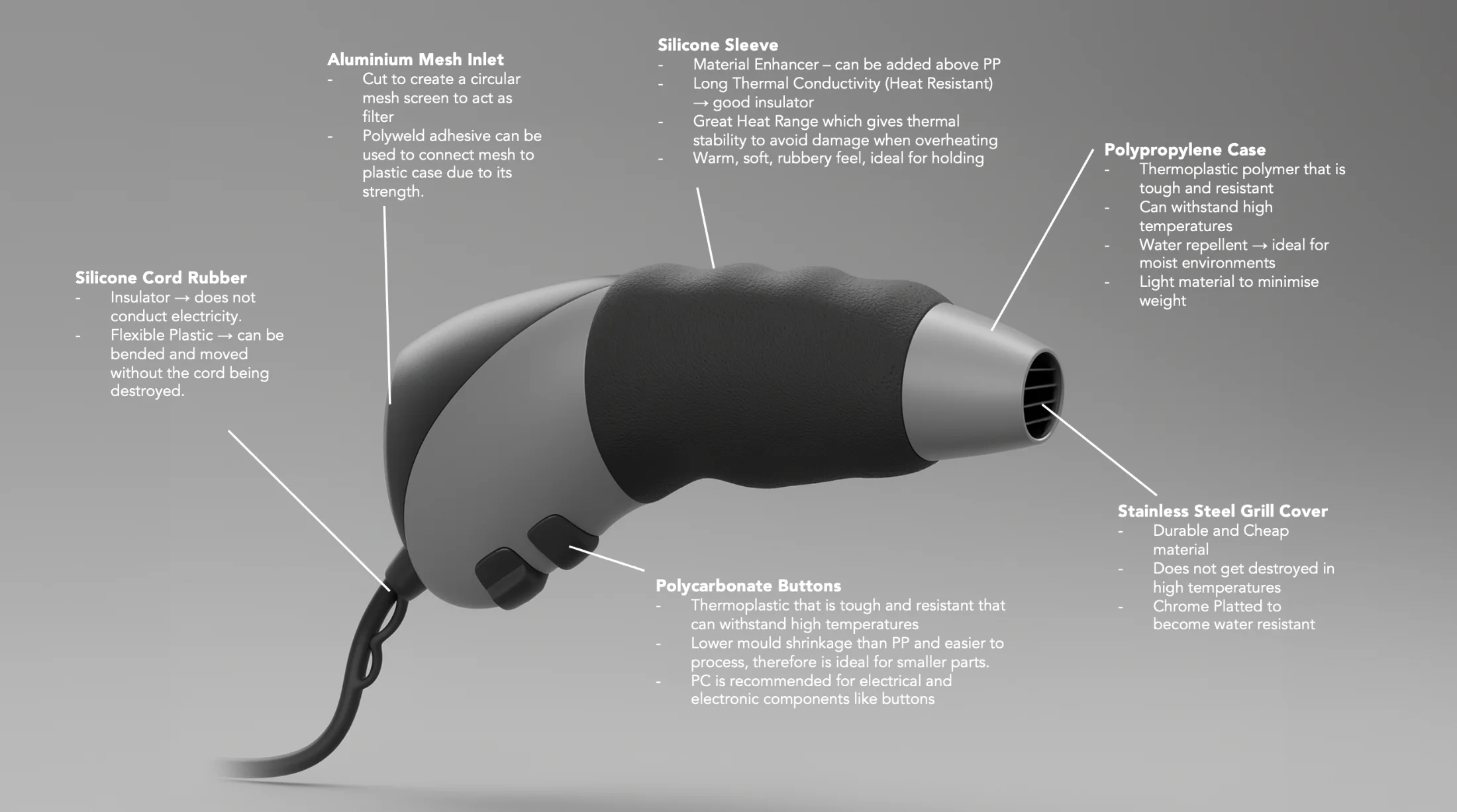
AirFlux is designed for mass production. Materials follow function, the case is built for injection moulding in two halves, and the Remington's mechanism slots in unchanged.
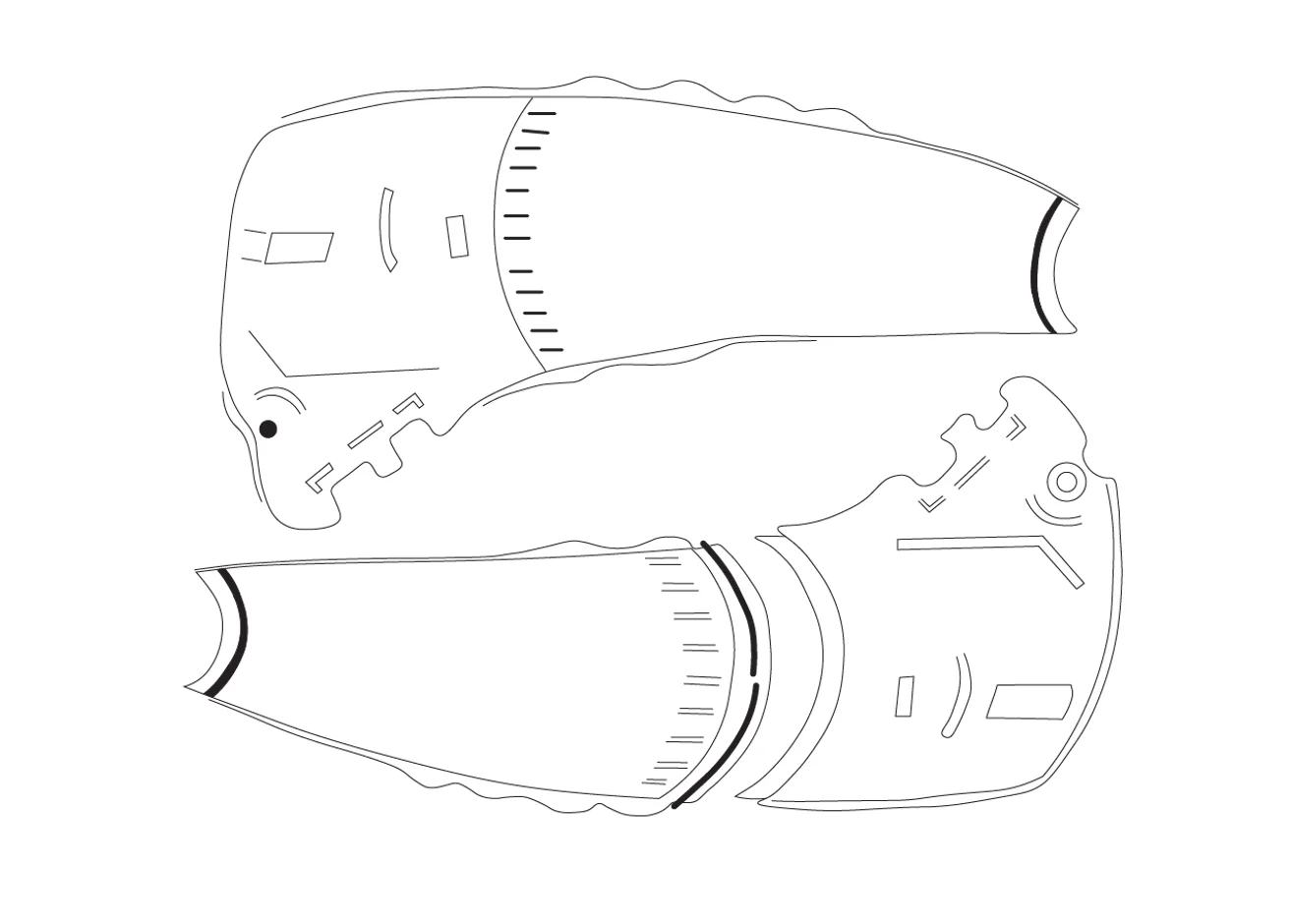
The case is designed in two halves for injection moulding, the standard process for dryer housings.
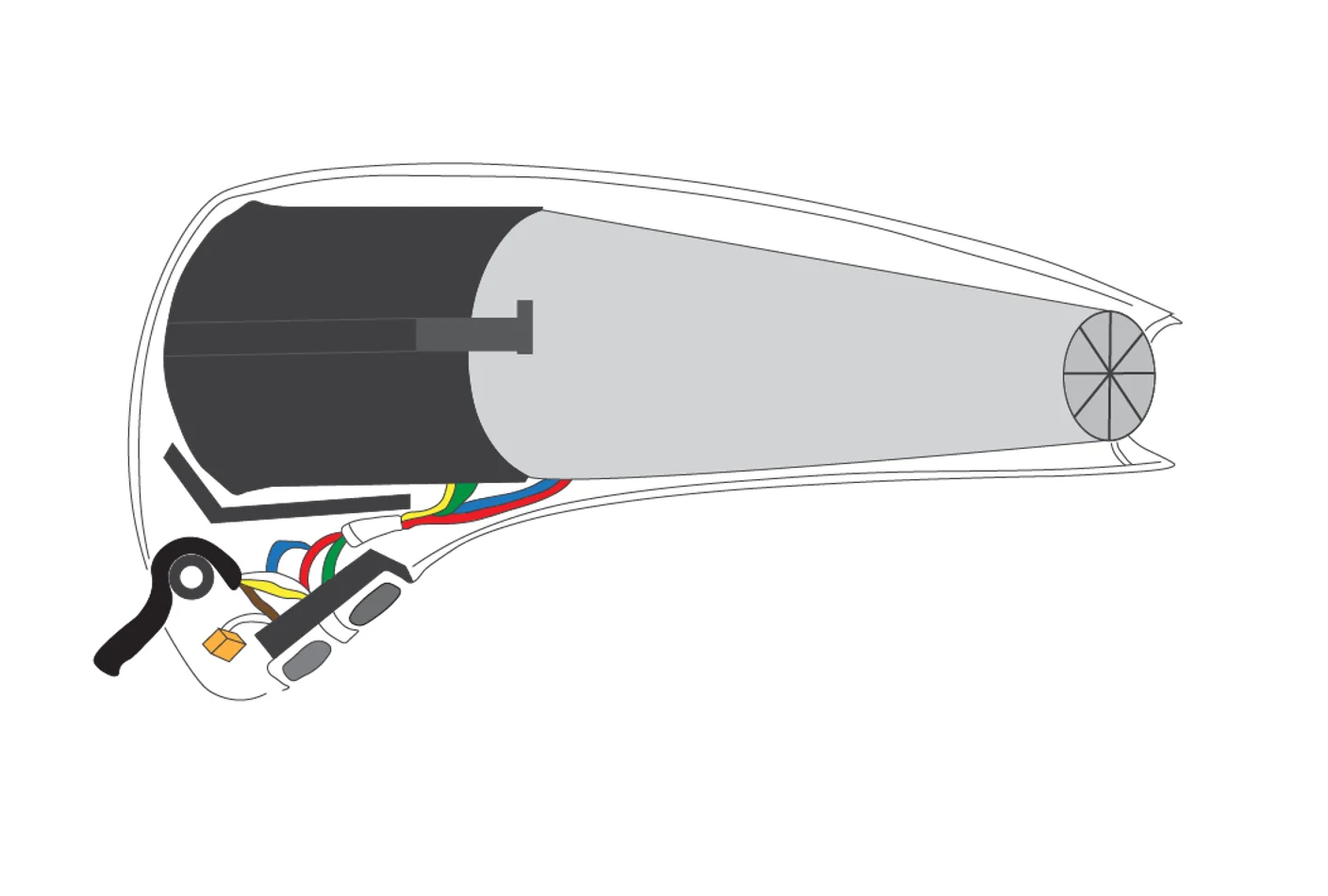
The existing Remington motor, fan, heater, and wiring tuck into the new housing unmodified. The redesign sits atop a working mechanism, not in place of one.