Project 06 — Ilia
Year Jan 2022 — May 2022
Context University of Edinburgh
Role With Quentin Bachelot · making, electronics, testing

A desk lamp that helps you breathe.

A wood-and-glass lamp for university students that doubles as a guided breathing exercise. Place your hands on the base and the light pulses to slow your breath, no app, no screen.

Tangible UX Mental Health Emotional Tech Glass + Wood Arduino
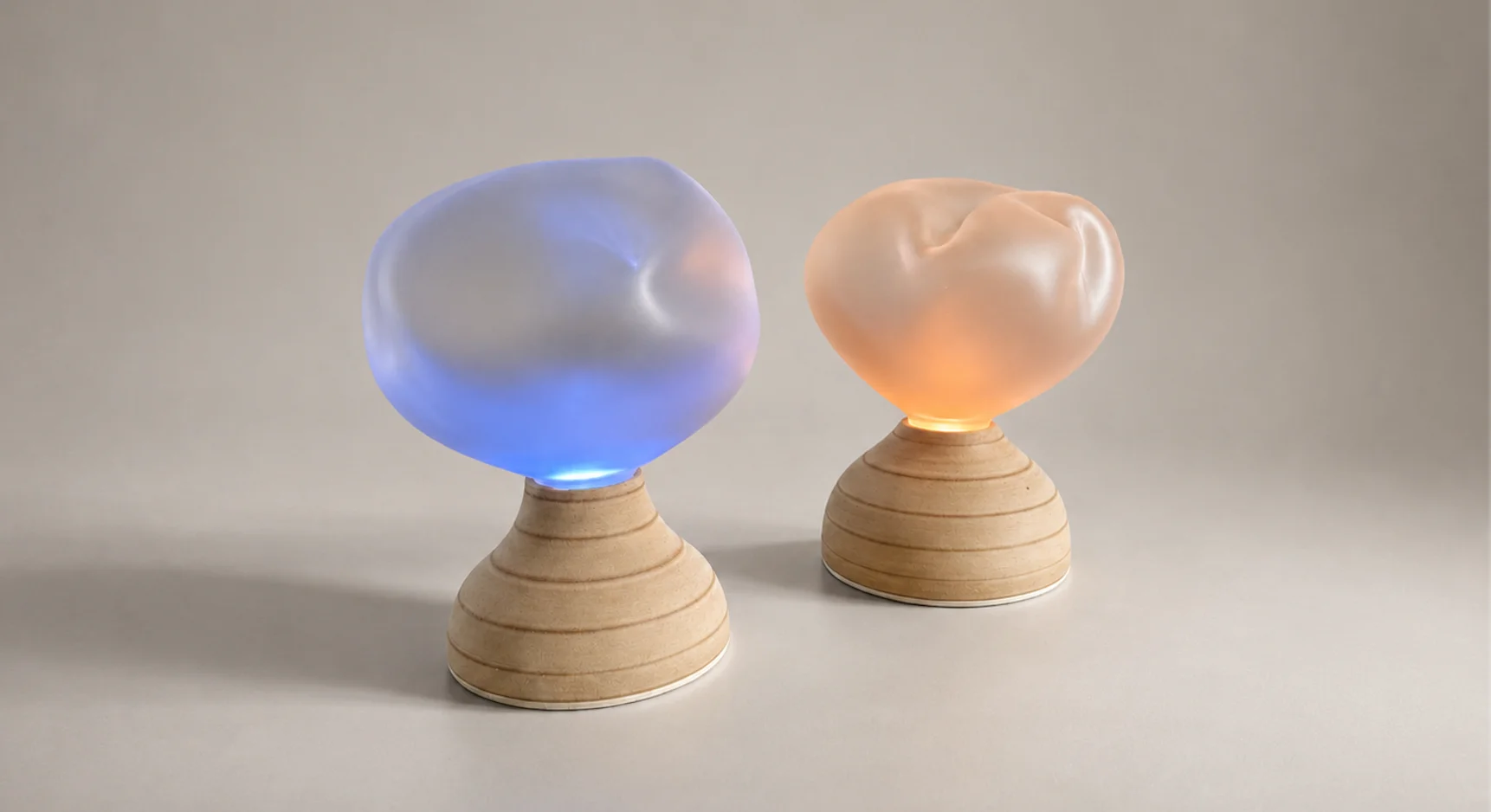
The Ilia pair on a desk — two turned-wood bases with sandblasted glass cloud diffusers, one glowing blue and one glowing warm orange
§ 01 Problem stillness at the desk

Anxiety is loudest where students spend most of their time, at the desk.

Mental health is a vast subject. The funnel from there to a desk lamp came from where anxiety actually shows up in young adults' lives, and from the techniques that consistently come out on top as ways to manage it.

Brief 00

Mental health

A broad starting point, sharpened by the rise in post-pandemic anxiety.

Step 01

Student anxiety

Gen Z is the most anxious generation on record; uncertainty about the future is a constant.

Step 02

Studying as the peak

For students, anxiety is highest while studying or working, and the desk is where it lands.

Step 03

Breathing as a tool

Across a dozen reviewed sources, breathing exercises consistently ranked top alongside physical exercise.

63%
of US university students experience increased anxiety post-COVID (APA)
62%
of UK students report peak anxiety while studying or working
82%
say uncertainty about post-COVID years is causing them stress (APA)
#2
most-recommended stress-relief technique across 12 reviewed sources, second only to exercise
§ 02 Concept two modes, one lamp

A desk lamp that pulses when you need a moment.

Ilia works like a normal desk lamp until you place your hands on its wooden base. Two modes let the user choose how much initiative the lamp takes.

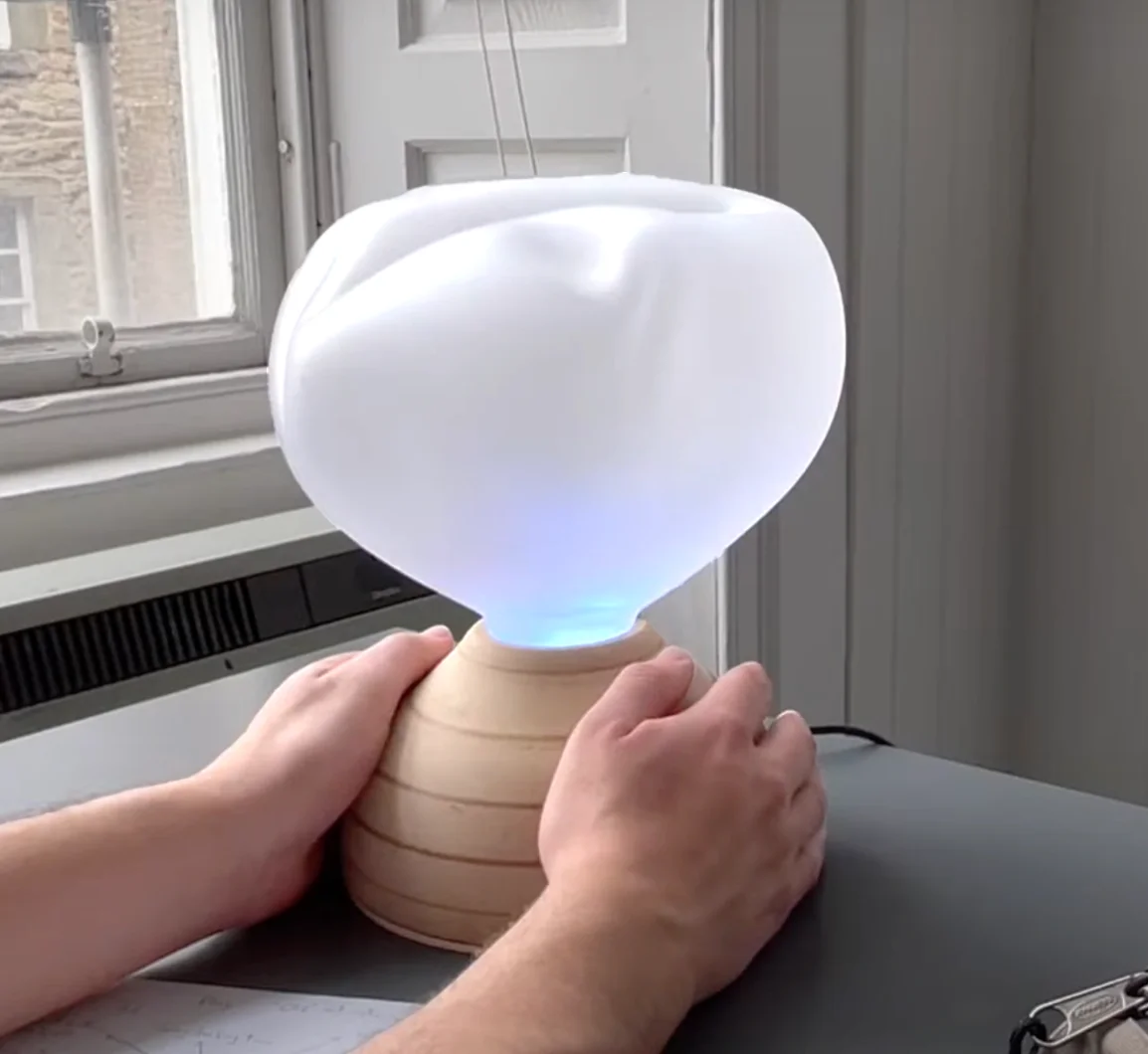
calm to hold Ilia on a study desk, a sandblasted glass cloud diffuser on a wooden dome base, the diffuser glowing softly with the user's hands placed on either side of the base
Hands on the base, light shifts to blue, breathing cycle begins.
The breathing cycle
5s inhale Light brightens slowly.
5s exhale Light dims slowly.
2 minutes later Light turns yellow; keep going or let go.
Mode 01

Free.

The lamp stays out of the way. Breathing is available whenever you want it, never when you don't.

For users who already know when they need a break.
Mode 02

Timed.

Every two hours, the light turns blue on its own and waits. It only resets once you complete a full two-minute cycle.

For users who lose track of time and would otherwise never stop.

Switch between modes with a potentiometer at the back of the base.

§ 03 Making glass, wood, hands

A cloud on a wooden dome.

The form had to feel warm, calm, and tactile. Something a stressed student would actually want on their desk.

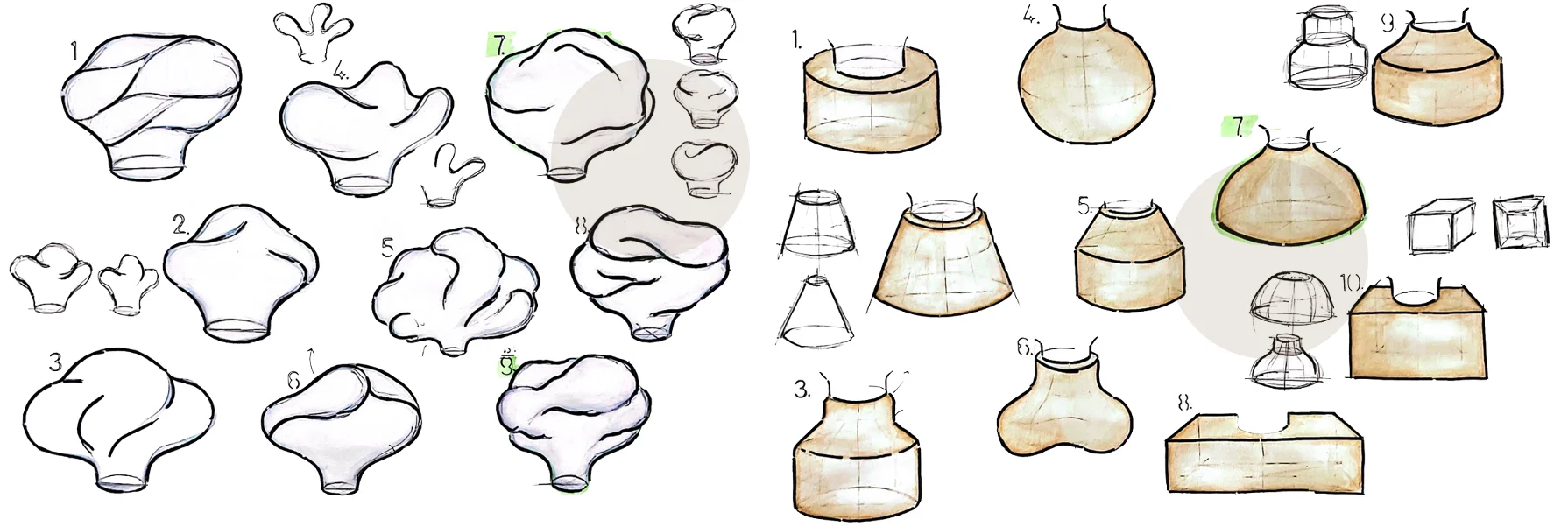
Two columns of form ideation sketches: organic cloud-like glass diffuser shapes on the left in pencil, and rendered wooden base form studies on the right
Form studies: cloud-shaped glass diffusers (left) and wooden base profiles (right).
Form

A cloud, diffused.

An organic, slightly random glass shape, not a perfect dome. Calmer, less product-like, more atmospheric.

Base

Wood, warm to the touch.

The base is what the user actually places their hands on. Wood invites that contact in a way plastic or metal wouldn't.

Sizes

Two bases, two hand sizes.

Testing showed no single size worked for everyone. Both versions shipped, with slightly different necks.

From furnace to finished pair.

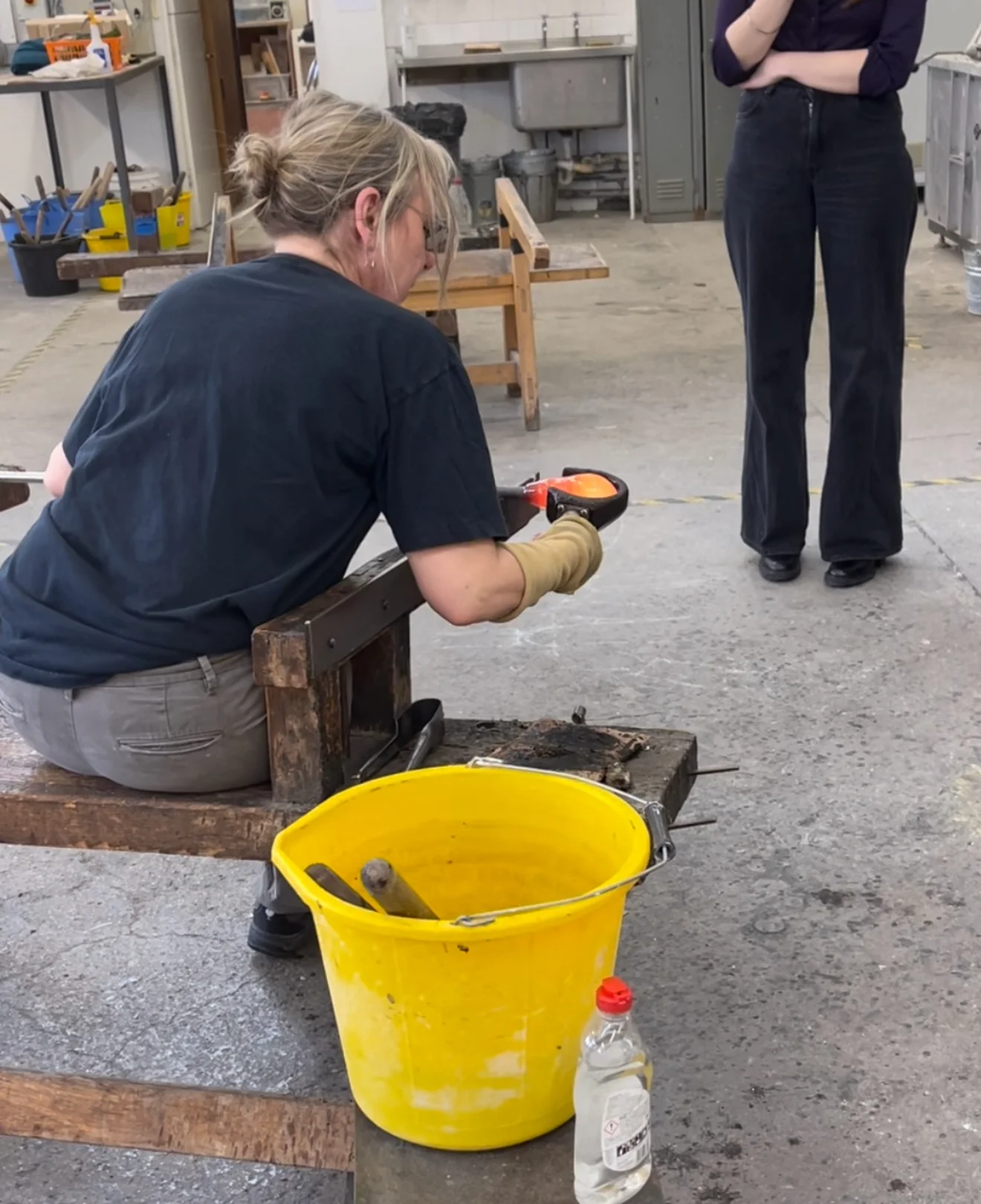
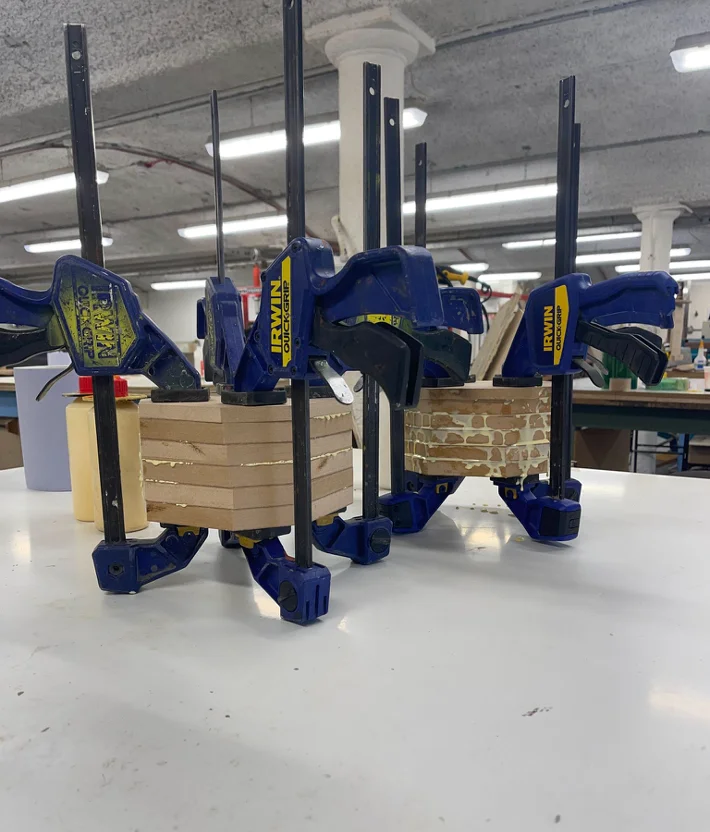
Glass made first with Ingrid in the hot workshop, then cold-worked and sandblasted. Wood prepared by gluing MDF blocks, then turned on the lathe by the technicians as we assisted.

Hot glass being blown and shaped with wooden rods to create the cloud-form diffuser
01 Glass blowing Sphere blown, neck shaped with jacks, wooden rods pressed in for the cloud creases.
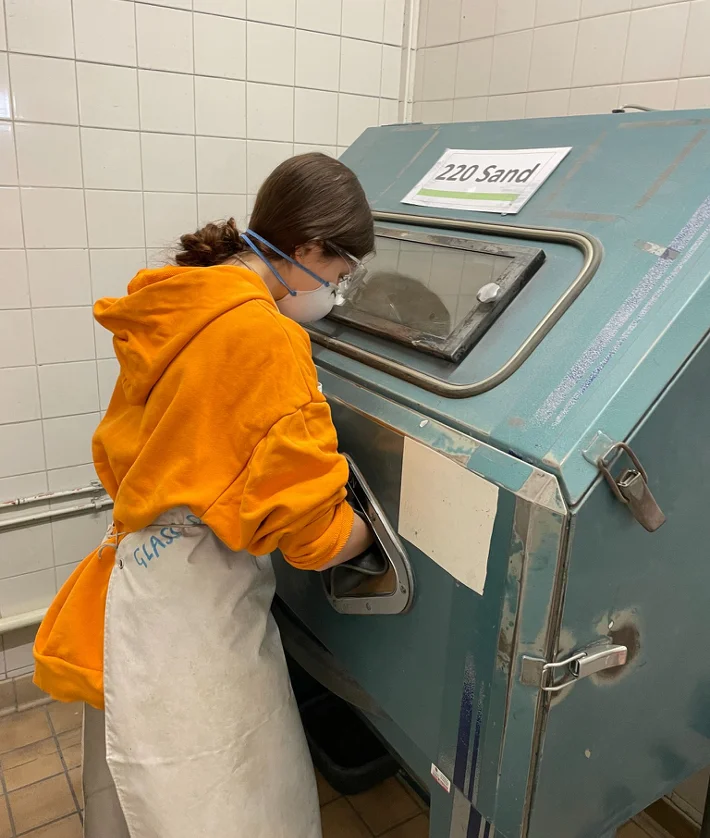
The blown glass cooled in the annealer, then sawn at the neck and sandblasted to a frosted finish
02 Cold work Cooled in the annealer, neck sawn to length, then sandblasted to a frosted finish.
MDF blocks glued together and clamped overnight, then mounted on the lathe for woodturning
03 Wood prep MDF blocks glued overnight, then turned on the lathe by the technicians to a dome.
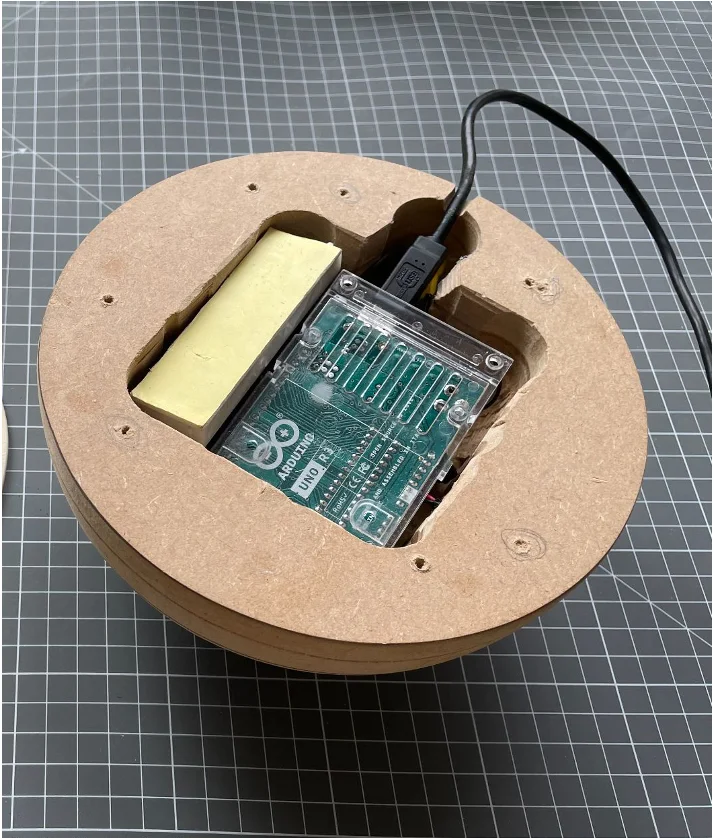
The wooden base hollowed out with a drill and chisel, electronics fitted inside, glass diffuser seated on top
04 Assembly Base hollowed with drill and chisel, channels cut for the LDR sensors, glass seated on top.
The remake

We made the glass first, then realised it was too small to sit properly on the bases we'd designed. The base couldn't shrink. It needed the room for the electronics. So we went back to the hot workshop and remade four new glasses, experimenting with deeper creases this time, and picked the best two.

§ 04 Electronics light sensing light

Sensing hands by the shadow they cast.

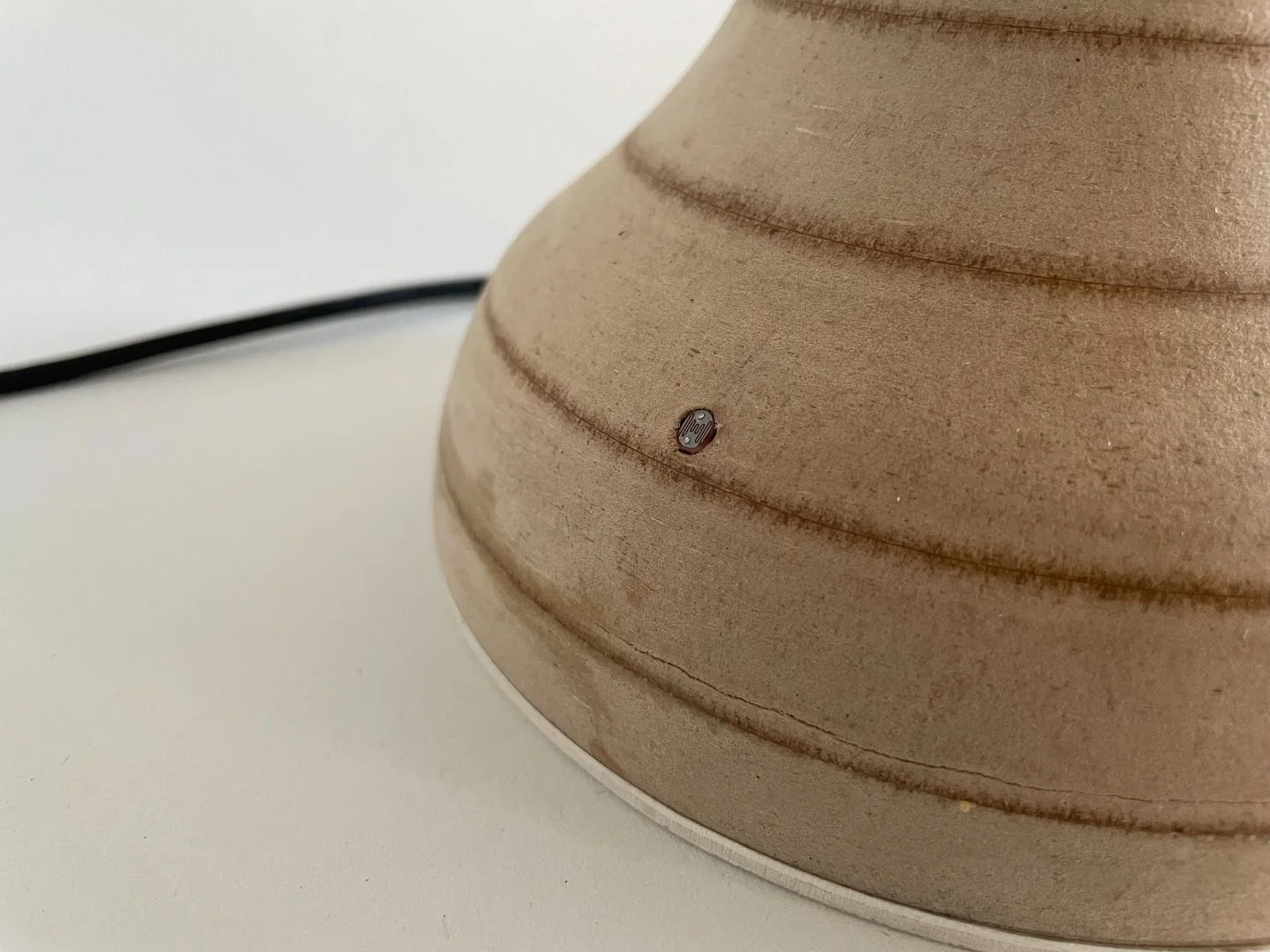
The lamp uses LDRs (light-dependent resistors) on the sides of the base to detect when hands cover them. Proximity sensors and touch sensors were on the table early on, but LDRs were small enough to stay discreet, and the team had already coded with them. A simple sensor doing a poetic job.
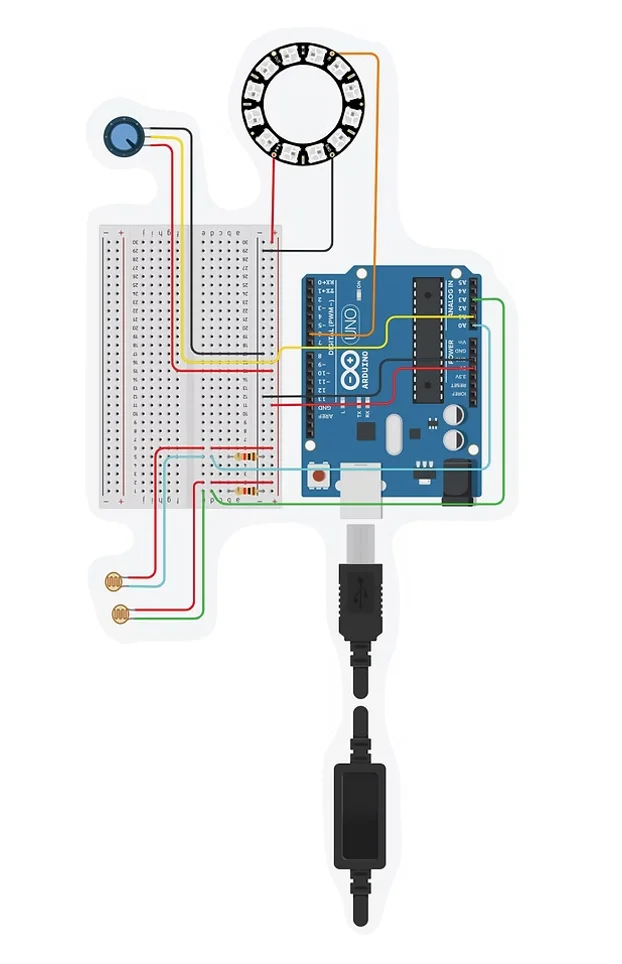
The Ilia electronics laid out: Arduino Uno, NeoPixel ring, two LDR sensors with soldered wire extensions, a potentiometer, and an external power switch, all on a breadboard during testing
The full electronics for one lamp.
  1. 01

    Arduino Uno

    Runs the code, drives the NeoPixel animation, and reads sensor input. Lives inside the hollowed-out base.

  2. 02

    Two LDR sensors

    Soldered to wire extensions so they could sit on opposite sides of the base. When hands cover both, ambient light drops, and the breathing cycle starts.

  3. 03

    NeoPixel ring

    An 8-pixel ring inside the glass diffuser. Yellow as the default lamp glow, soft pulsing blue during a breathing cycle.

  4. 04

    Potentiometer

    Located at the back of the base. Switches between Free and Timed mode with a turn.

  5. 05

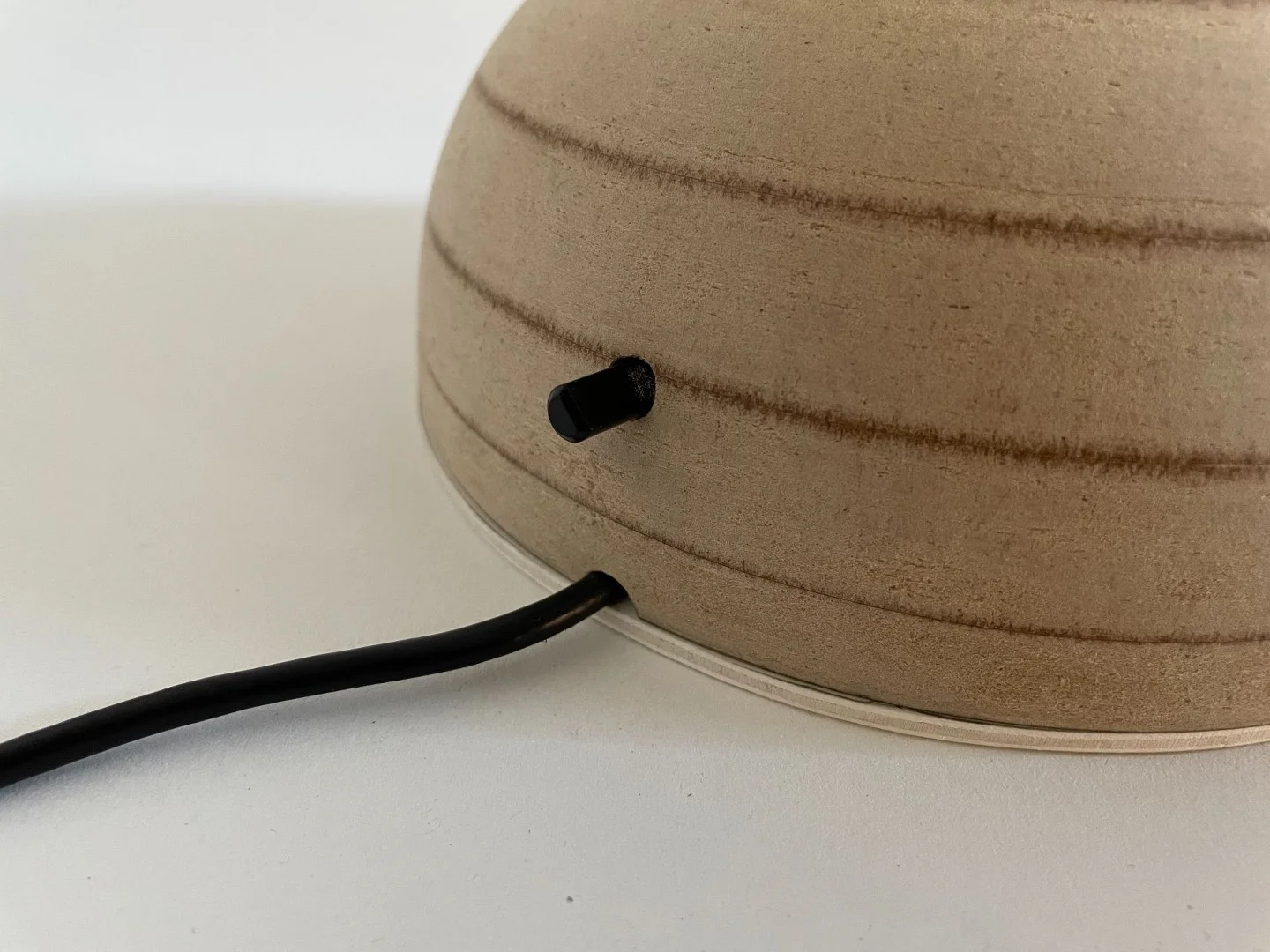
    External switch

    A USB-cable inline switch cuts power directly, simpler than wiring a soft on/off into the code and saves a sliver of electricity when the lamp's idle.

The hard part of the code

Pulsing the LED smoothly turned out to need a sine function, beyond what we'd learned at that point. Our tutor Matthew helped us with the maths so the breathing animation actually breathed, not stepped.

§ 05 Testing on real desks

Tested where it would actually live.

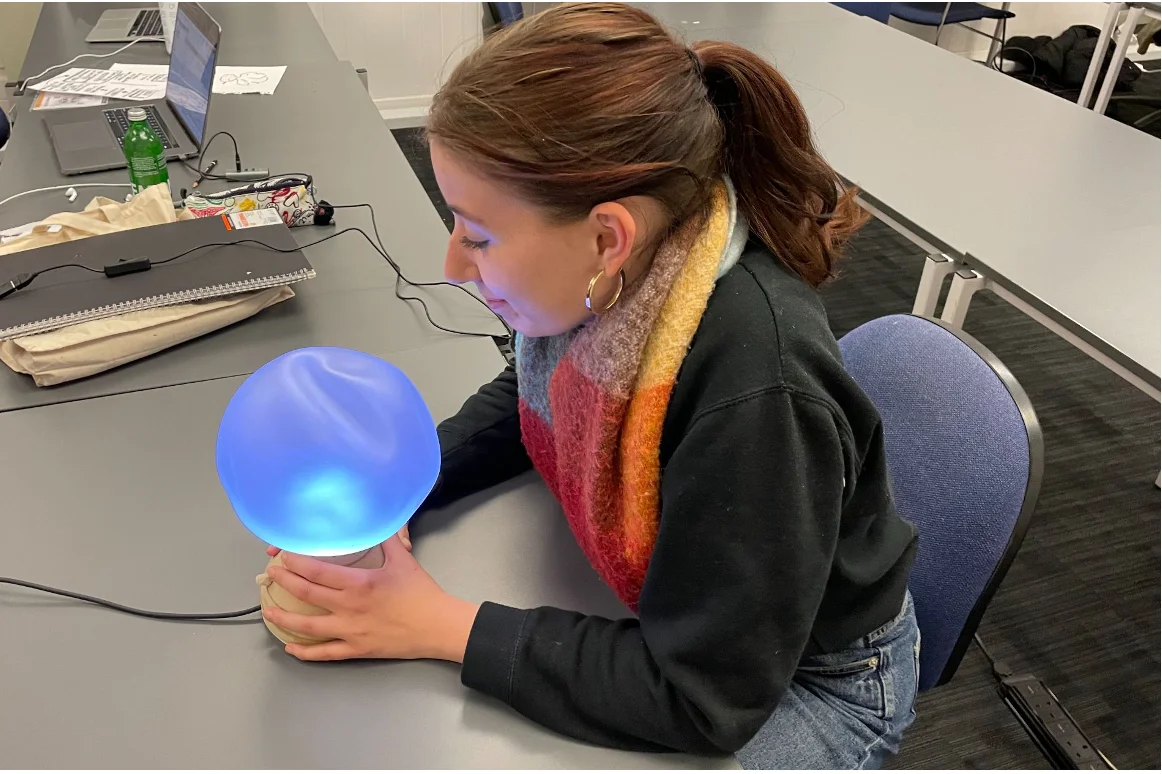
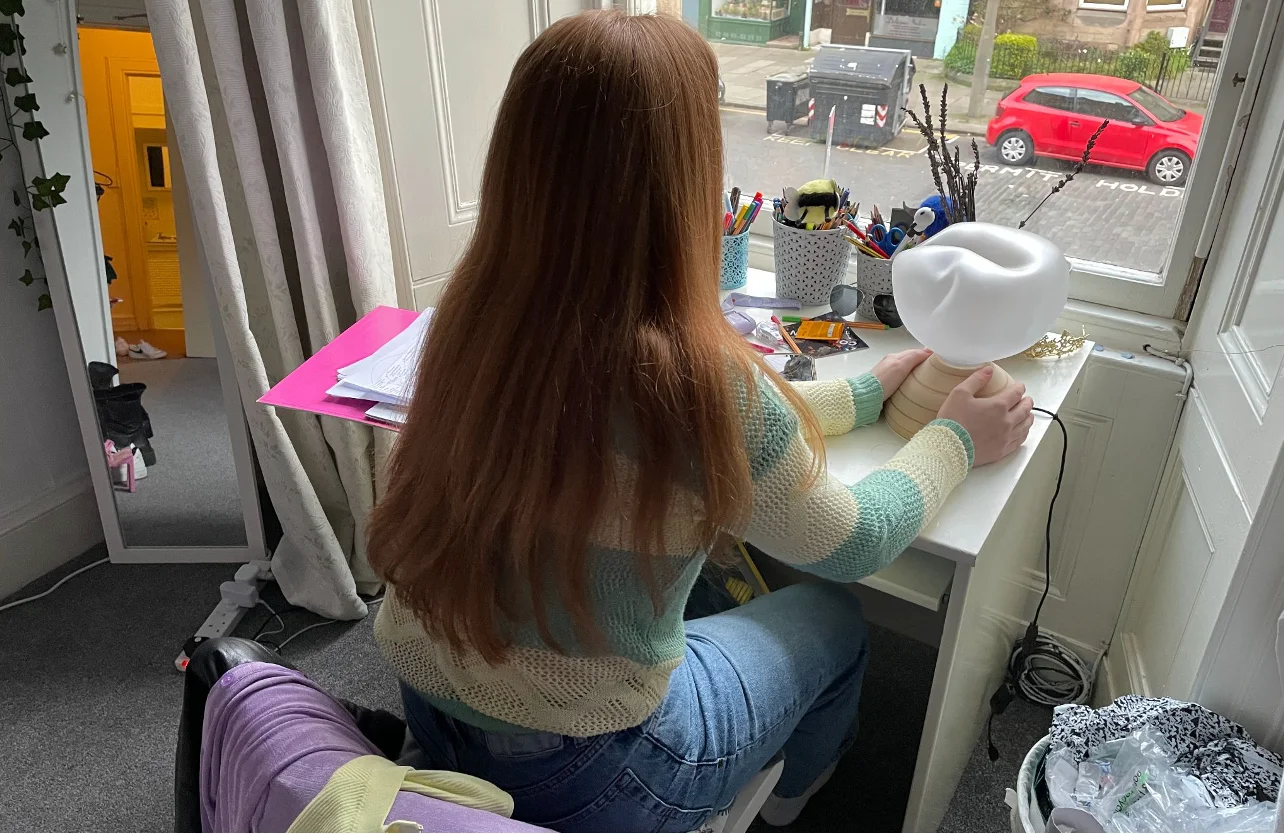
Two phases of testing. Quick studio sessions with first-time users, and a longer context test with one student keeping the lamp on her desk for a full day.

tested with students A student trying the Ilia lamp during a quick studio session, hands on the wooden base
Studio test, with the lamp on the desk during a breathing cycle.
A student with the Ilia lamp on her desk during a full-day context test
Home context test, a full day at the desk with the lamp.
What landed
Worked

Testers found the interaction intuitive without instructions. One described the design as "the right balance between interesting and basic enough to fit my space."

Worked

The two-size split resolved itself naturally. Larger hands preferred the bigger base; smaller hands preferred the smaller. No single ideal size, just two right ones.

What didn't
Didn't

No visible markings around the potentiometer made mode-switching unclear. Easy fix with an engraved knob, flagged as a development.

Didn't

One tester with severe anxiety noted that touching the base continuously could trigger sensory overload. Raised a real question about contact-required interactions.

§ 06 Final outcome the pair, glowing

Ilia, resolved.

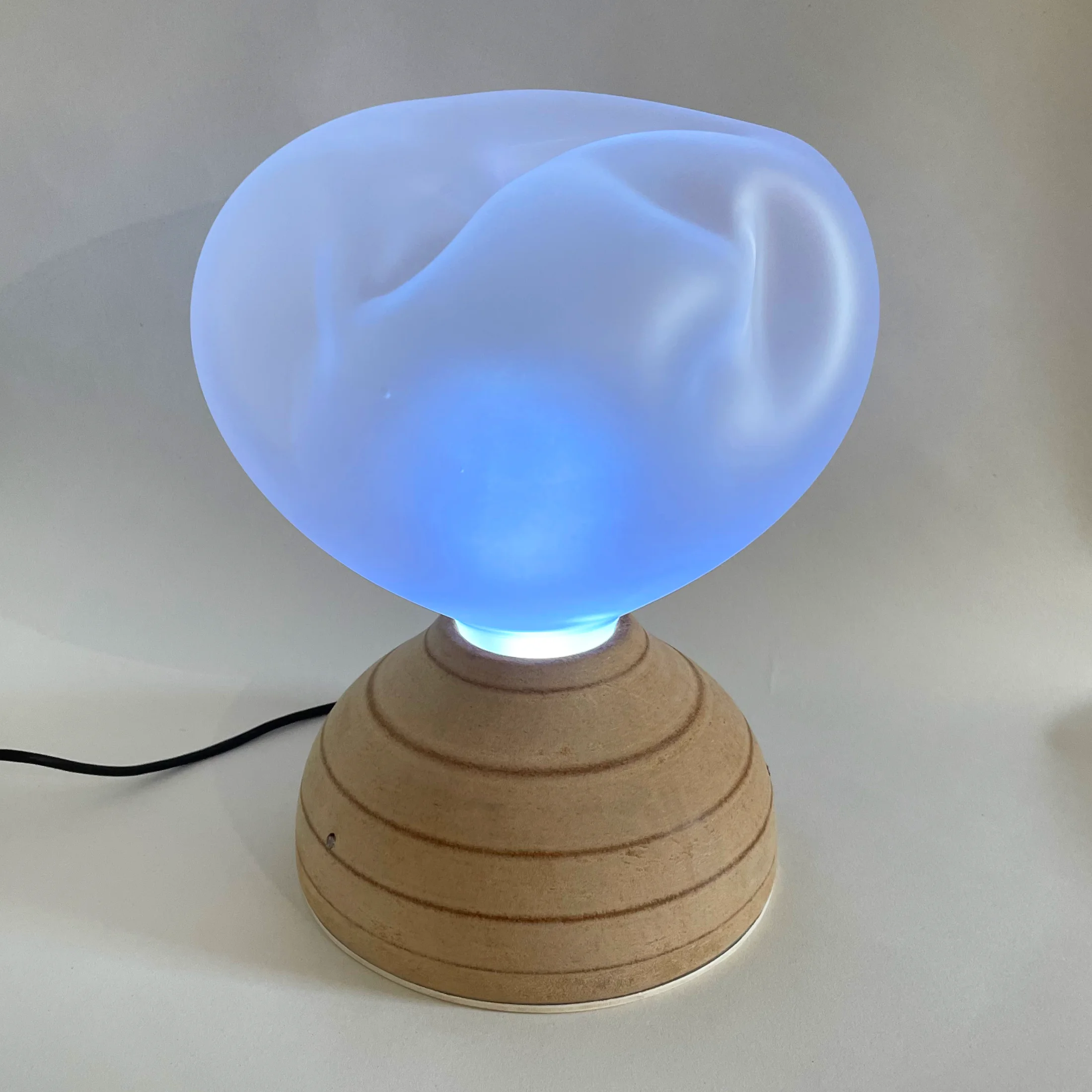
Ilia glowing blue during a breathing cycle on the wooden dome base
Breathing cycle, blue.
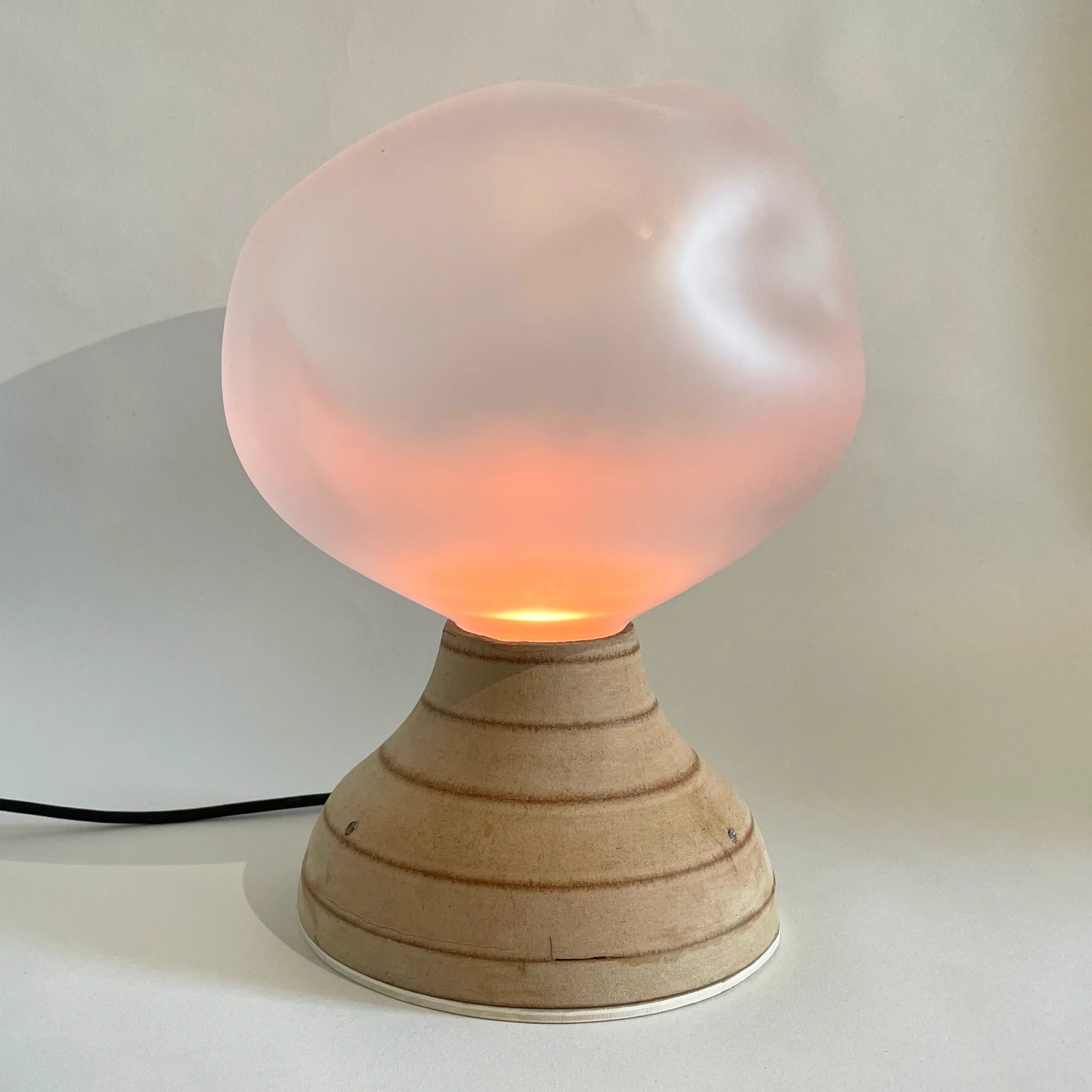
Ilia glowing soft pink-yellow during a breathing cycle
Breathing cycle, warm pink.
Detail of the side power switch tucked into the turned wooden base
Side switch on the wooden base.
Detail of the LDR light sensor embedded flush in the wooden base
LDR light sensor, embedded flush.
Demonstration video: both lamps in use, breathing cycle visible.