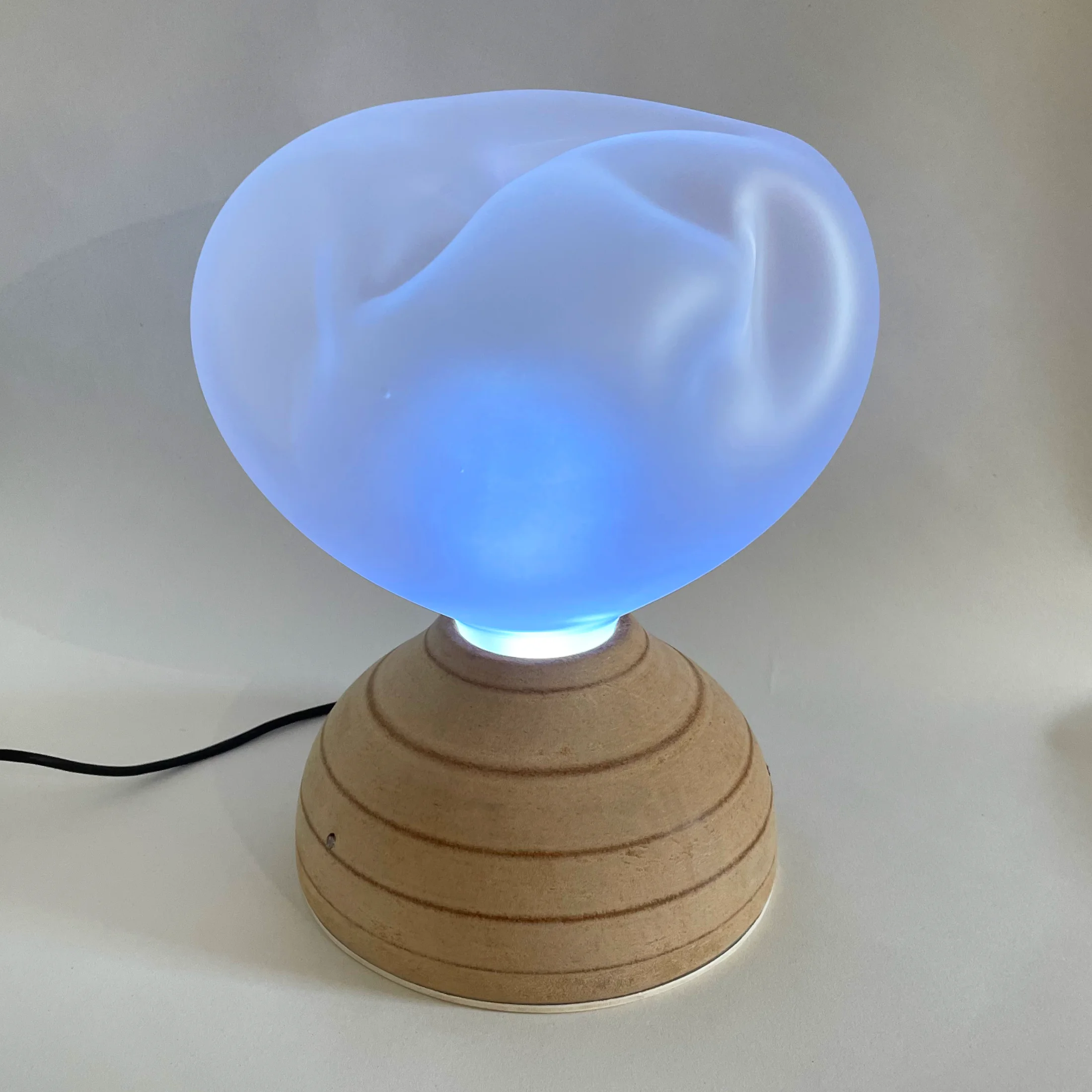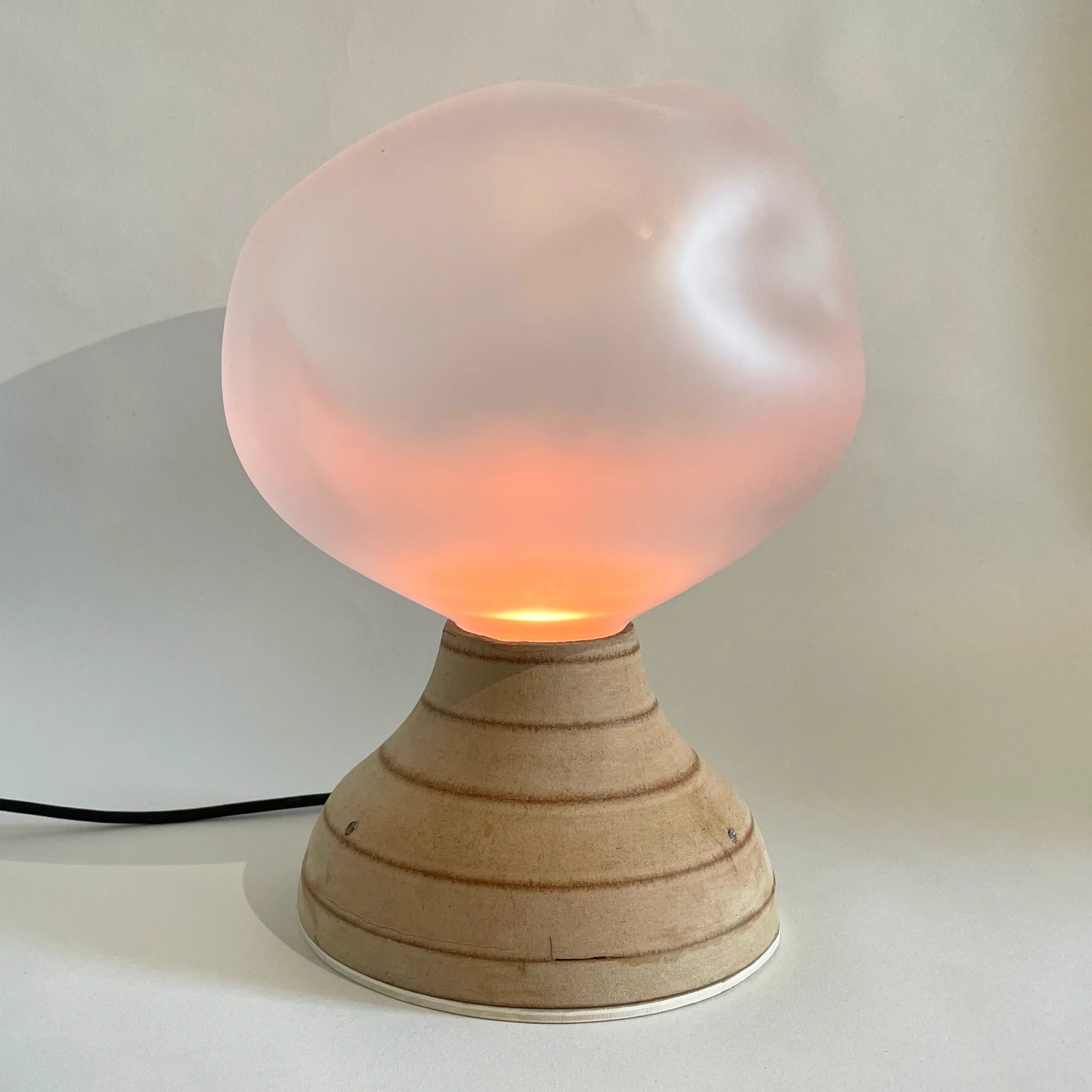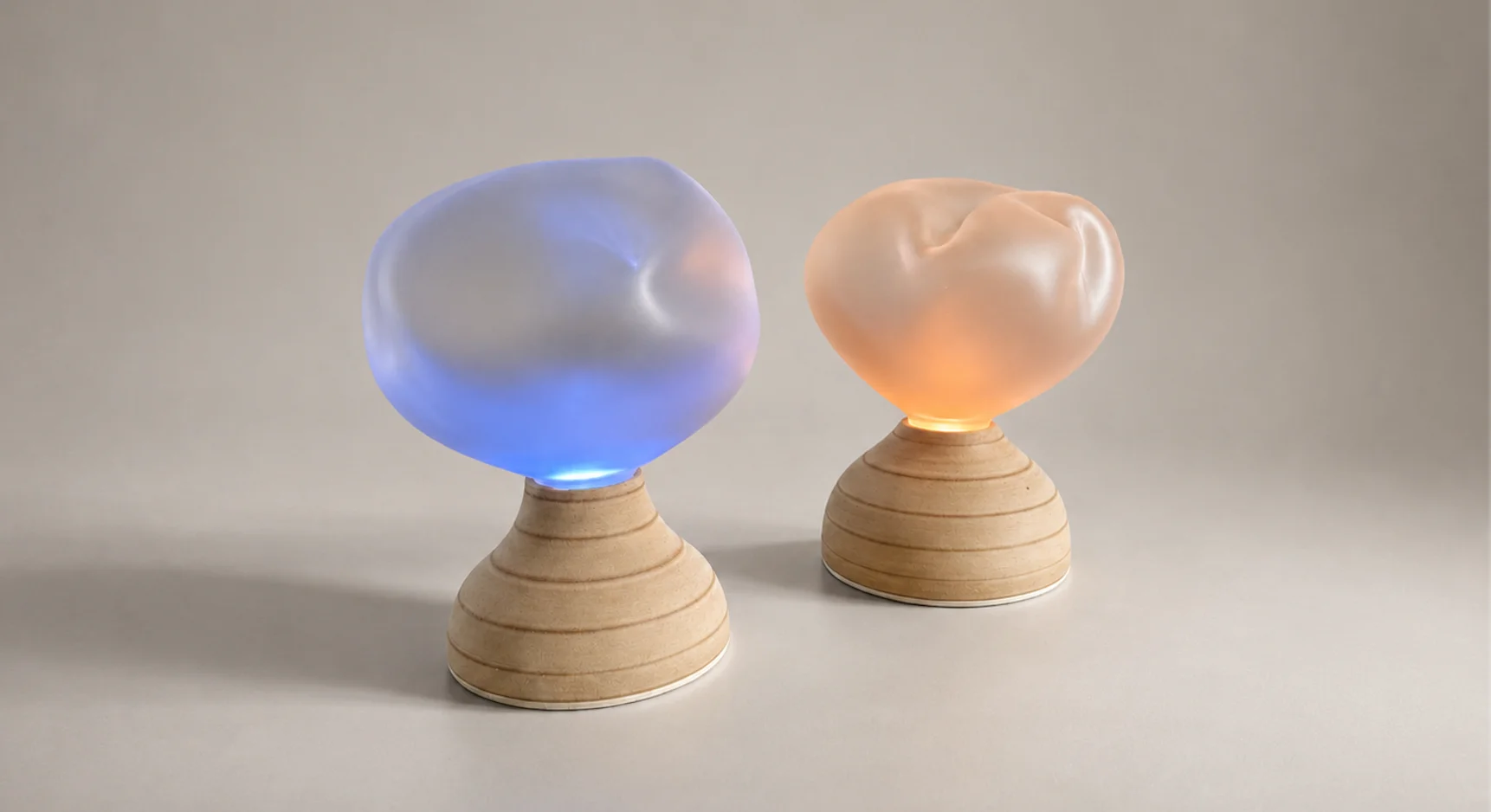
A wood-and-glass lamp that doubles as a guided breathing exercise. Hands on the base, and the light pulses to slow your breath: no app, no screen.
Anxiety is loudest at the desk. The funnel came from where anxiety shows up in young adults' lives, and the techniques that consistently top the list for managing it.
A broad start, sharpened by post-pandemic anxiety.
Gen Z is the most anxious generation on record.
Anxiety peaks while studying, and the desk is where it lands.
Breathing exercises rank top alongside physical exercise.
Ilia works like a normal desk lamp until you place your hands on its wooden base. Two modes let the user choose how much initiative it takes.
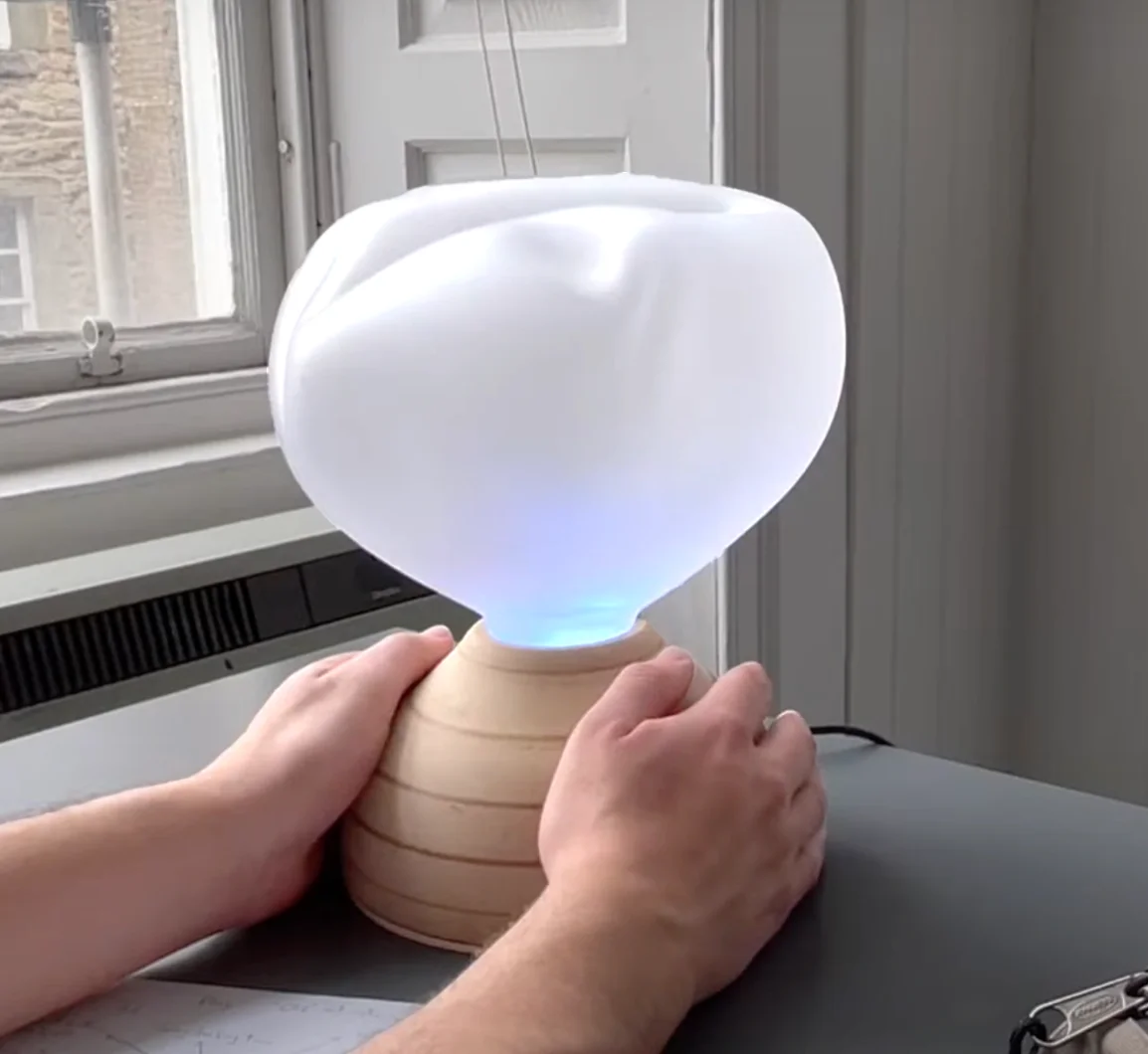
The lamp stays out of the way, available whenever wanted, never when not.
For users who already know when they need a break.Every two hours, the light turns blue and waits, resetting only after a full two-minute cycle.
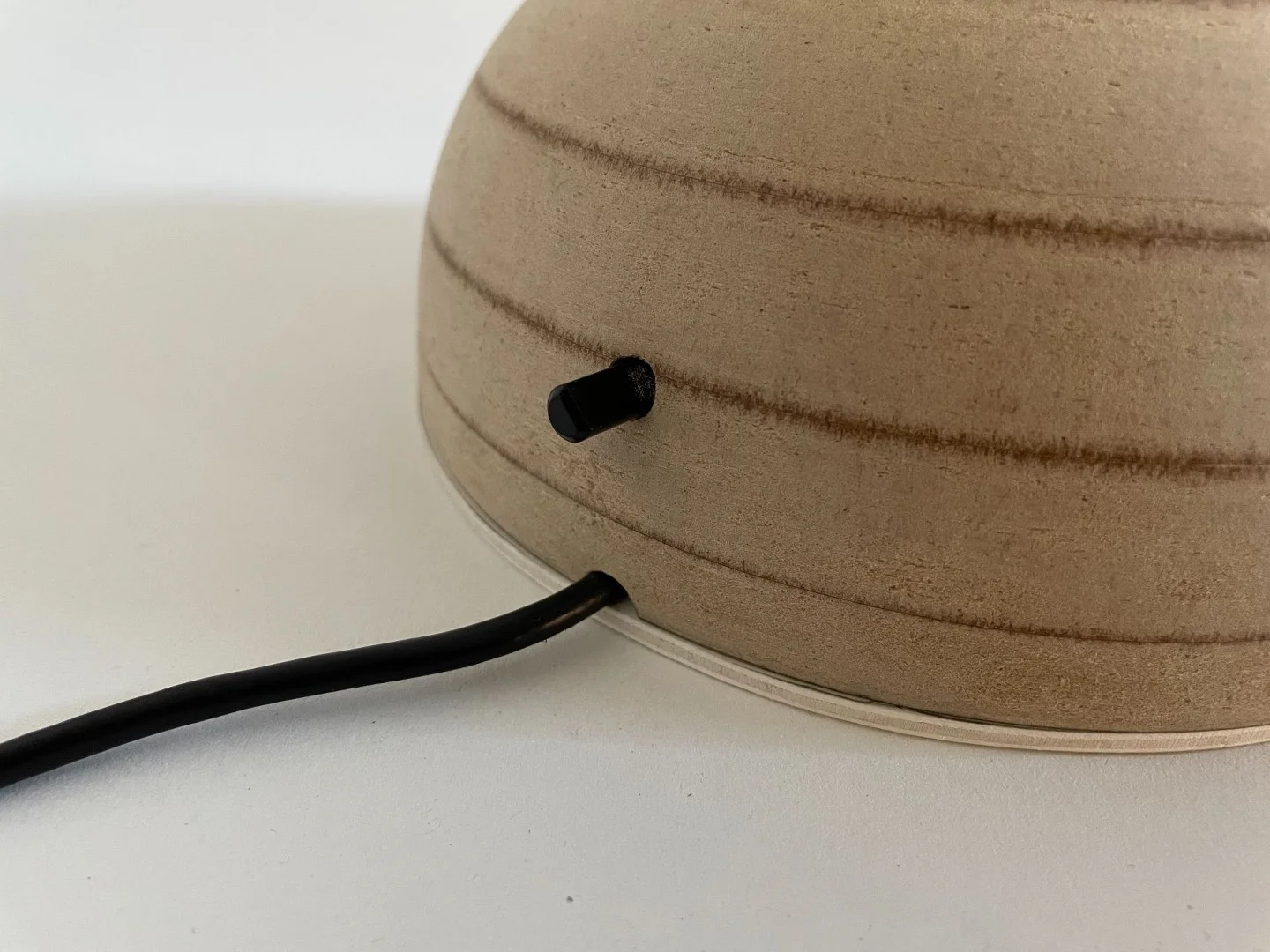
For users who lose track of time and would otherwise never stop.Switch modes with a rear potentiometer.
The form had to feel warm, calm, and tactile: something a stressed student would want on their desk.
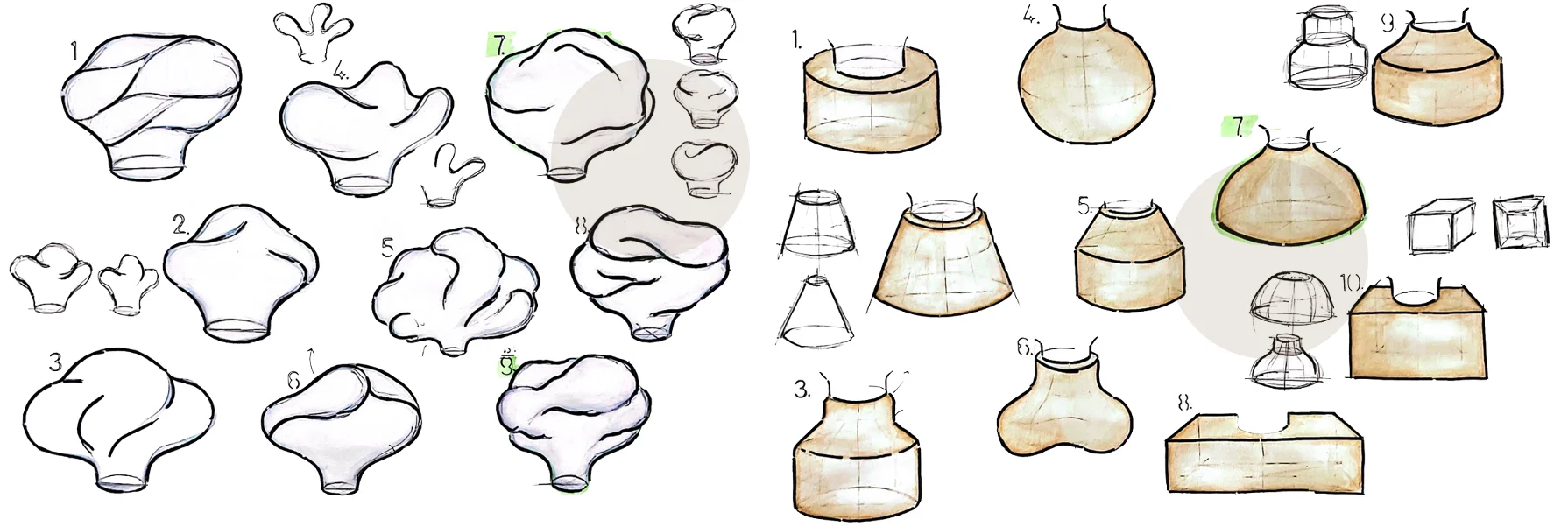
An organic, slightly random glass shape, not a perfect dome: calmer, more atmospheric.
The base is what users place their hands on. Wood invites contact in a way plastic or metal wouldn't.
Testing showed no single size worked for everyone. Both shipped, with slightly different necks.
Glass made first with Ingrid in the hot workshop, then cold-worked and sandblasted. Wood glued from MDF blocks, then turned on the lathe by technicians as we assisted.
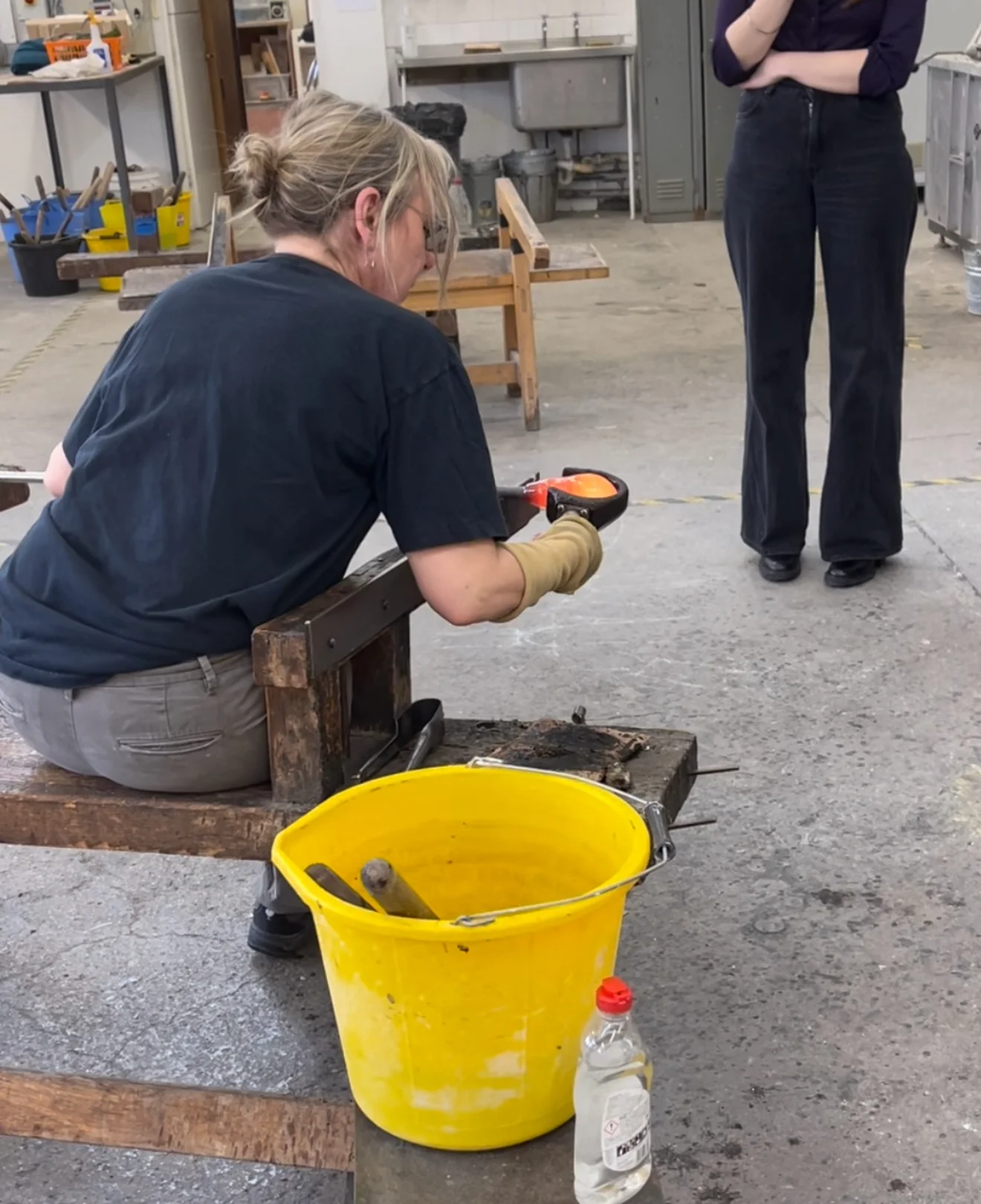
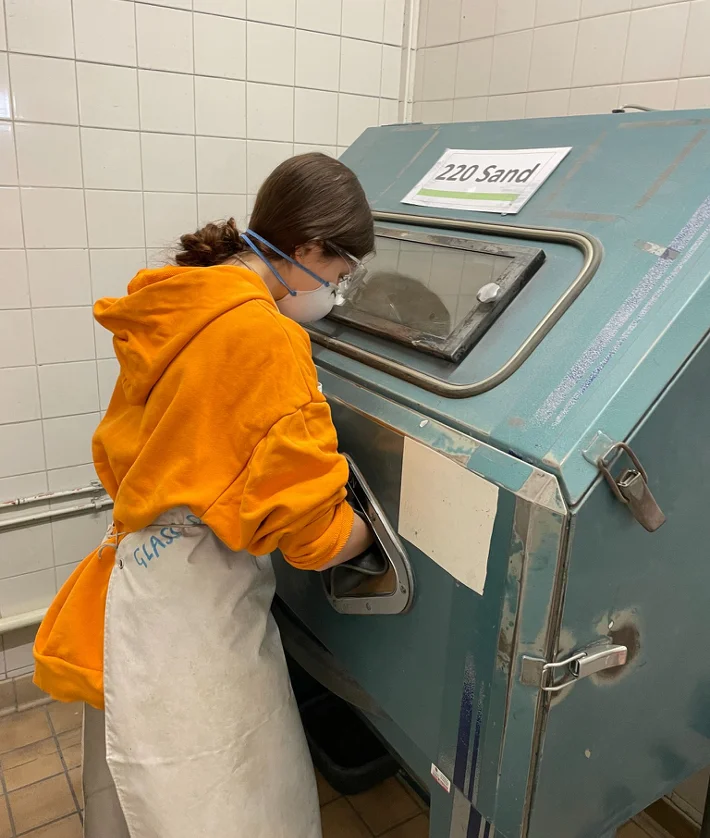
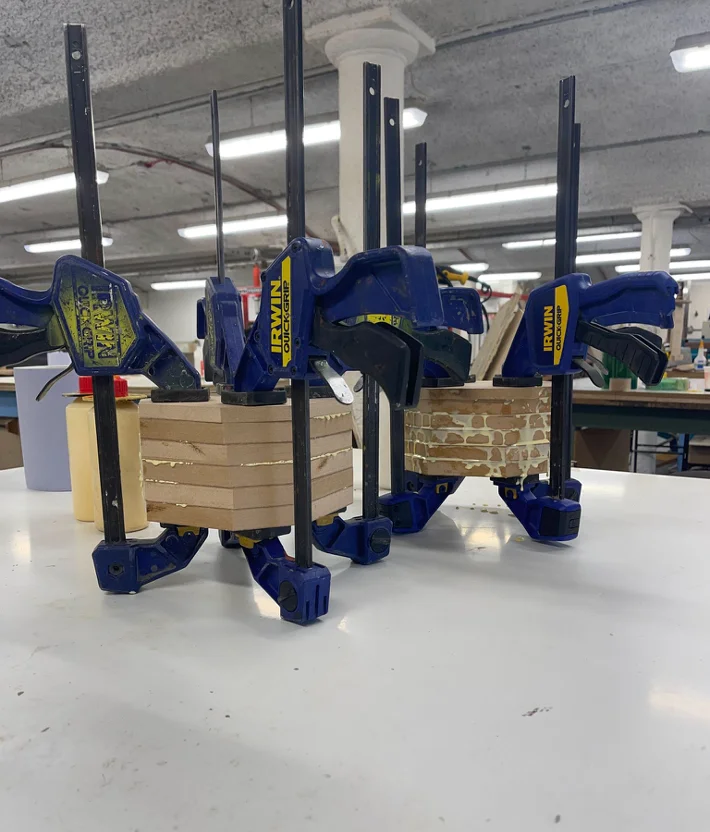
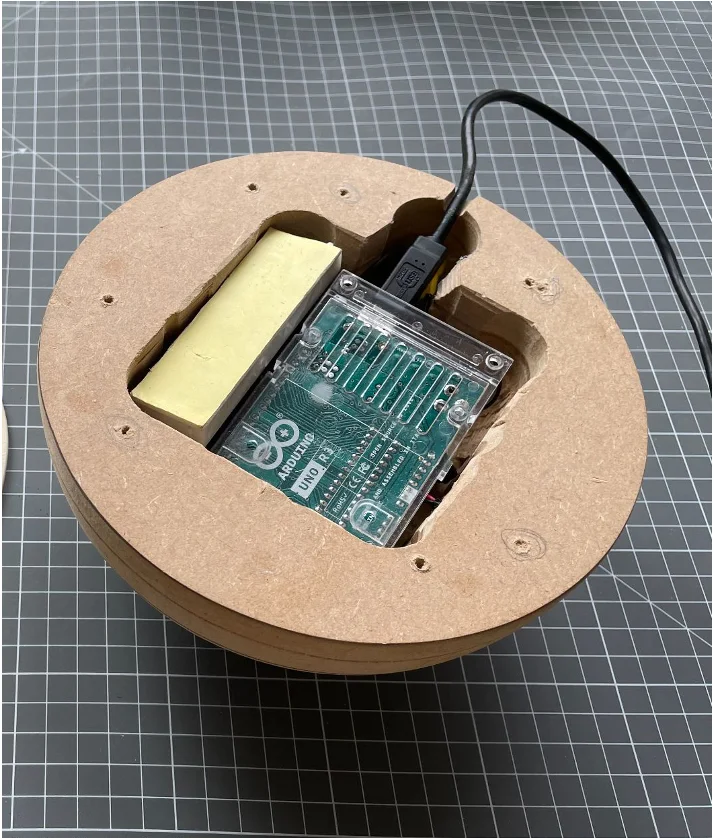
We made the glass first, then found it too small for the bases. The base couldn't shrink, it needed room for electronics. We remade four glasses with deeper creases, and picked the best two.
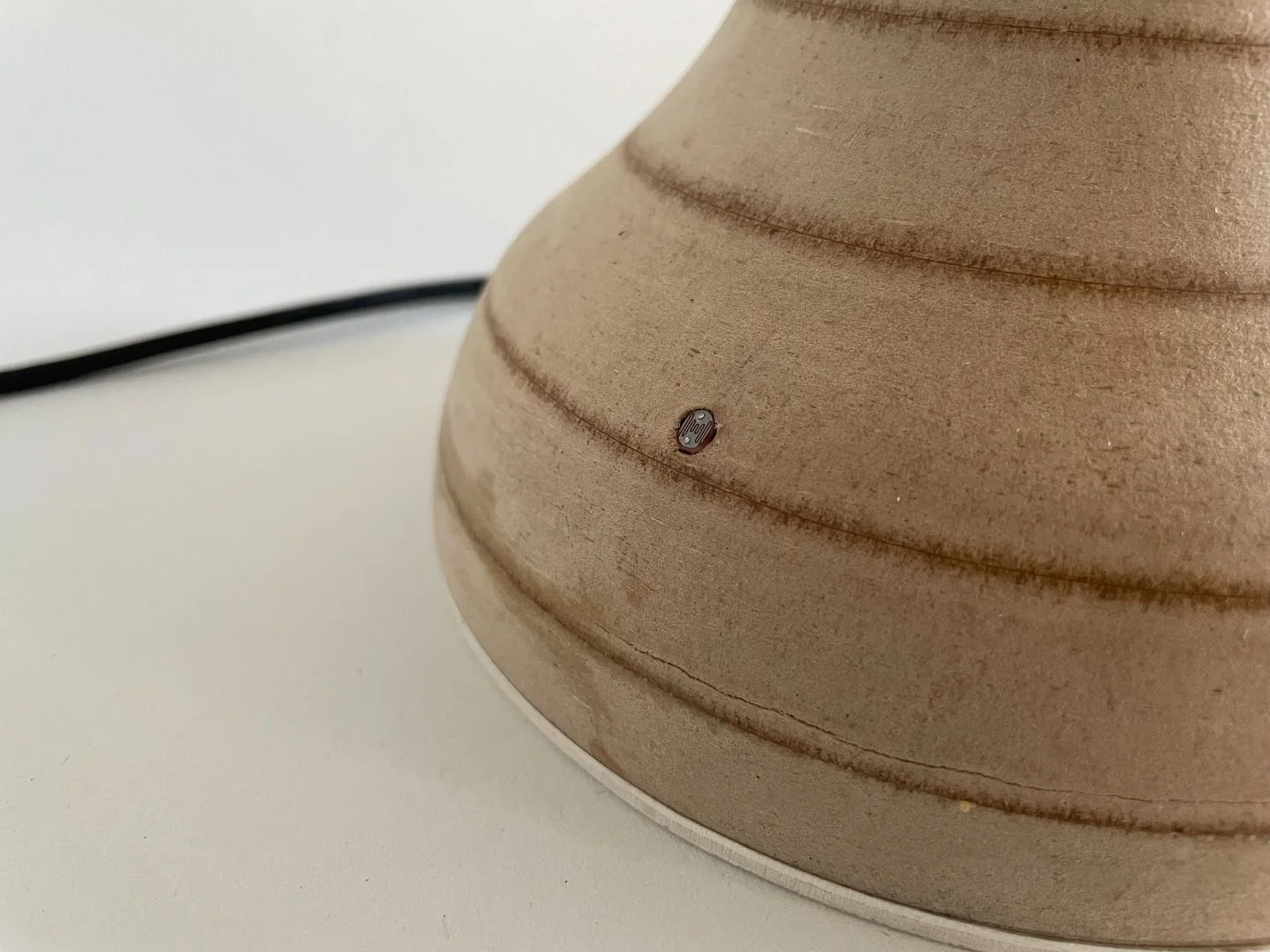
LDRs (light-dependent resistors) on the base detect hands covering them. Proximity and touch sensors were considered, but LDRs stayed discreet and the team had already coded with them.
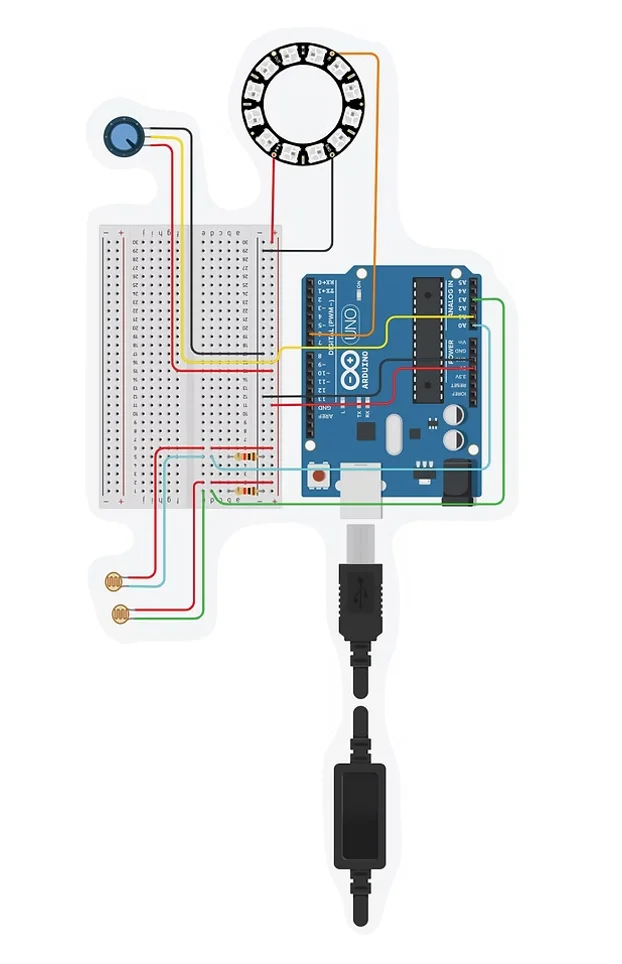
Runs the code, drives the NeoPixel animation, reads sensor input. Lives inside the hollowed base.
Soldered to wire extensions on opposite sides. When hands cover both, ambient light drops and the cycle starts.
An 8-pixel ring in the glass diffuser: yellow default glow, soft pulsing blue during a cycle.
Located at the back. Switches between Free and Timed.
A USB inline switch cuts power directly, simpler than a soft on/off and saves power when idle.
Pulsing the LED smoothly needed a sine function, beyond what we'd learned. Our tutor Matthew helped with the maths so the animation actually breathed, not stepped.
Quick studio sessions with first-time users, then a longer context test: one student, one full day at her desk.
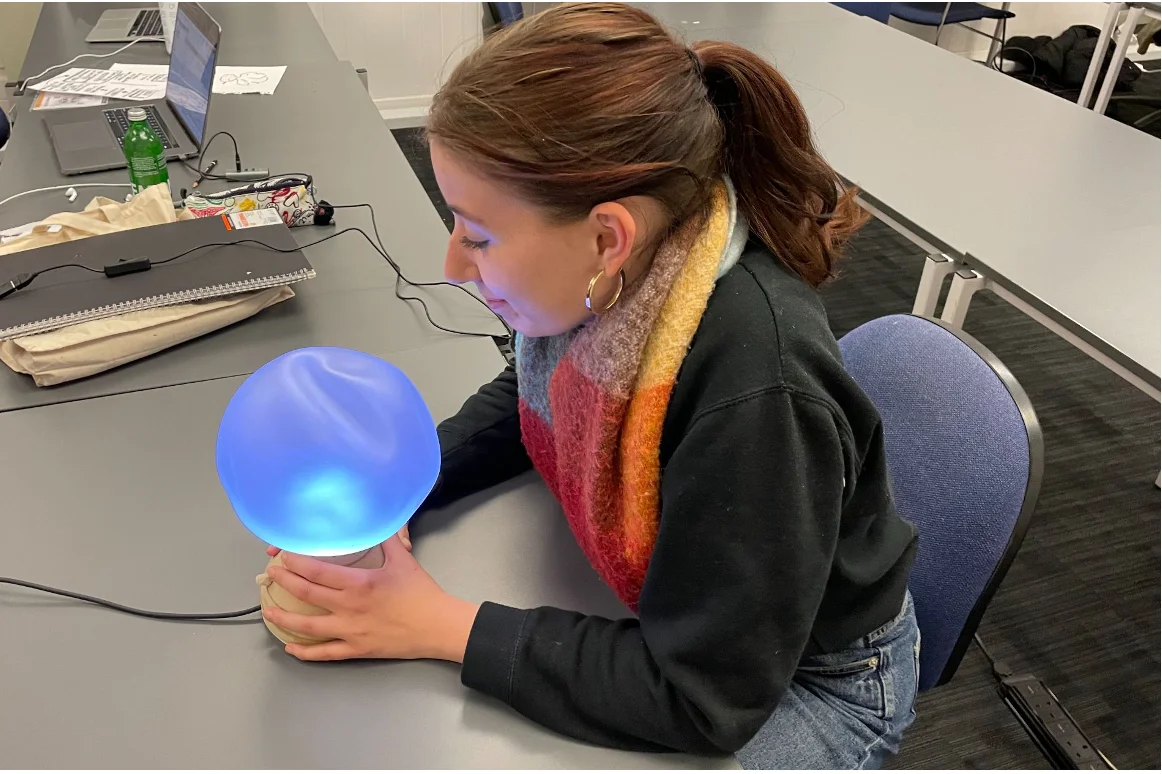
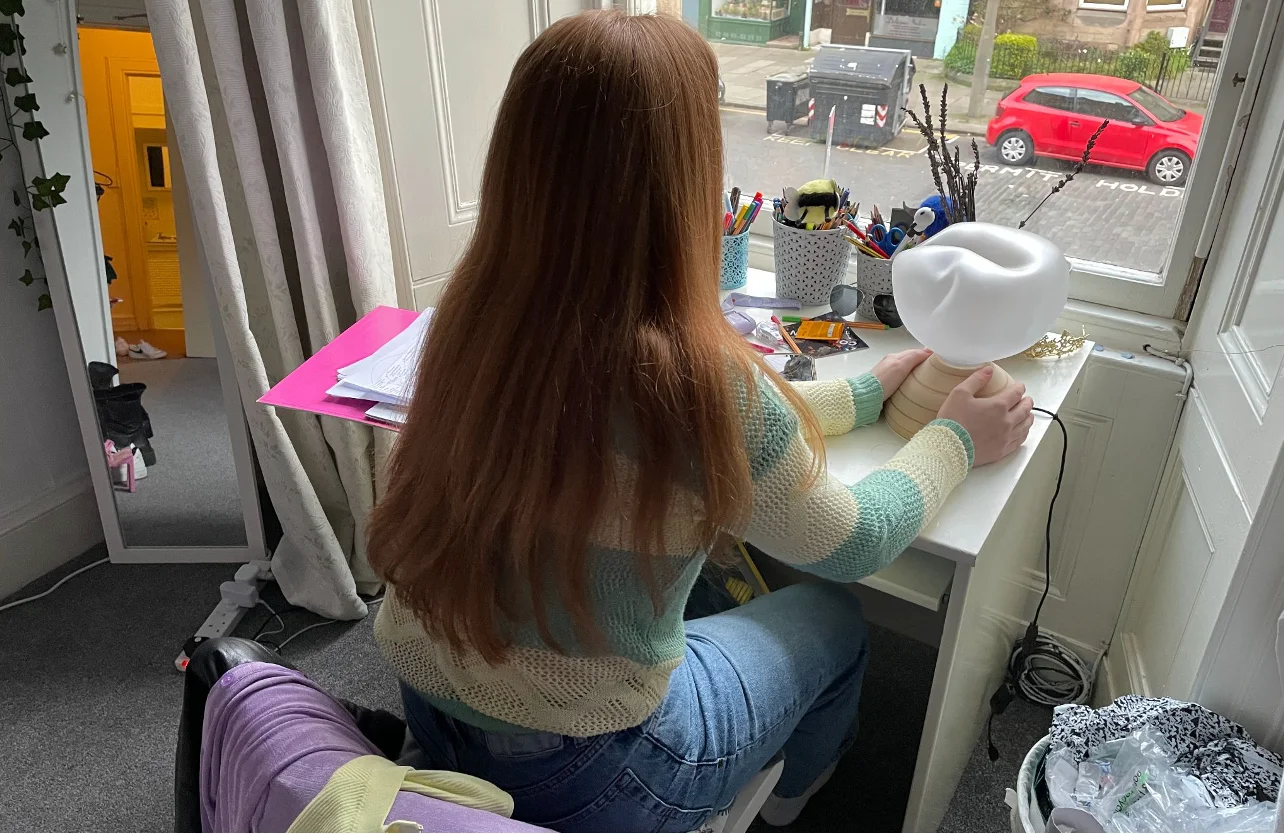
Intuitive without instructions: "the right balance between interesting and basic enough to fit my space."
The two-size split resolved naturally: bigger hands, bigger base. Two right sizes, not one ideal.
No markings around the potentiometer made mode-switching unclear. Easy fix: an engraved knob.
One tester with severe anxiety noted continuous touch could trigger sensory overload, a real question for contact-required interactions.