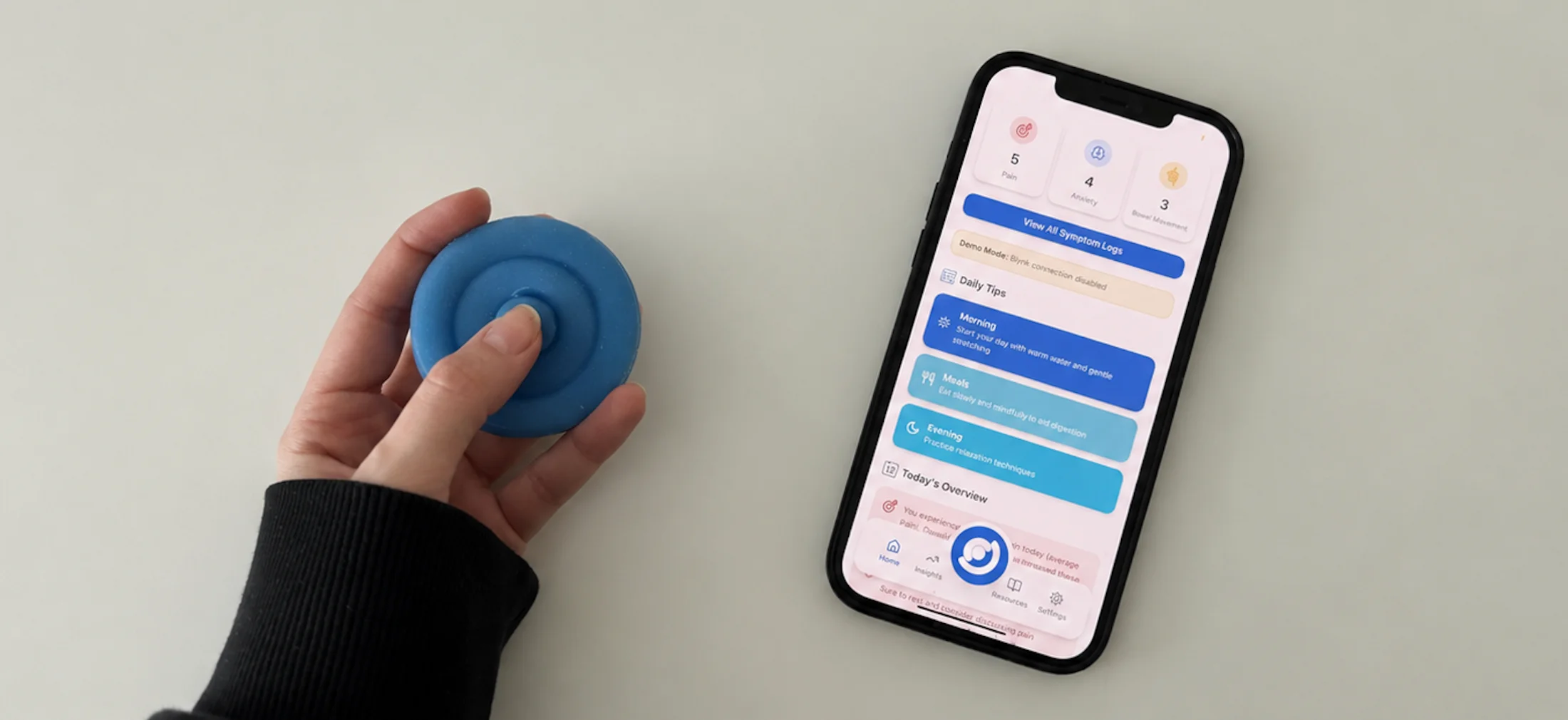
A pocketable IoT device and app that lets people with chronic GI conditions log symptoms in seconds, screen-free.
Existing apps demand constant logging, feeding the anxiety that, through the gut-brain axis, worsens the very symptoms they track.
"Existing solutions need too much effort, more stress than relief."Patient interview · 2024
Gastroenterologists, at project start and mid-development.
Day-mapping surfaced the cycle, and the cost of current tools.
Diary study across three leading GI apps.
"People need a fast, low-stress way to capture experience."Design insight · synthesised from research
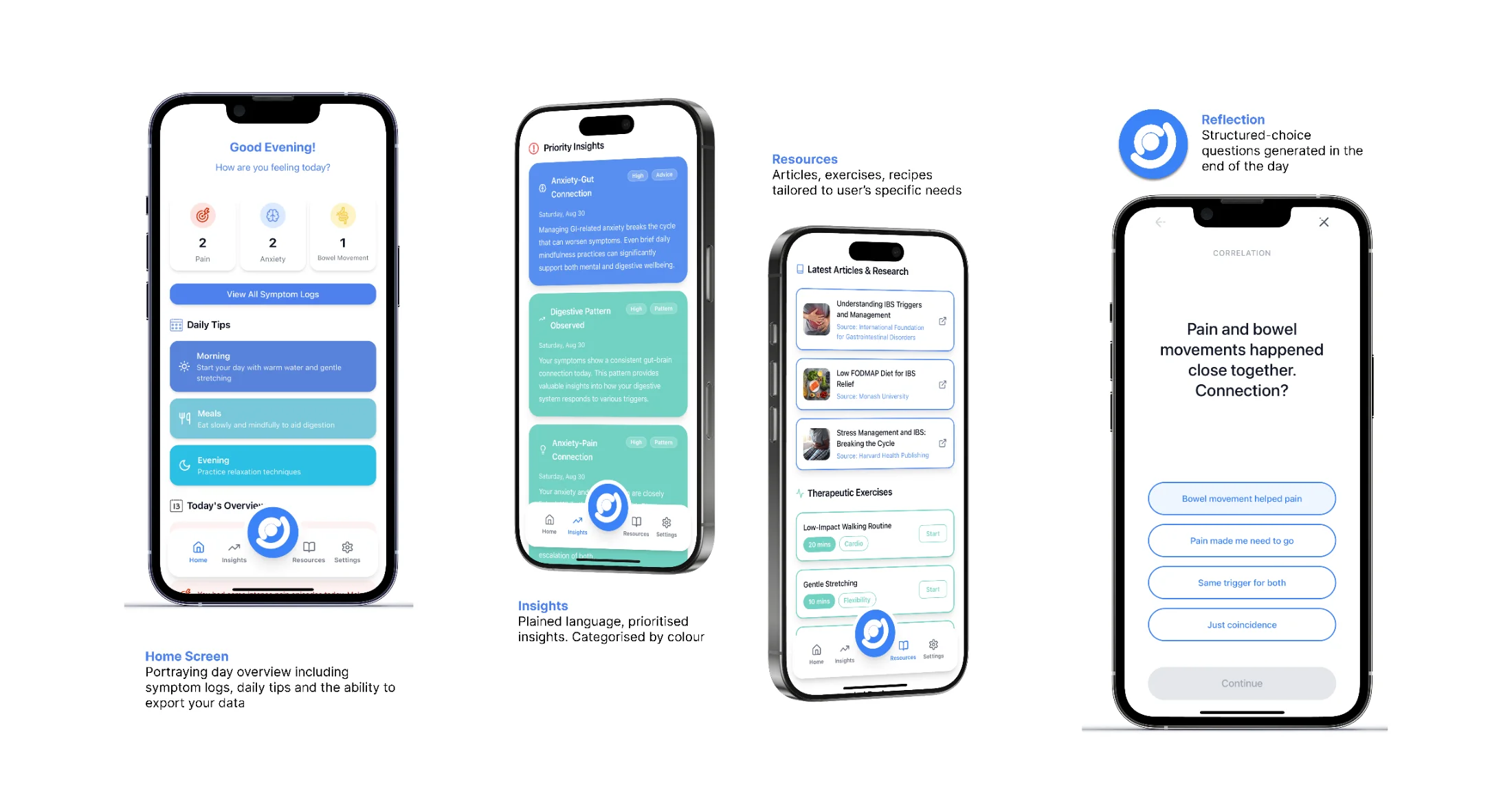
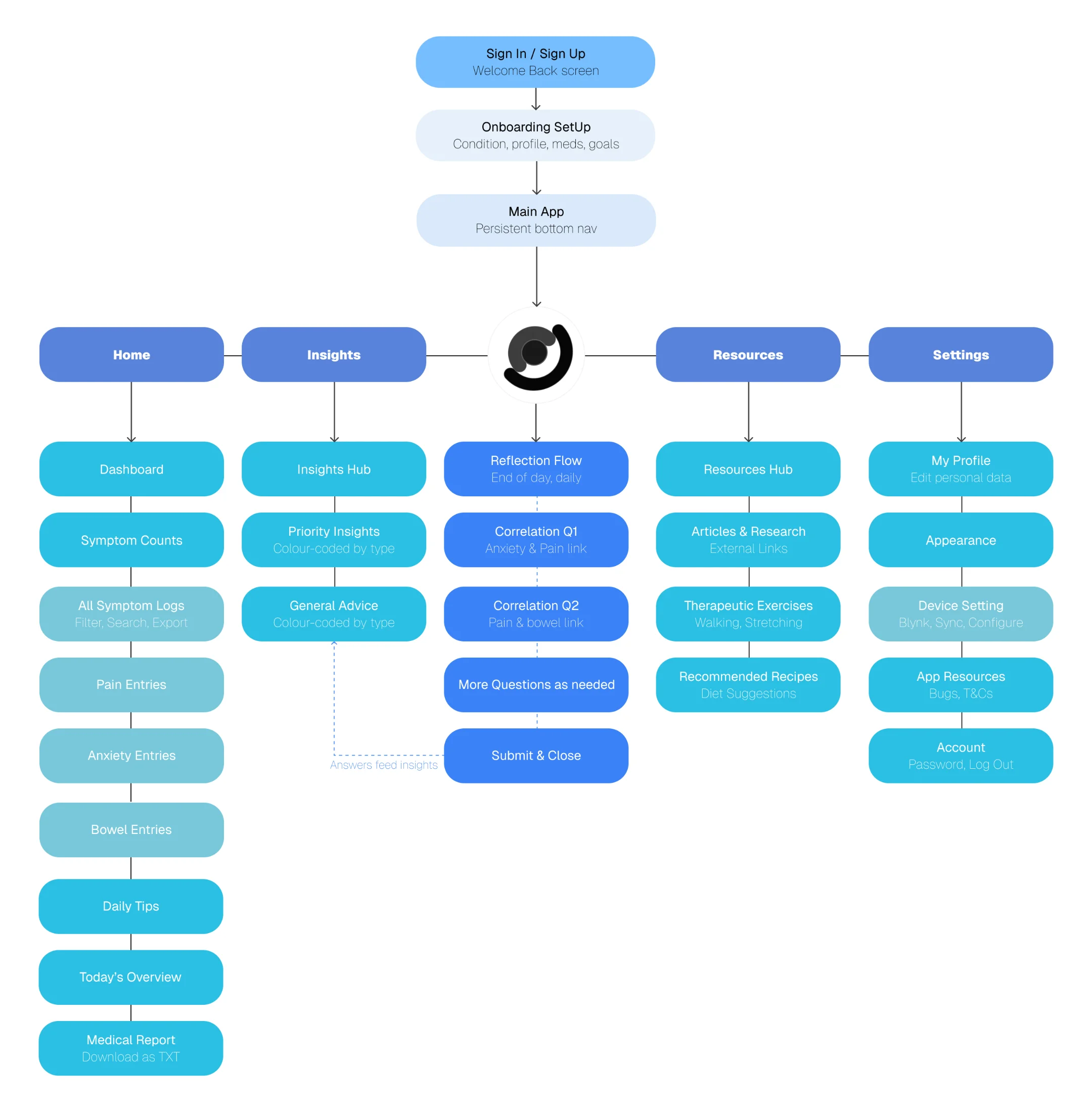
Four moments, two on the device, two in the app. The hand-off between them is the design.
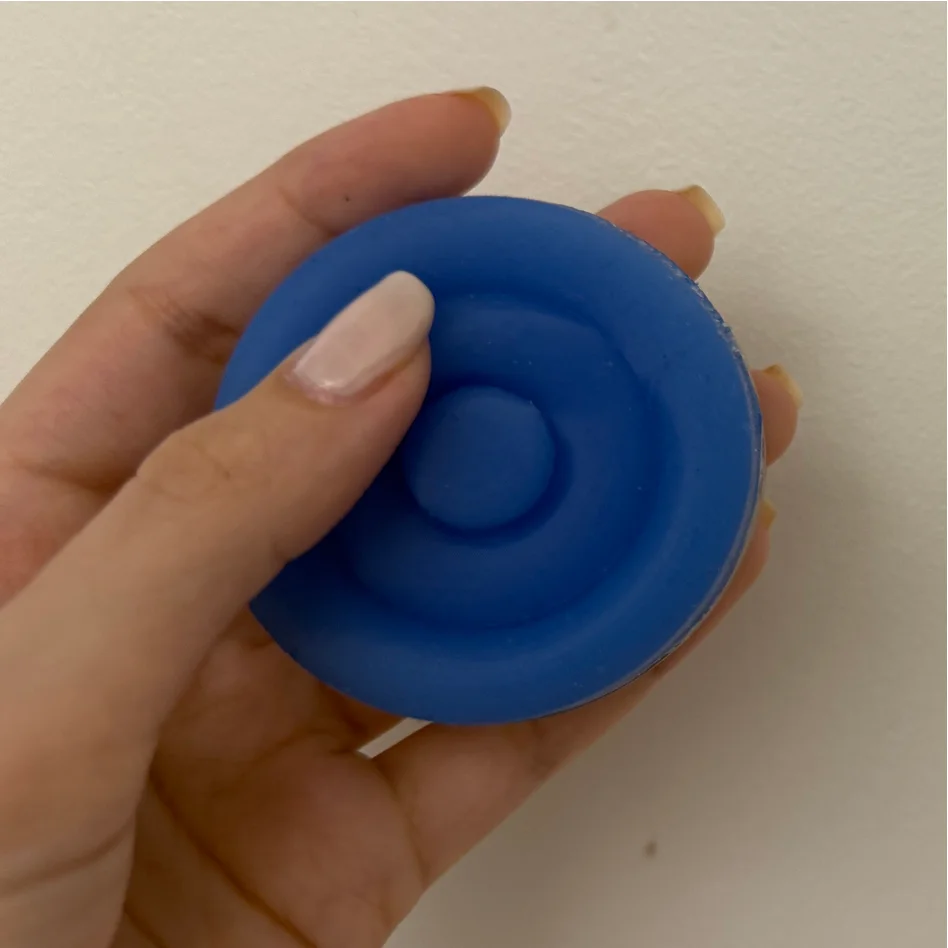
Pain, anxiety, or bowel in seconds, without opening anything.
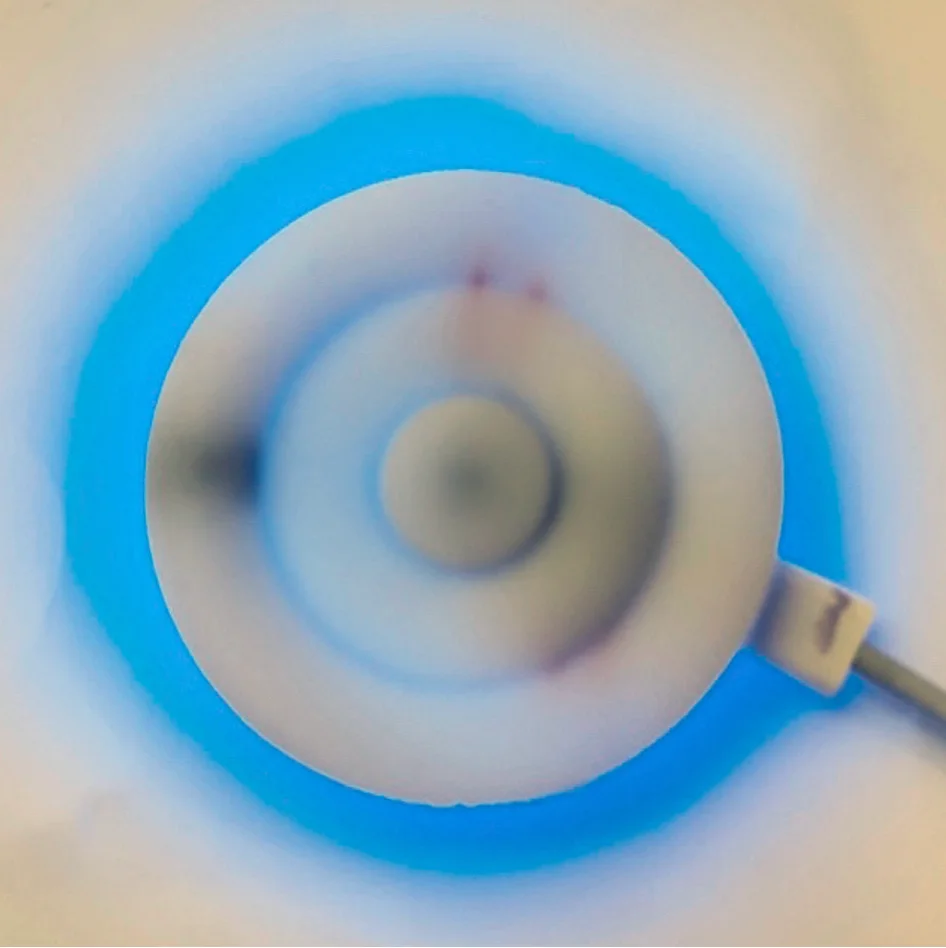
Press anxiety and the device pulses a 5s inhale / 5s exhale before logging.
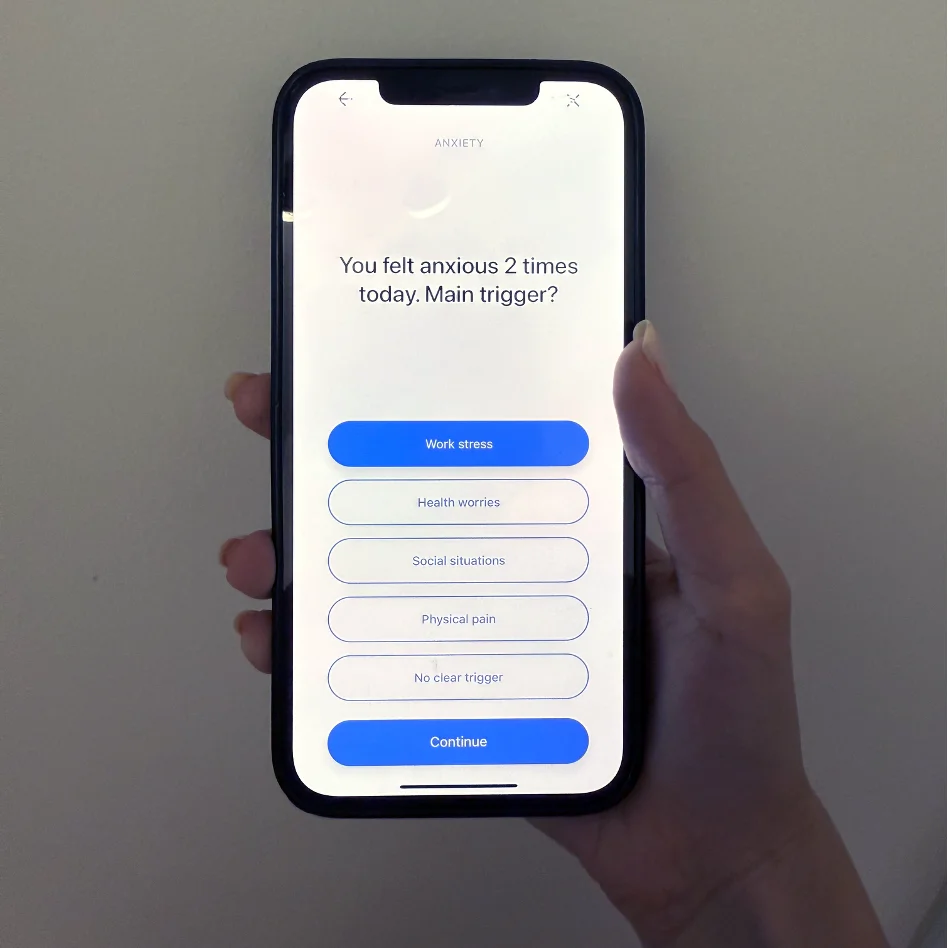
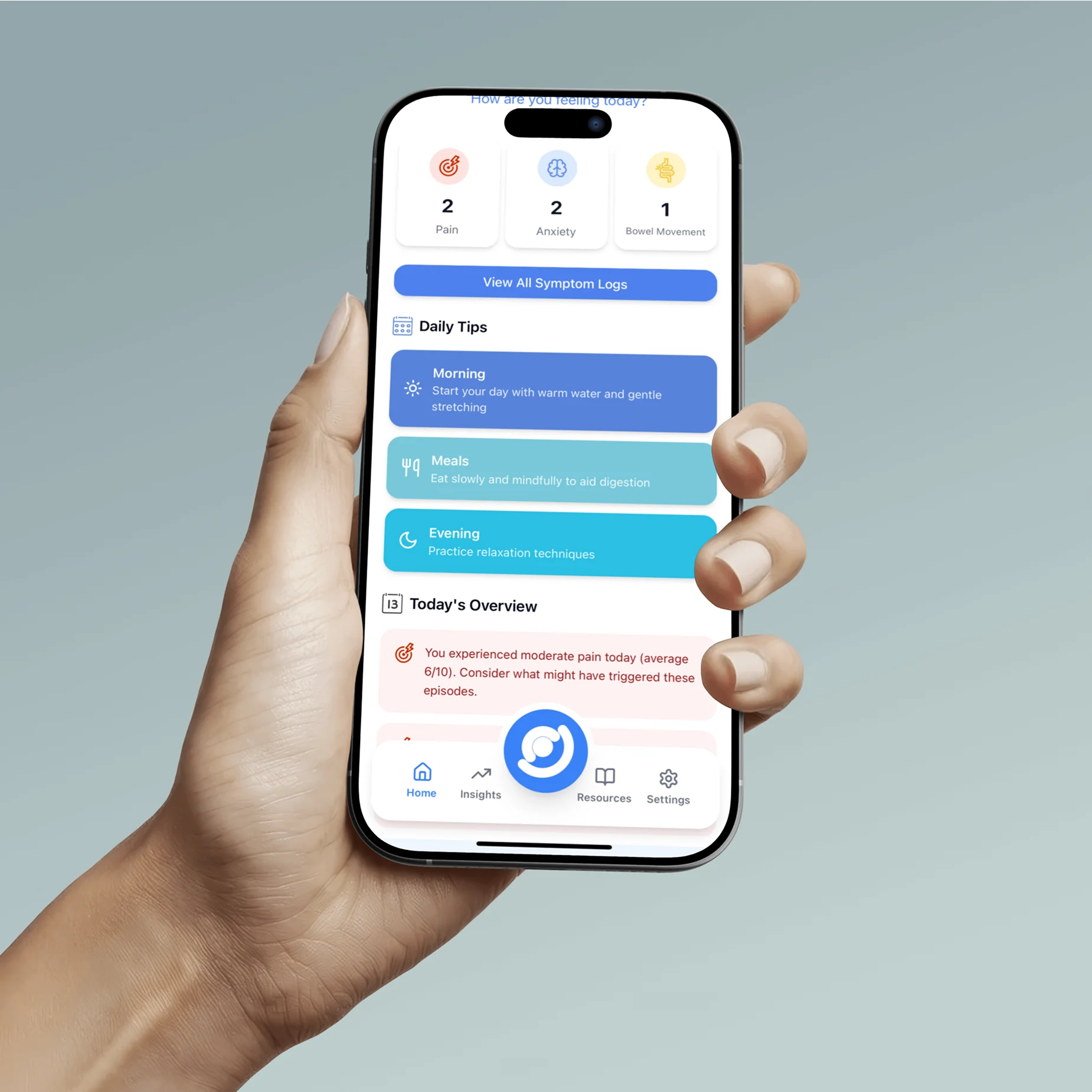
One end-of-day question, generated from what was logged.
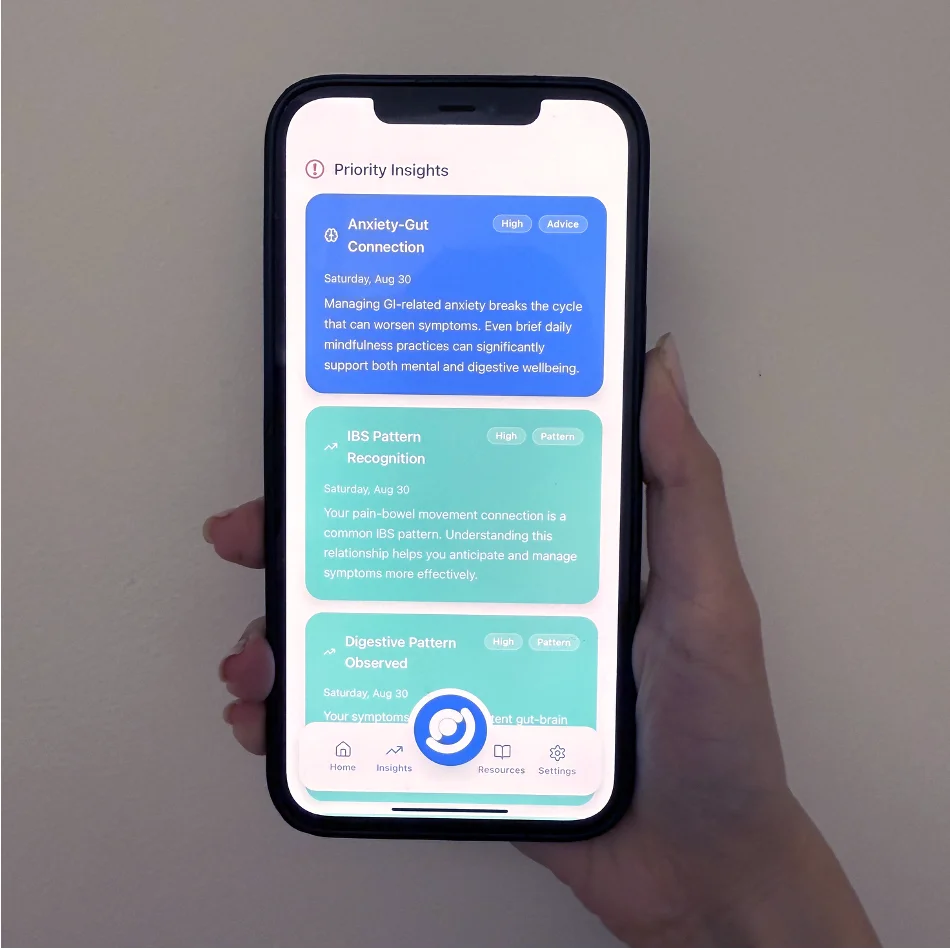
Patterns surfaced as plain-English insights. No charts, no jargon.
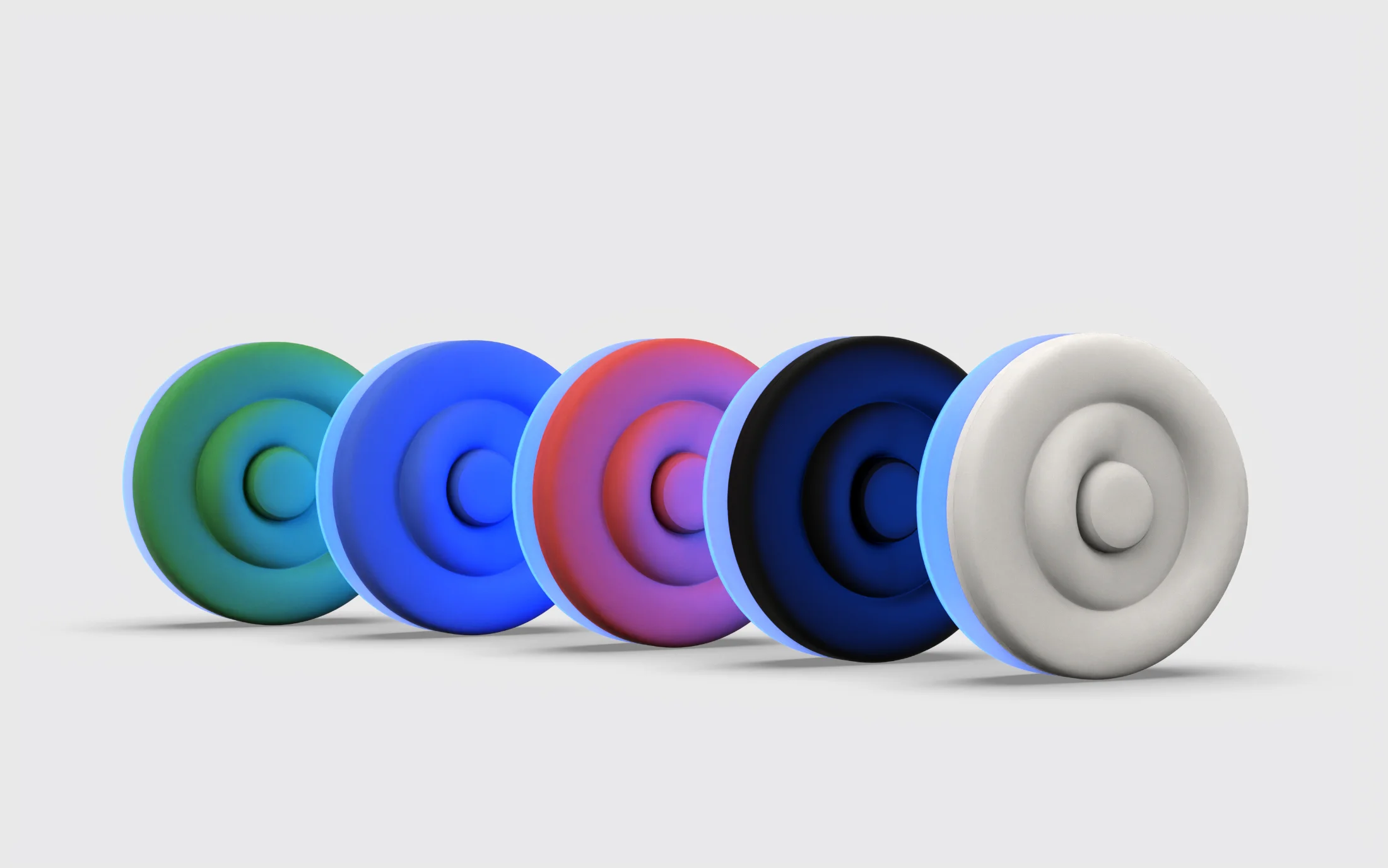
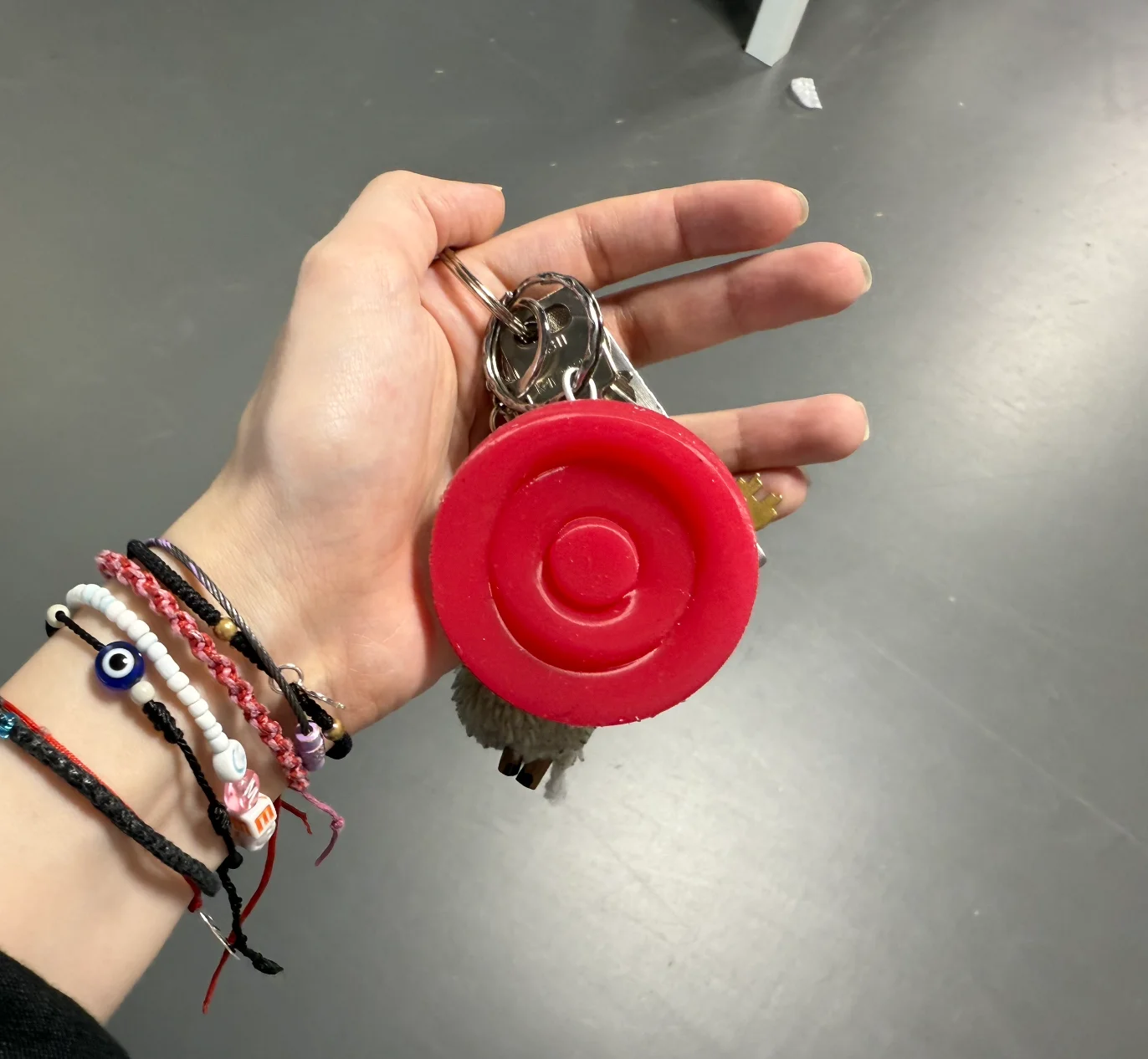
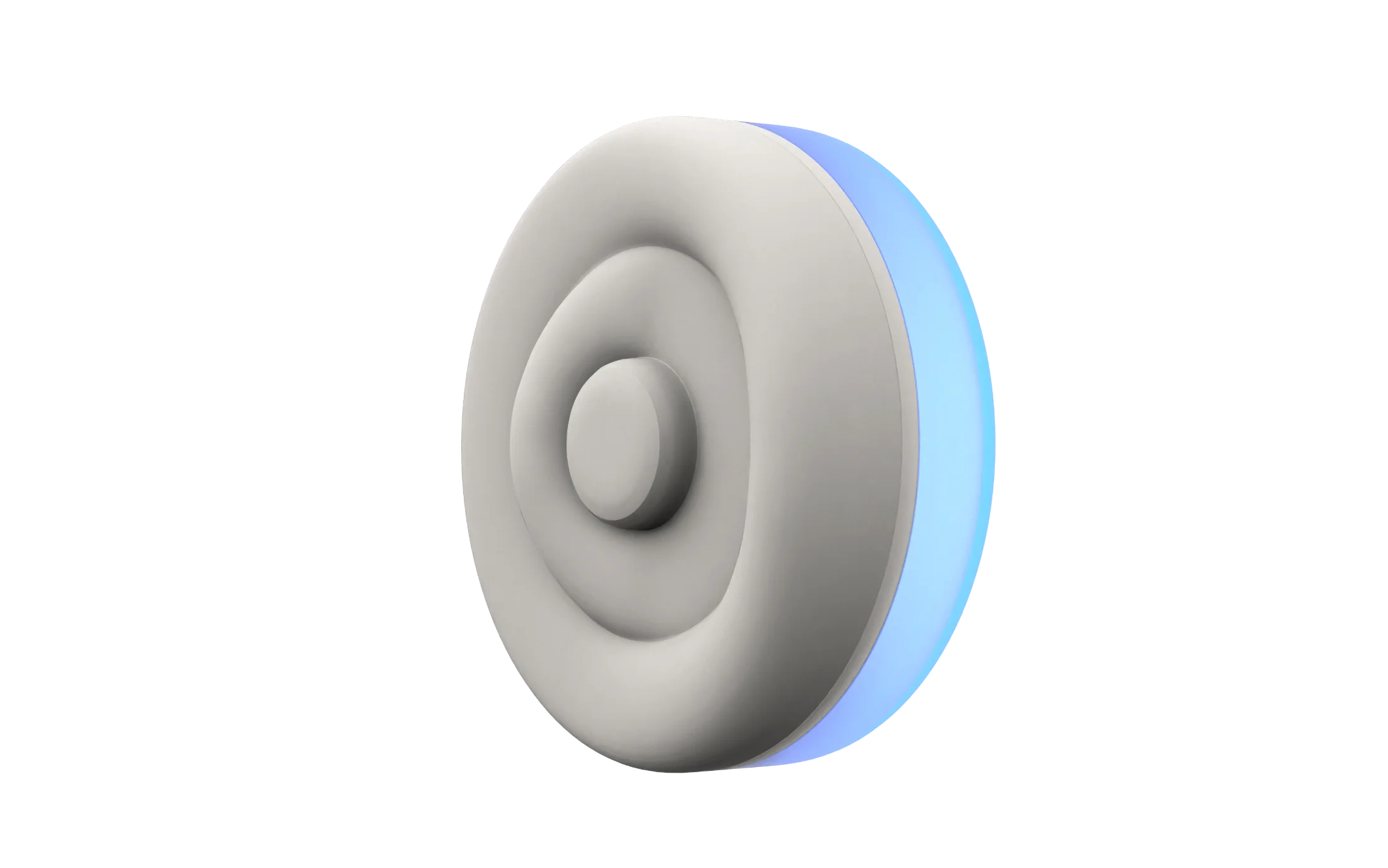
A pocketable, tactile object for seconds-long capture, without screens.
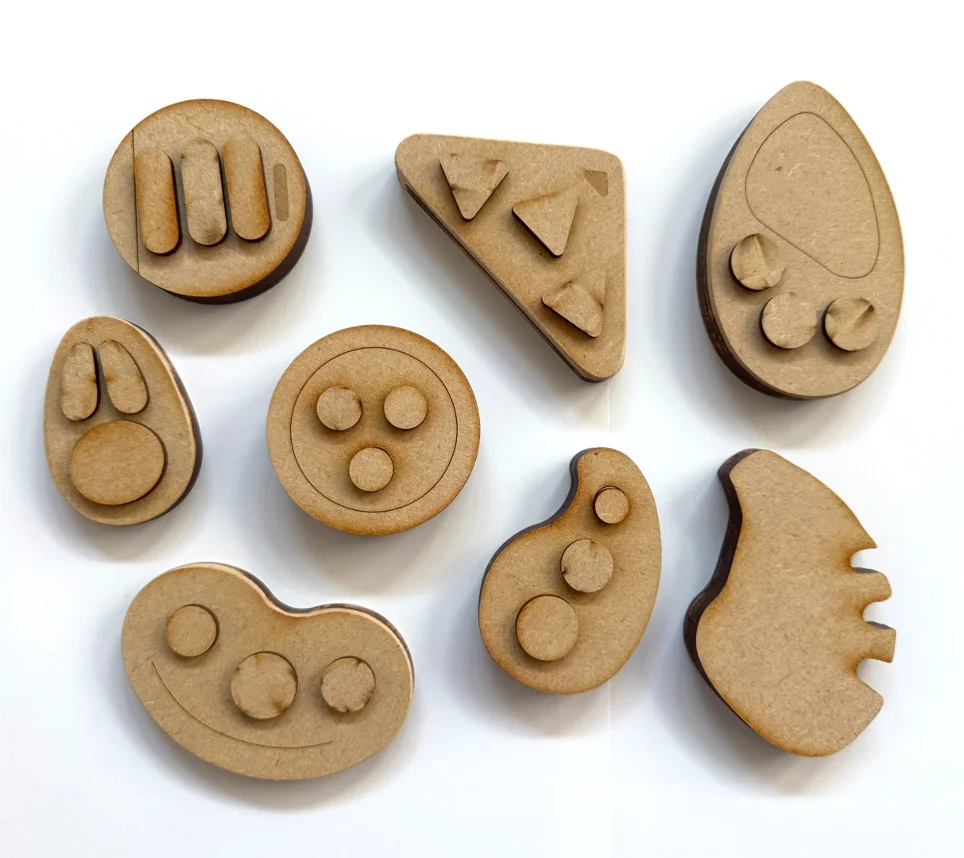
Users loved squeezing fabric, but couldn't trust an input had registered. The data corrupted itself.
Three gestures to log three symptoms: tactile, but unreadable to the device.
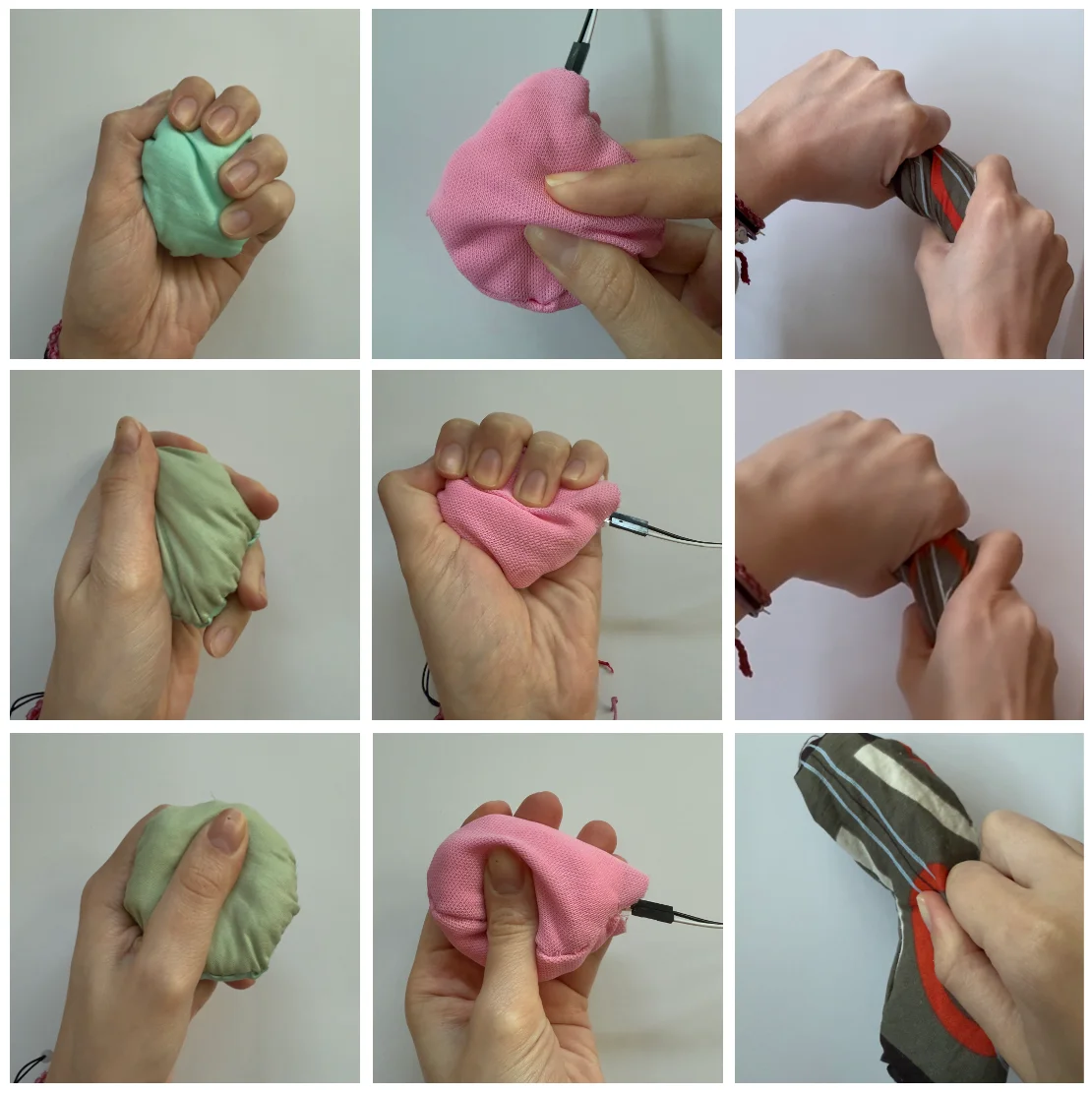 didn't work
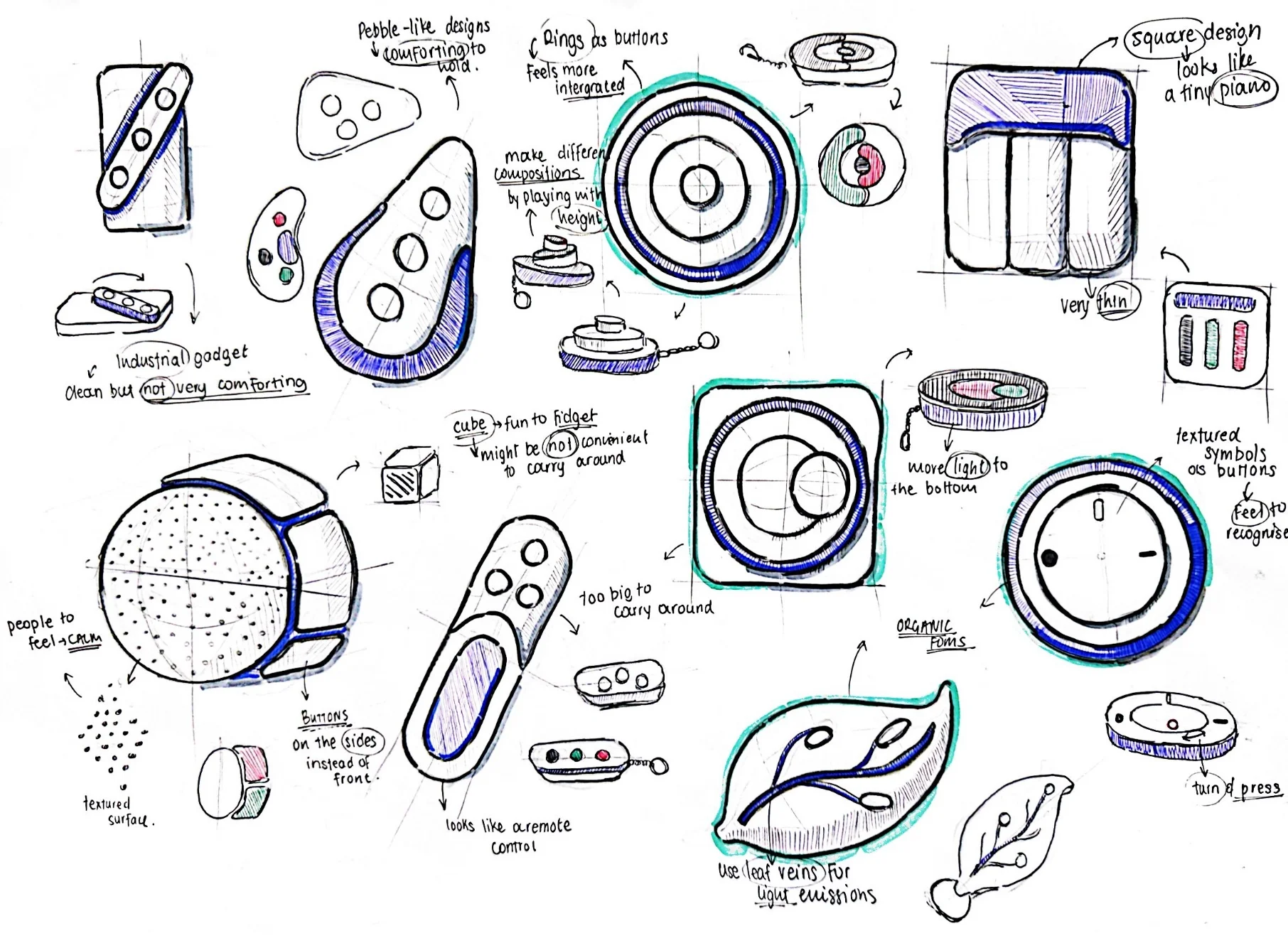
Buttons confirm instantly. The ring layout makes each one findable by touch, from a pocket.
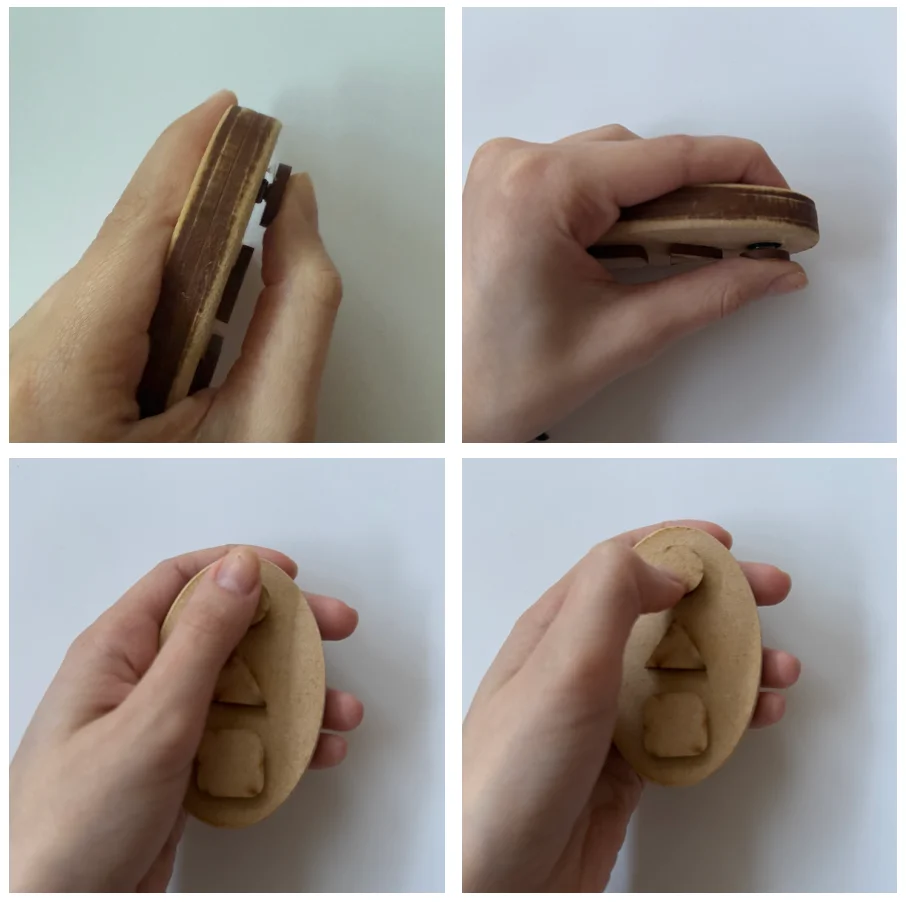
Pain, anxiety, bowel: spontaneous, identifiable in the moment, the visible surface of deeper patterns. Enough for targeted questions, with no form to fill in.
"Capture the minimum data that allows meaningful questions at end of day."
Short press = mild, long press = severe.
Triggers a blue breathing pulse, 5s inhale / 5s exhale.
Press duration differentiates normal, loose, and hard movements.
A calm object that lives in a pocket, presses without looking, feels nothing like a screen.
Three microcontrollers in, the SparkFun Qwiic Pocket fit the 60 mm form with Wi-Fi. Runs on a 1200 mAh LiPo over Blynk IoT.
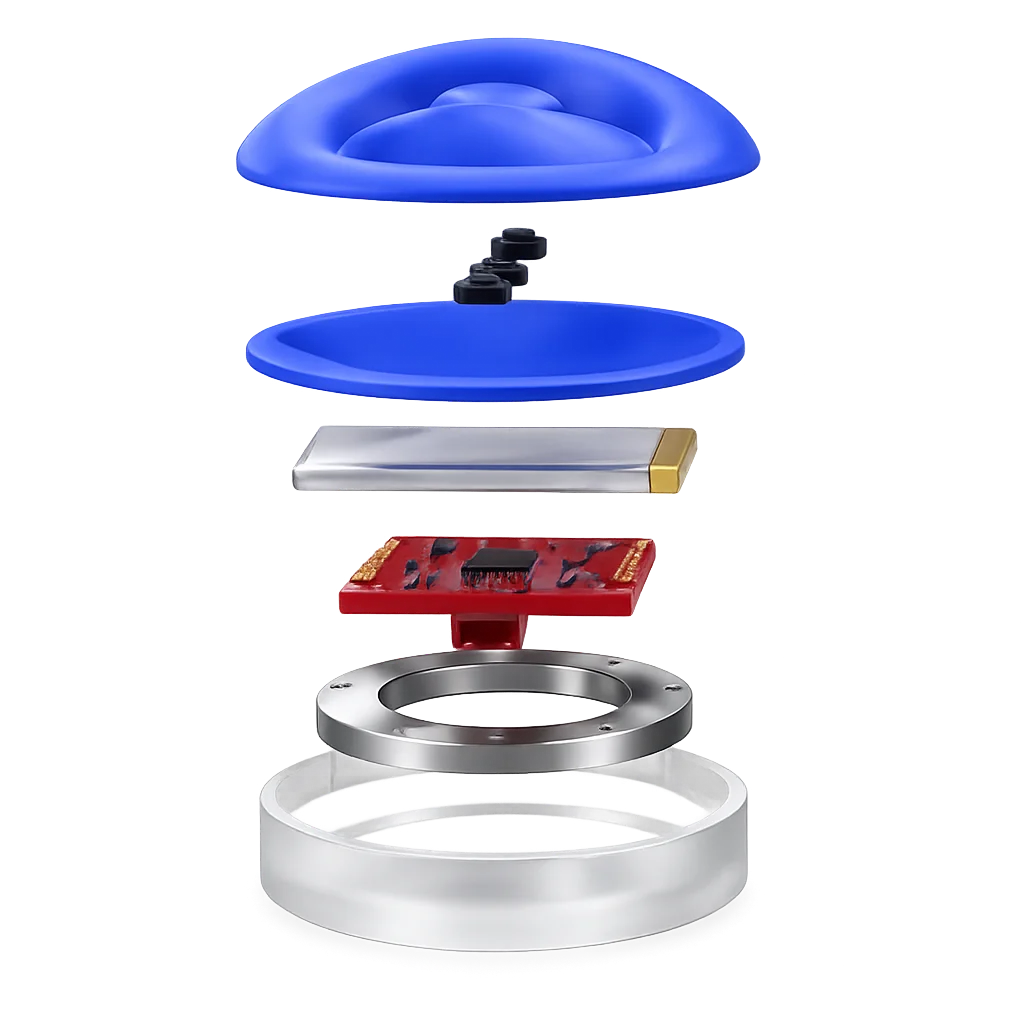
Two-part cast silicone over a PLA stiffener, skin-safe and water-resistant.
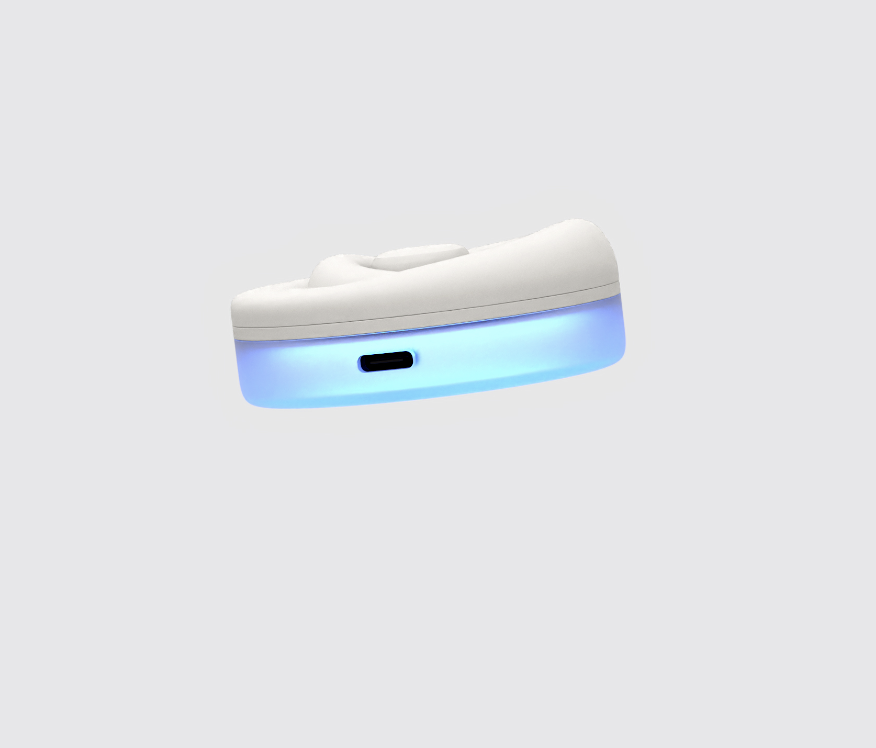
Connected via 2-pin JST; charges through USB-C in the SLA base.
The smallest Wi-Fi board tried, after M5StickC Plus and Arduino Nano 33 IoT.
12 LEDs pulse blue for anxiety and confirm every press.
Each press pushes as an event to the app via auth token; a demo mode bypasses the cloud.
PLA and SLA move to injection-moulded polypropylene in production, on a custom PCB.
What a pocket object can't carry: reflection, history, a trail for the doctor.
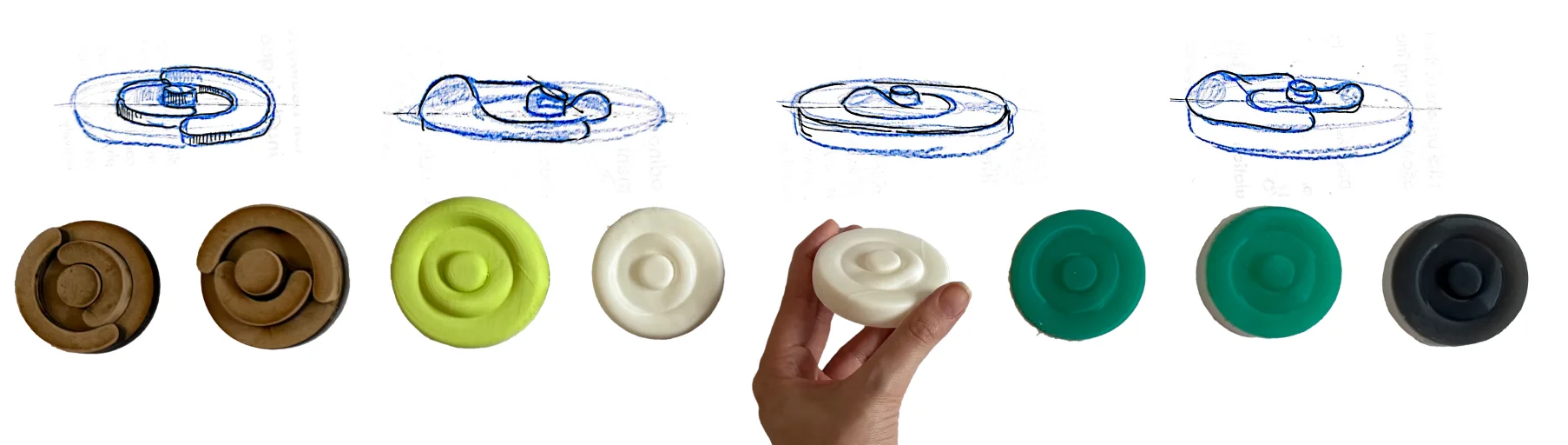
Four low-fi prototypes, four input philosophies, tested with 5 users. The winner defined the app.
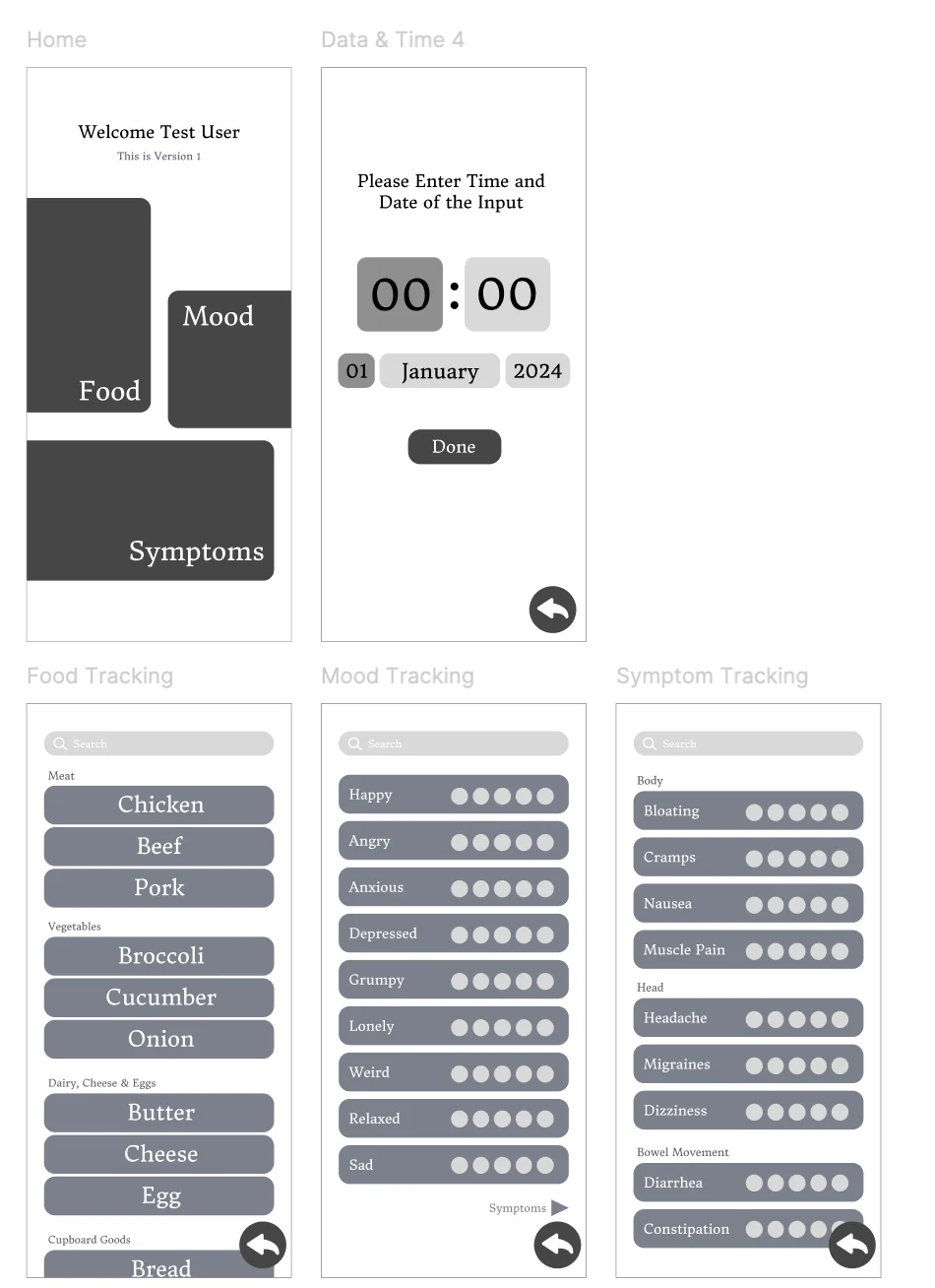
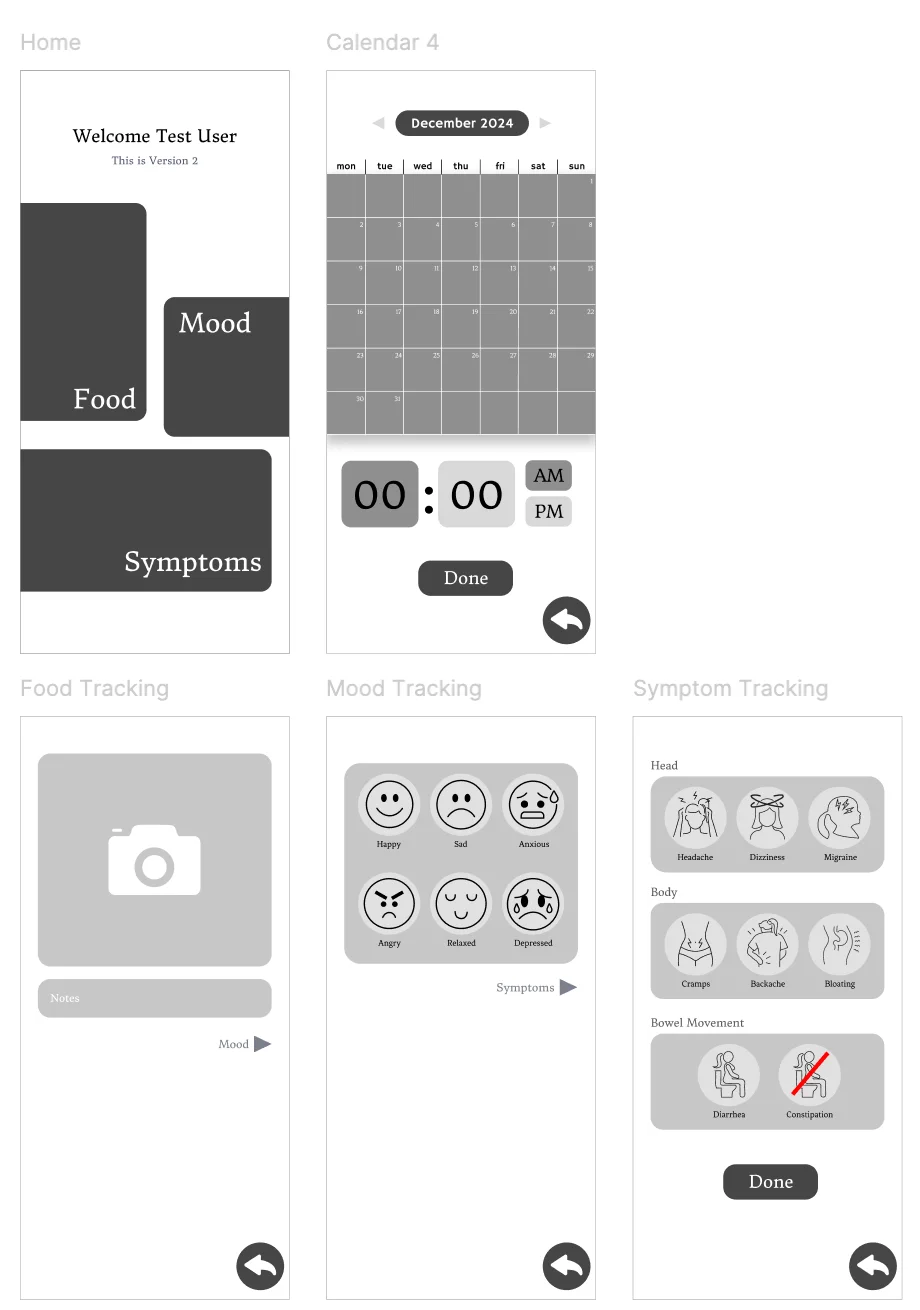

Every input got rebuilt as multiple choice: no blank fields, no typing, no voice capture. Voice survived only as the AI reading the question aloud.
"The device handles logging. The app exists for reflection, at the user's most tired moment of the day."
Three question banks (bowel, pain, anxiety), plus an end-of-day wrap-up. Close-together symptoms get a linking question.
"Did the pain lessen after going to the toilet?"
"Did the anxiety arrive before the pain, or after?"
"Did stress feel like it changed what happened in the gut?"
Answers become short, plain-English insights, prioritised by urgency.
Pain eased after bowel movements, three times this fortnight.
Anxiety precedes pain by 30 to 60 minutes on weekdays.
Bowel discomfort followed dairy, four times this month.
Try the breathing pulse next time anxiety arrives.
Shades of blue, set against the clinical grey of GI apps and the pink of period-tracker conventions. Three warm accents mark the symptoms.
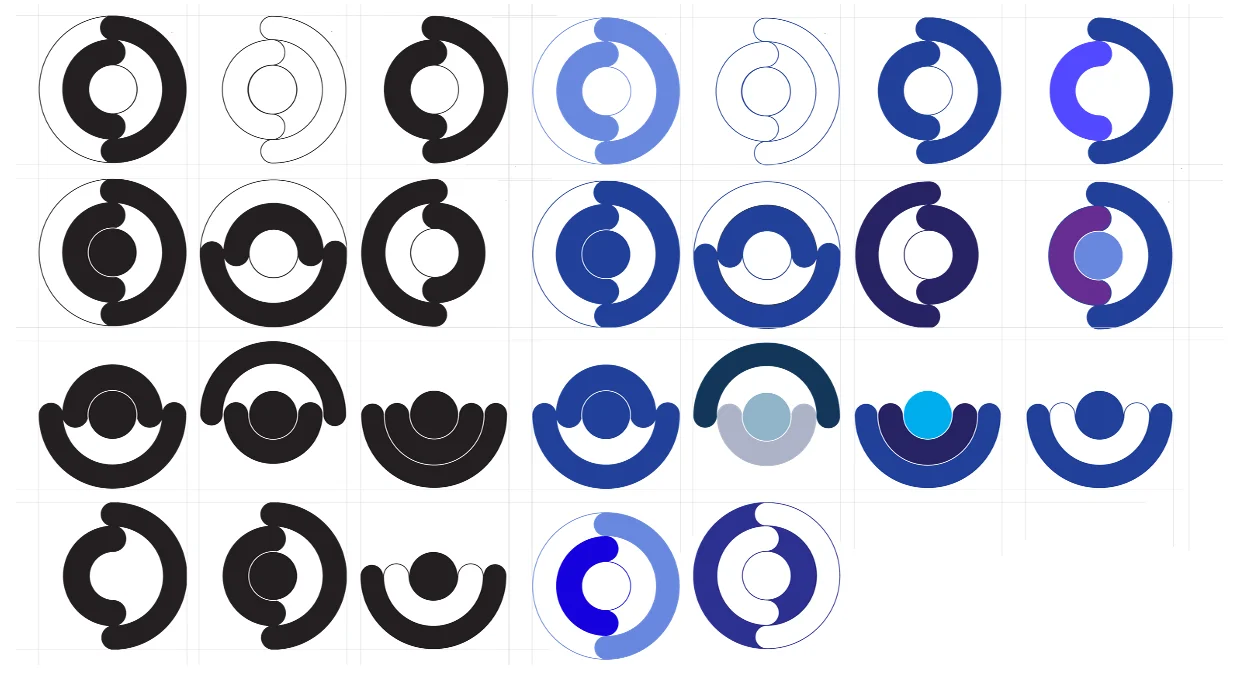
The rings became a circle that doubled as the letter o, which needed an o-name: onaka, Japanese for "tummy."