Project 05 · VATTENKANNA
Year Sept 2022 to Dec 2022
Context University of Edinburgh
Role Sole designer · research, CAD, CMF

A vessel that turns dishwater into water for the plants.

Designed to a brief from IKEA, Vattenkanna sits in the sink, collects water you'd otherwise waste, strains it, and pours it back like a watering can.

Sustainable Design Circularity IKEA Brief Design for Manufacture CAD
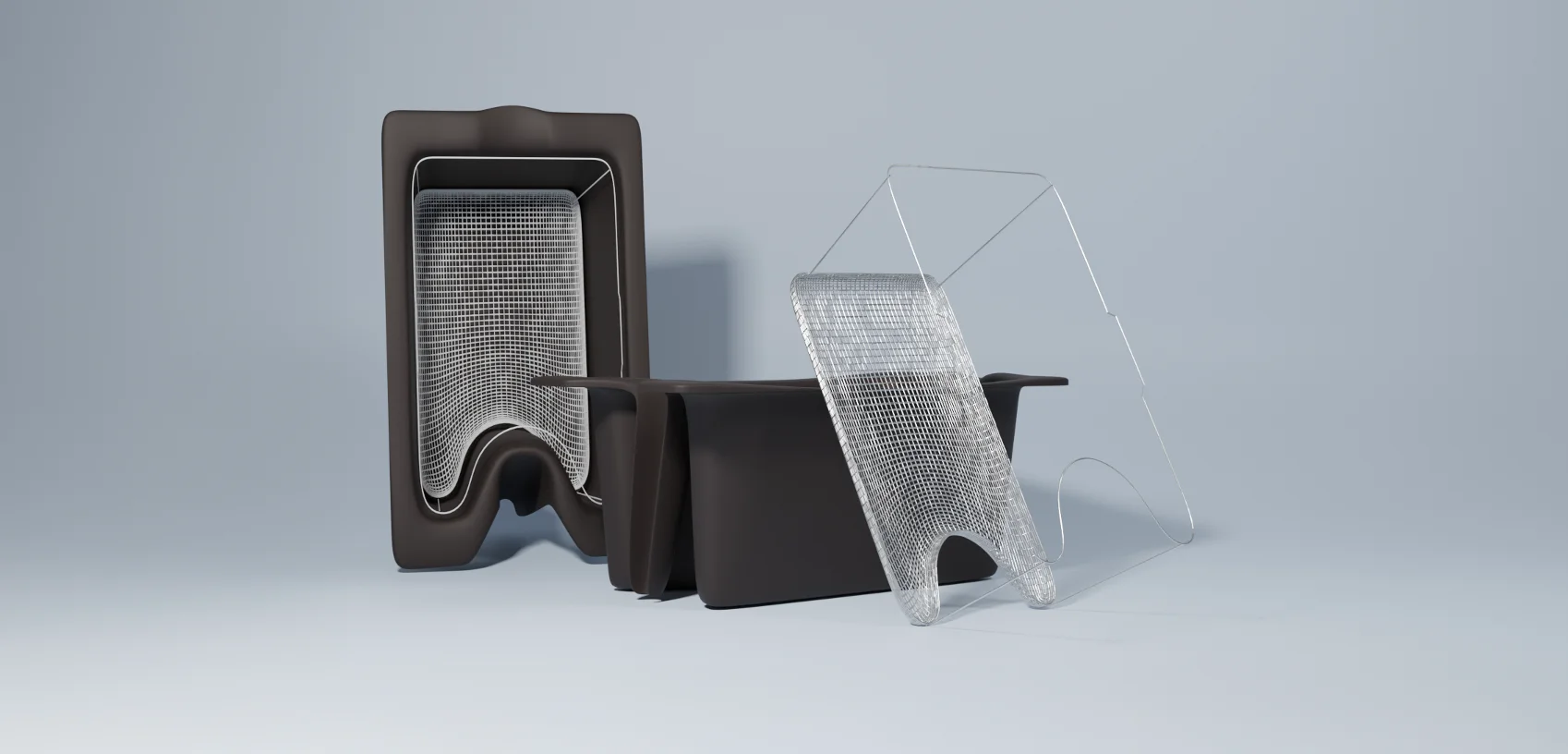
The Vattenkanna vessel and mesh strainer, dark brown moulded basin forms with a wireframe mesh strainer insert, studio render
§ 01 Problem narrowing the brief

A broad brief on sustainability, narrowed to the kitchen sink.

The brief was open: food waste or energy conservation. The funnel to the kitchen sink came from the data.

Brief 00

Food waste or energy?

Open prompt: pick a sustainability angle.

Step 01

Water saving

89% of UK water-related CO₂ comes from heating, not pumping.

Step 02

The kitchen

Kitchen and bathroom dominate use; kitchen is most addressable.

Step 03

Handwashing dishes

51% of UK households never dishwash; handwashing wastes most.

6%
of UK CO₂ emissions come from water use, almost all from heating
30L
per handwash session with tap running, vs 10L for a dishwasher in eco mode
51%
of UK households never use a dishwasher, handwashing is the default
§ 02 Research how people actually wash

Different sinks, different countries, the same habit.

Sink photos across countries, interviews with dishwashers, observation of how people actually wash.
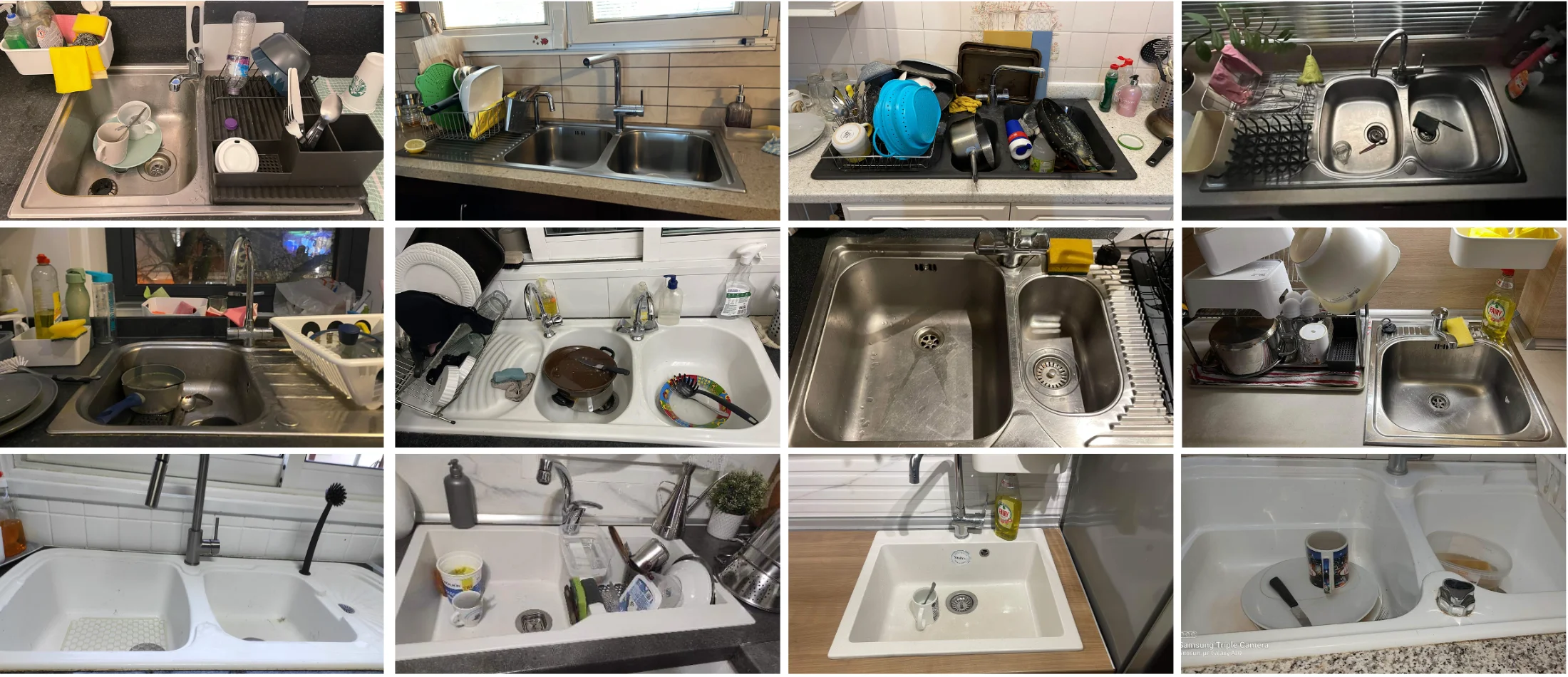
Sinks · Six countries
A composite grid of twelve kitchen sink photographs taken by participants in different countries, showing the range of sink types, sizes, and dishwashing setups

Twelve sinks, six countries. Sizes varied, but most fit a standard ~34 × 40 × 20 cm range.

Interviews · Different countries, same answer
Stefanos 27 · Student · Amsterdam

"I'd want an easier alternative, I hate doing dishes."

Andrea 21 · Student · Sheffield, UK

"We'd change habits, as long as it doesn't take more effort."

Observation · Two methods, twice the water gap
METHOD 01 · EUROPE · RUNNING TAP

Wash under a flowing tap.

~30 L per session
METHOD 02 · UK · FILLED BOWL

Wash in a filled basin.

~8 L per session
Scraping and rinsing waste more water than needed, and it's the cleanest, most worth catching.
§ 03 Insight a different question

Most water-saving products ask you to use less. This one accepts the waste, then catches it.

Interviews kept landing on the same point: people will change habits, but only if it doesn't add effort. So the design moved from reduce to reuse.

The usual question

How do we use less water?

Asks the user to change a habit.

The shift

What if the wasted water didn't have to be wasted?

Asks the product to do the work.

"The water is going to be wasted anyway. The design move is to let it be wasted into something useful, not down a drain."
Design journal · Mid-project reflection
§ 04 How it works three moves

Three steps, no extra effort.

Vattenkanna doesn't change how you wash. It catches water that would've gone down the drain, and lets you carry it somewhere useful.
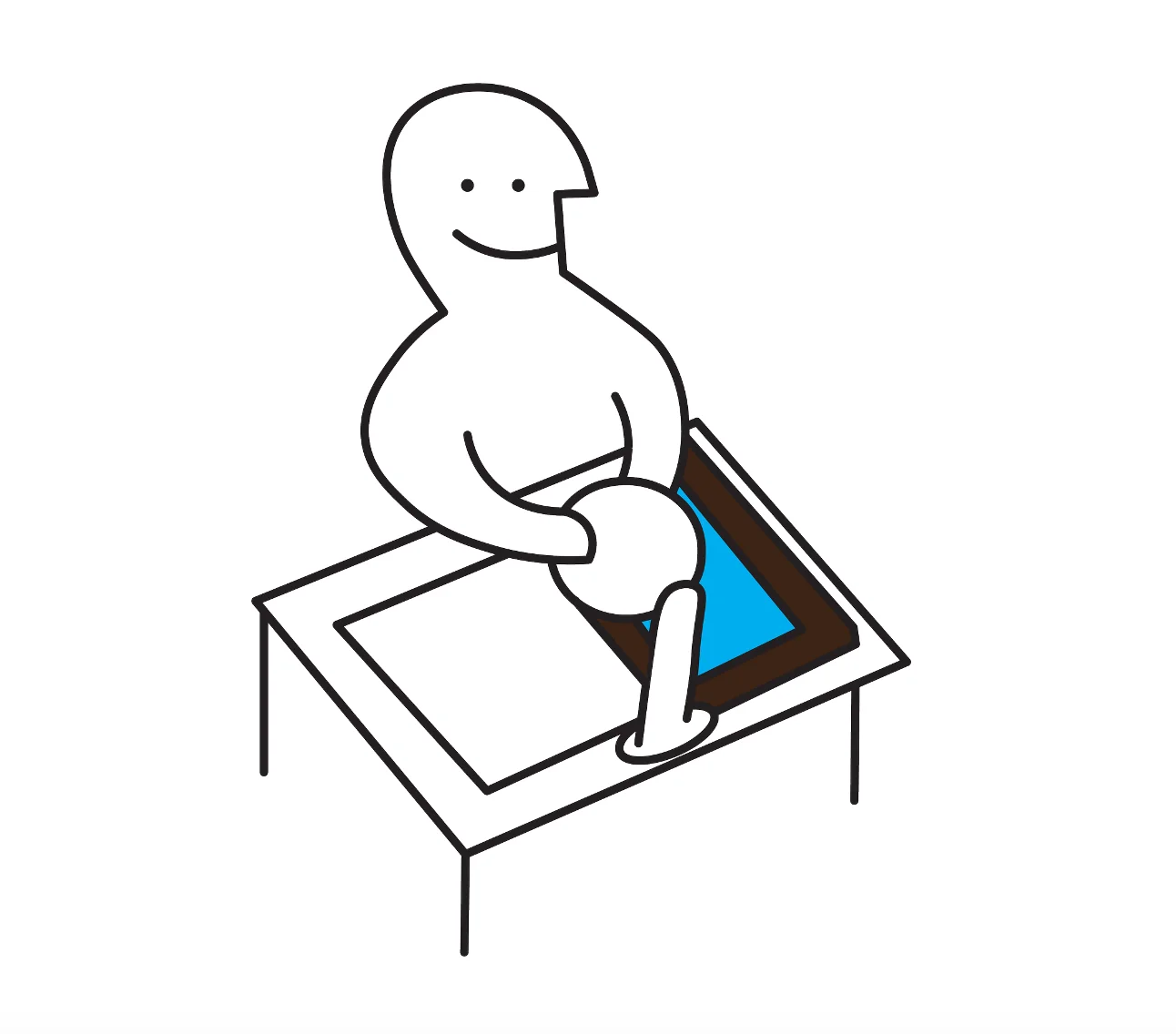
Collect
In the sink, while you wash
Illustration of a person handwashing dishes over the Vattenkanna vessel sitting in the sink

Greywater from rinsing falls into the vessel, not down the drain.
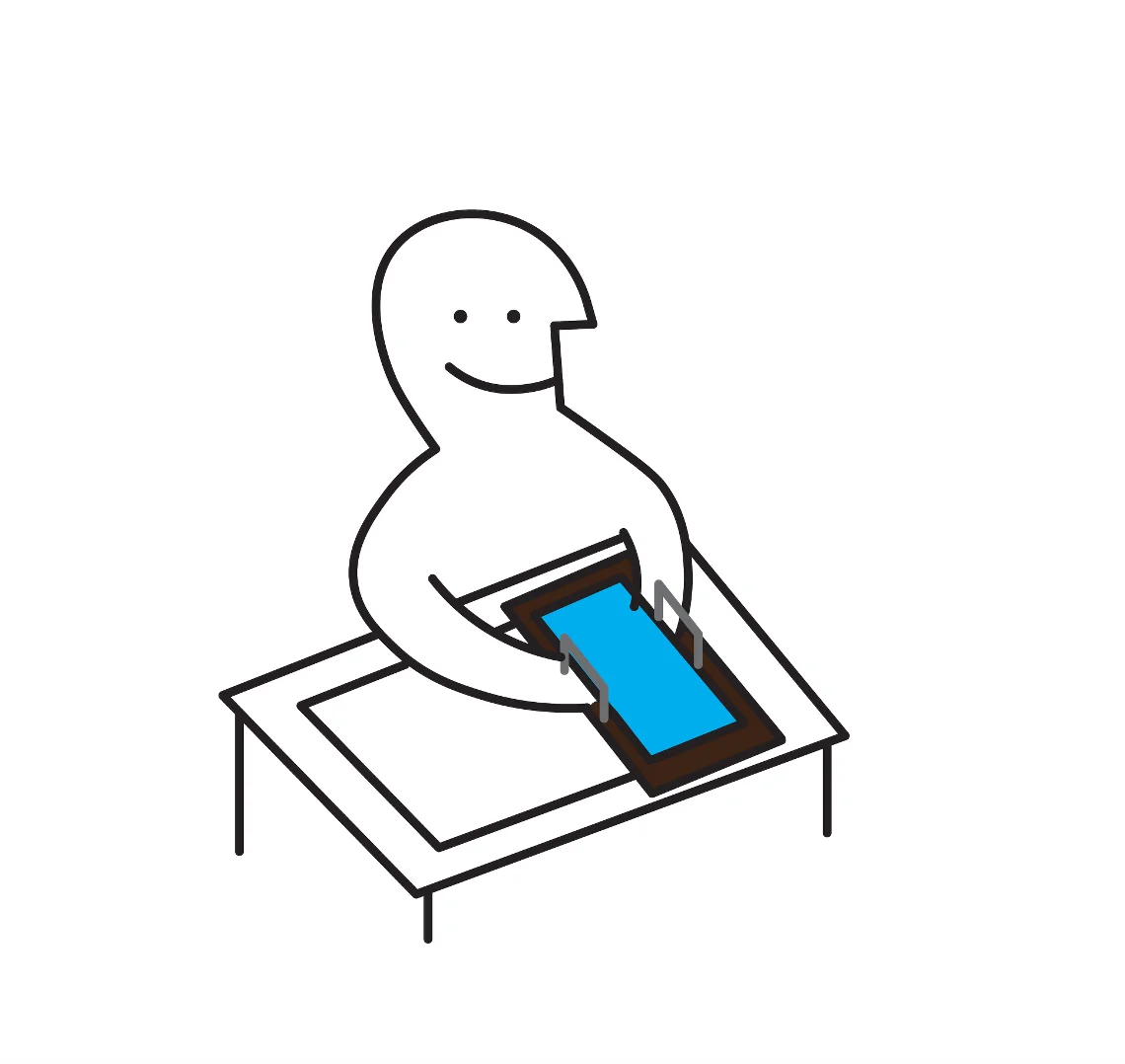
Strain
Lift the mesh, dump the debris
Illustration of a hand lifting the mesh filter out of the vessel to dispose of food debris

Tip food bits into the bin. The water left is clean enough to reuse.
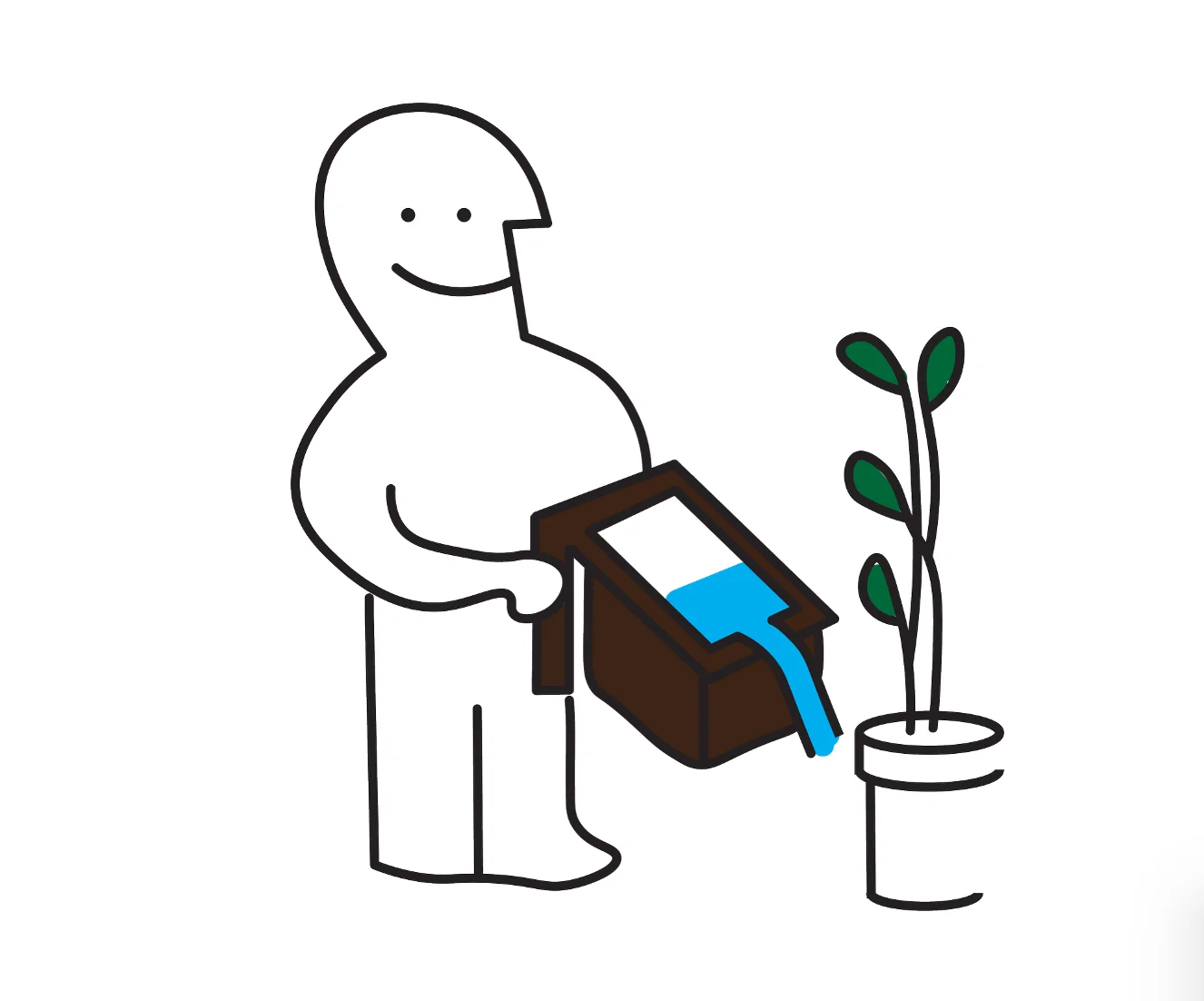
Pour
Carry like a watering can
Illustration of a person carrying the Vattenkanna by its handle and pouring water onto a houseplant

Water plants, wash the car, fill a bucket, whatever's needed.

§ 05 The vessel four jobs at once

The form had to do four jobs at once.

Fit any standard sink, stay stable while filling, pour cleanly, nest for flatpack shipping. Each constraint has its answer in the form.
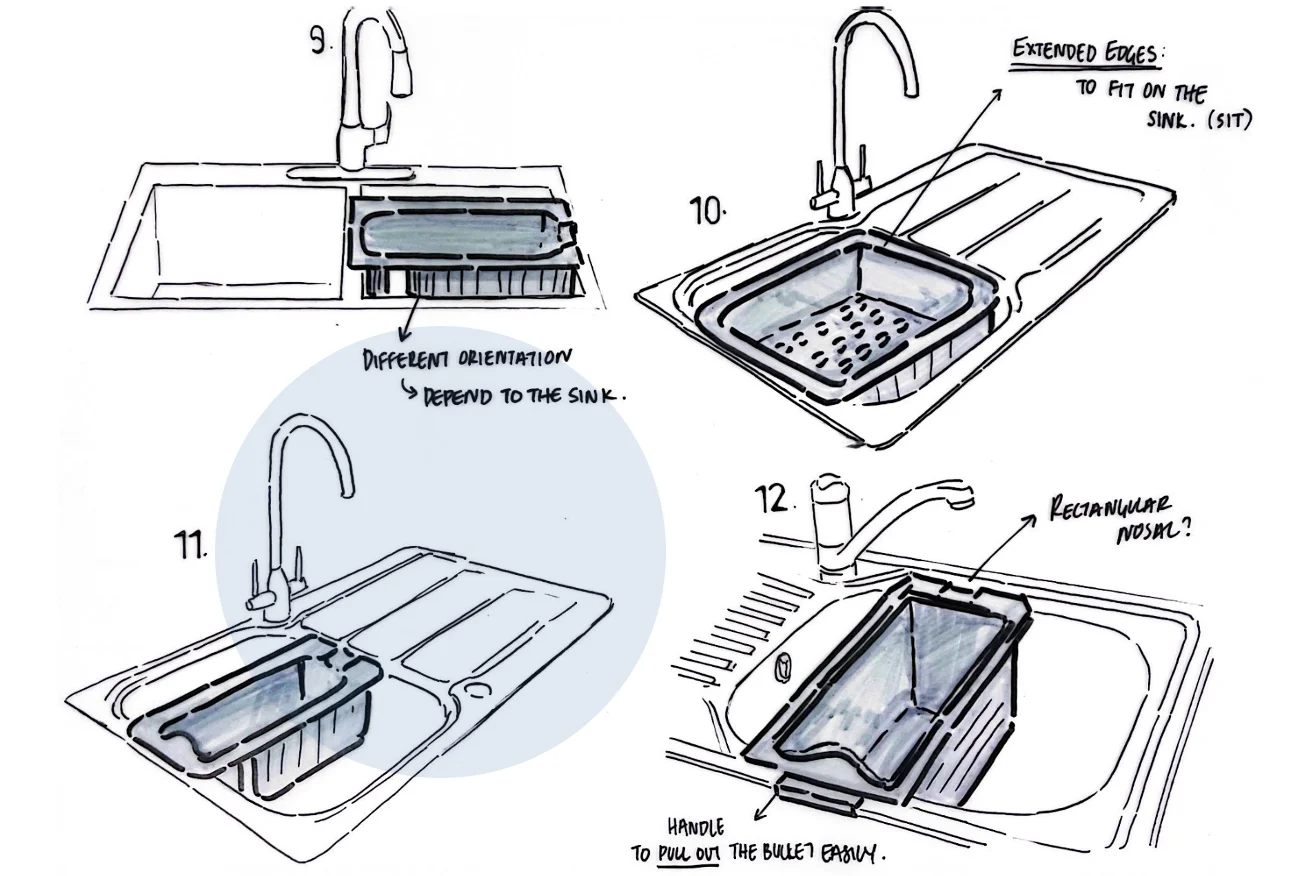
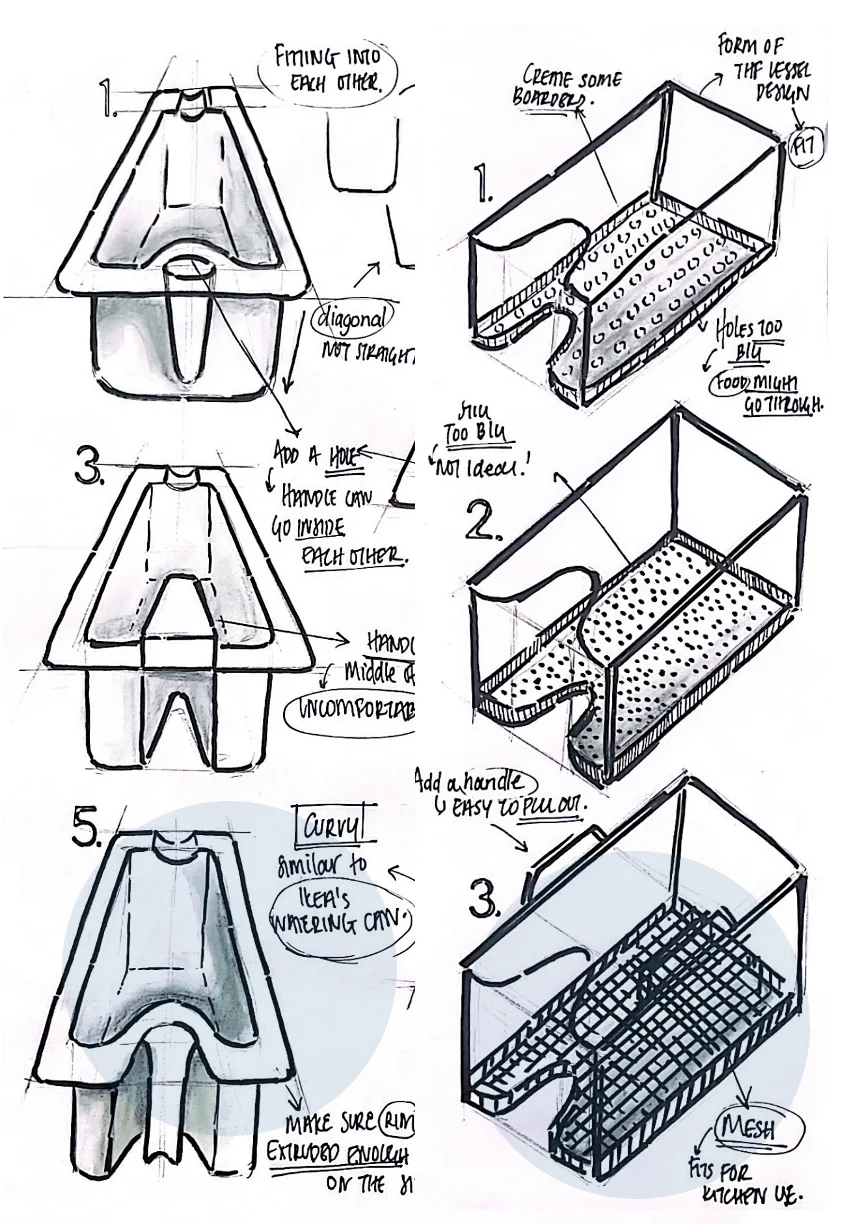
Four sketches exploring how the vessel sits across different sink configurations
Fit study: single, double, sit-on, drop-in sinks.
Form-development sketches: vessel nozzle profiles, handle placement, mesh detail
Nozzle profiles, handle, mesh detail.
Decision 01 · Nozzle

Curved for pouring, flat for fitting.

Curved to pour without spilling, flat to sit against the sink edge.

Decision 02 · Rim

Sits on the sink, doesn't tip.

The rim hooks over the sink edge and grips when wet.

Decision 03 · Handle

A handle that nests.

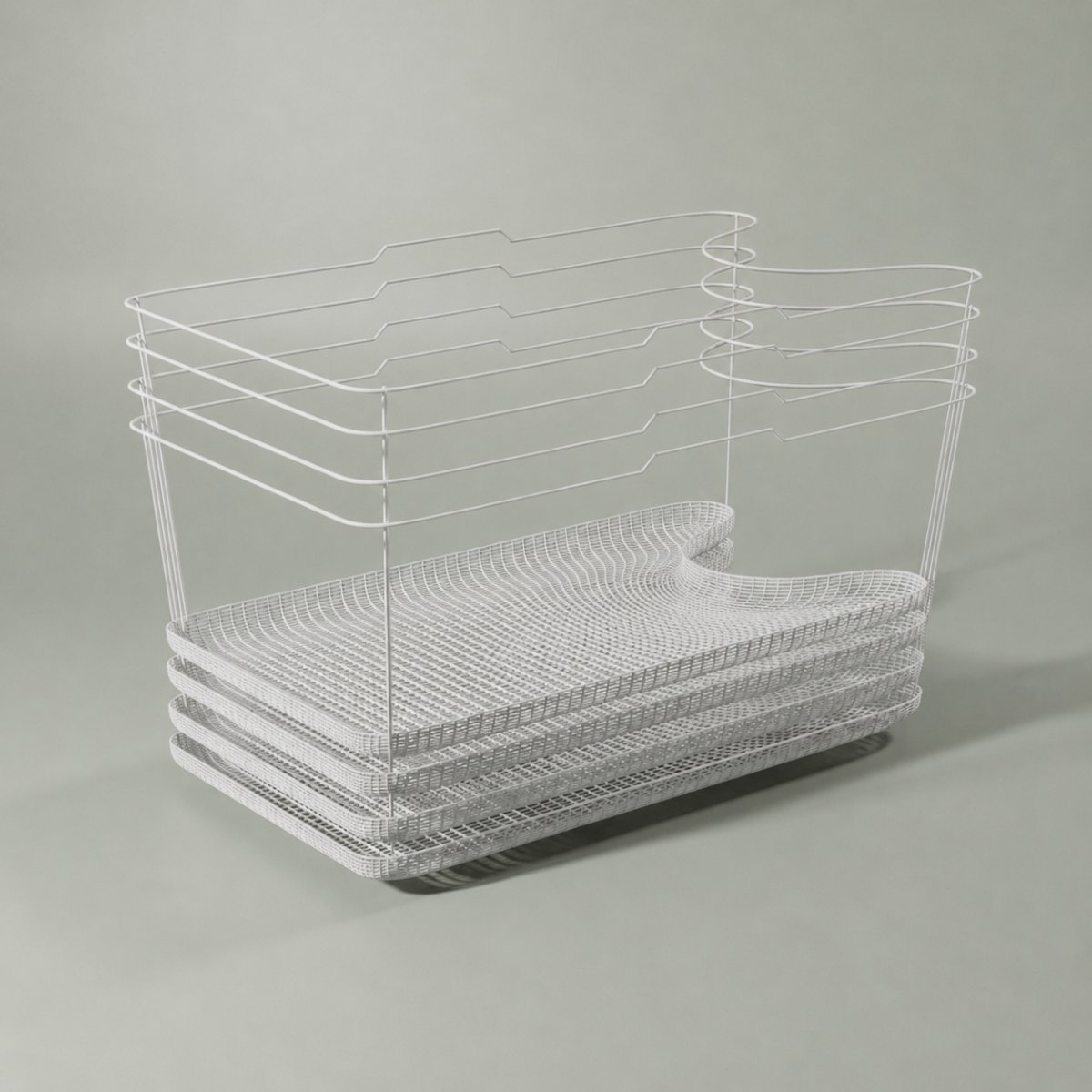
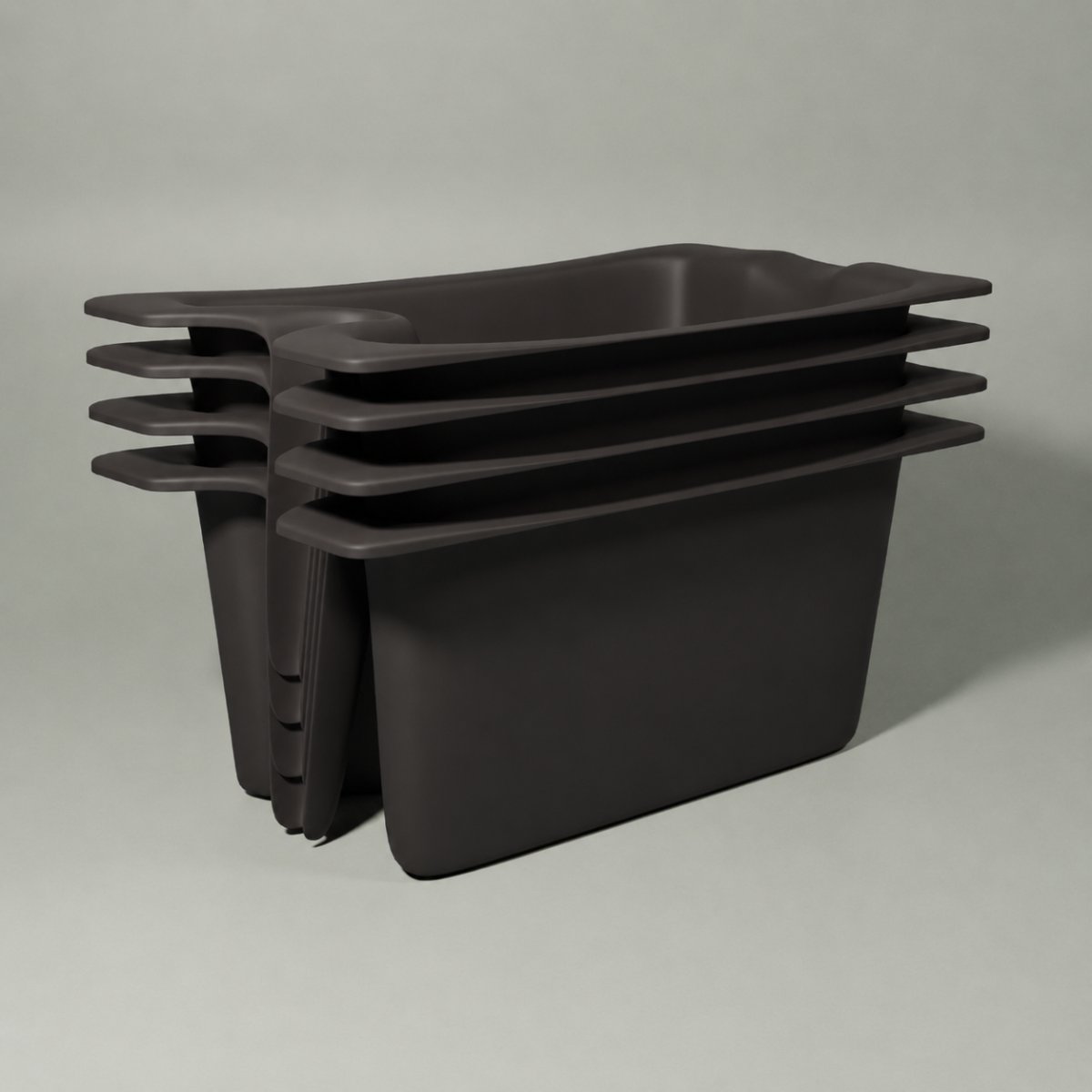
A U-shaped cutout lets units nest for flatpack shipping.

Decision 04 · Strainer

Catches the food, keeps the water.

A removable mesh traps debris, keeping the water reusable.

§ 06 Making for IKEA's shelf

One recycled material, three colourways, one moulding tool.

The brief came from IKEA: a material their supply chain runs, a mass-output process, a CMF fitting the kitchenware family.

Material

Recycled PET.

Waterproof, durable, the most recycled plastic in the world. Fits IKEA's 2030 recycled-plastic commitment.

Process

Injection moulded.

One tool, one part per cycle. Consistent walls, curves, and a simplified mould.
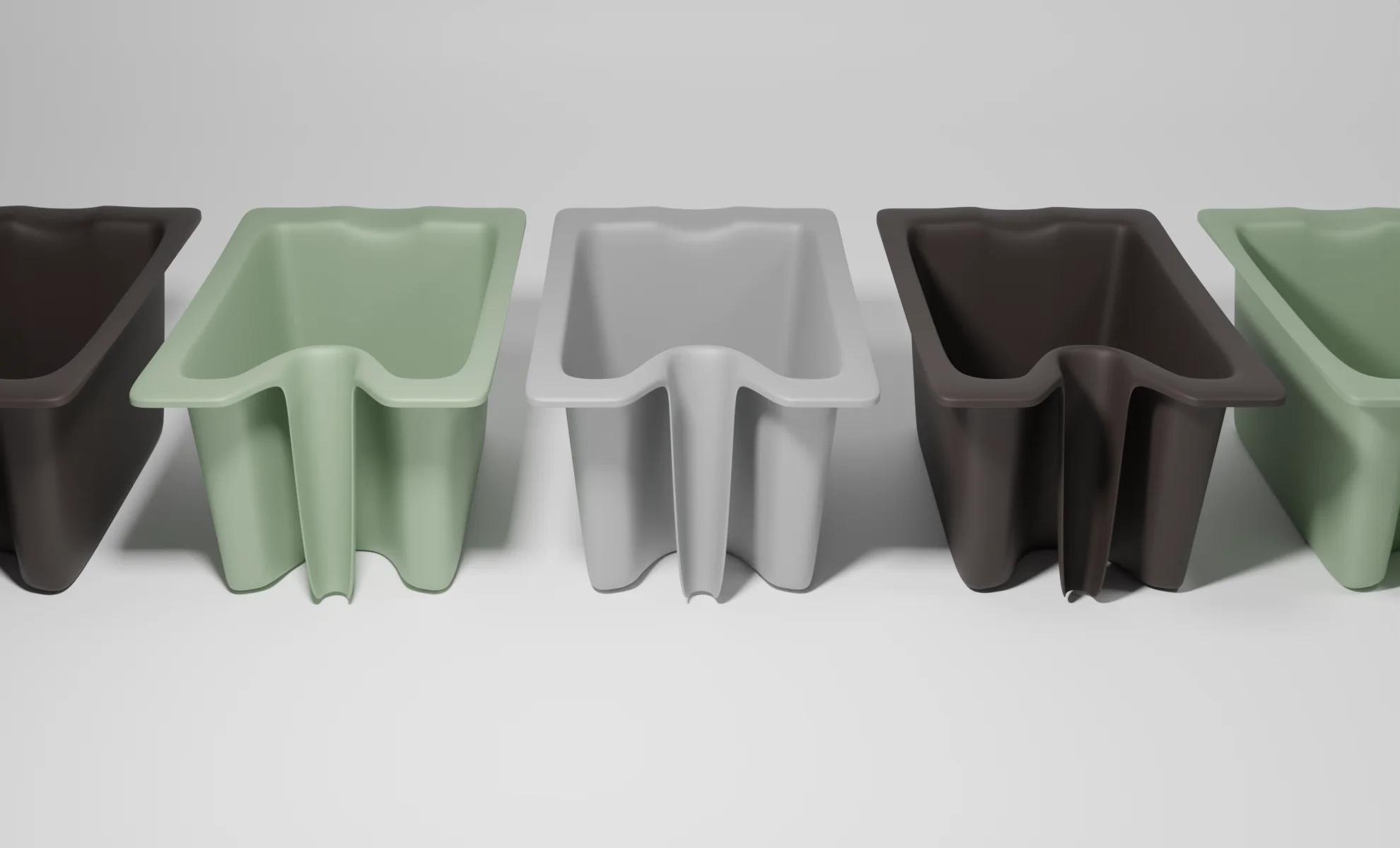
CMF · Three colourways

IKEA's kitchen palette.

Dark brown
Sage green
Light grey
three colourways The three Vattenkanna colourways rendered side by side: dark brown, sage green, and light grey, all in matte recycled PET
Three CMF options: dark brown, sage green, light grey.
§ 07 Values who this is for

Three stakeholders, three sets of value.

Designed for the person handwashing, the company shipping it, and the planet carrying the cost.
User

An easier water habit.

  • Reused water · greywater to plants, not the drain.
  • Lower bills · less water heated and paid for.
IKEA

Fits the line, fits the truck.

  • Flatpack-ready · stacks for efficient shipping.
  • Single-tool moulding · low cost, high output.
Planet

Less water, less CO2.

  • Less hot water · reduces heating-related CO₂.
  • Fewer shipments · stacking density, fewer trucks per pallet.
§ 08 Final outcome water is precious

Vattenkanna, resolved.

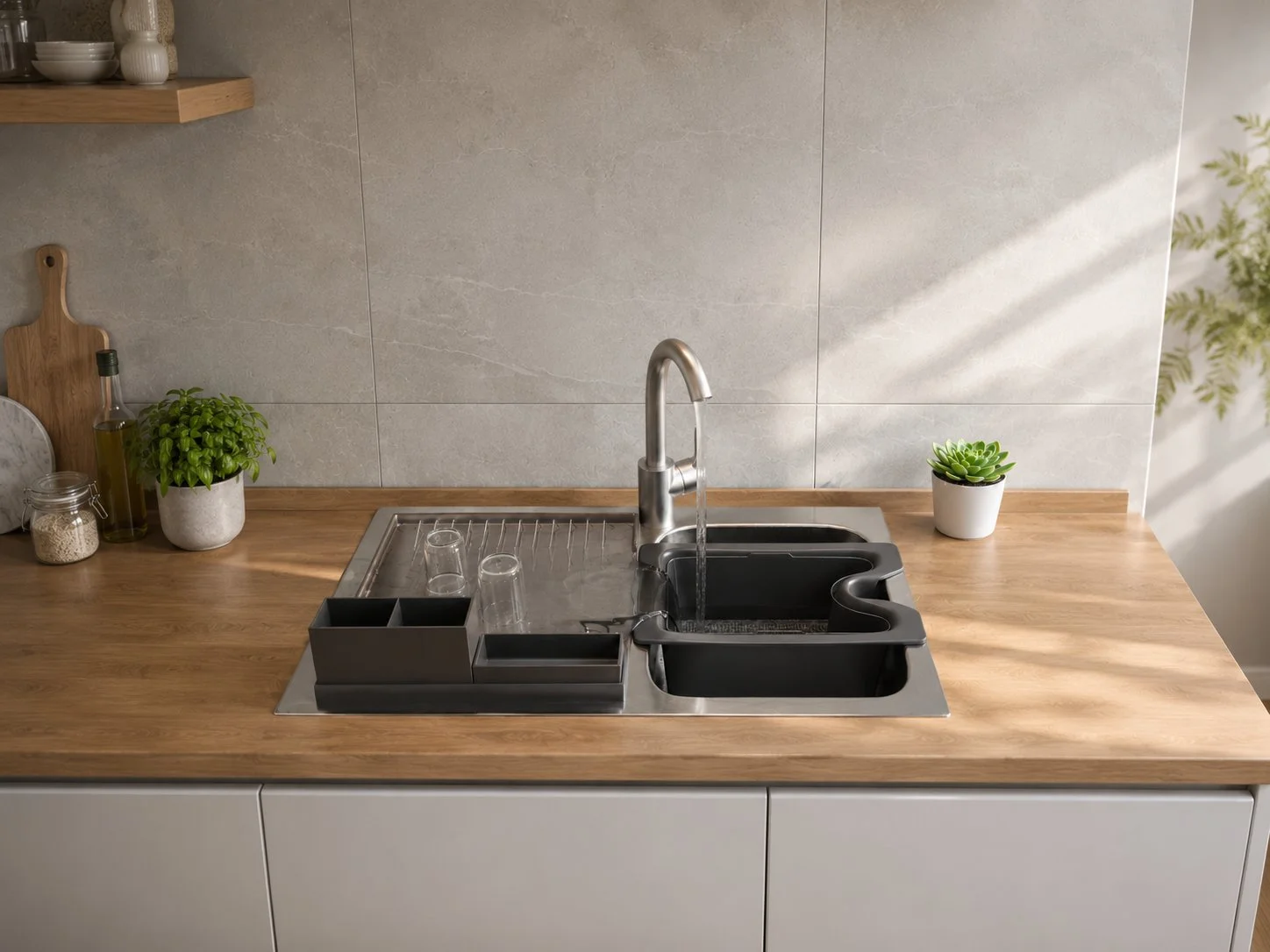
in the sink The resolved Vattenkanna sitting in a kitchen sink, water running from the tap into the vessel inside, in the dark brown colourway
In context: the vessel catches handwashing water.
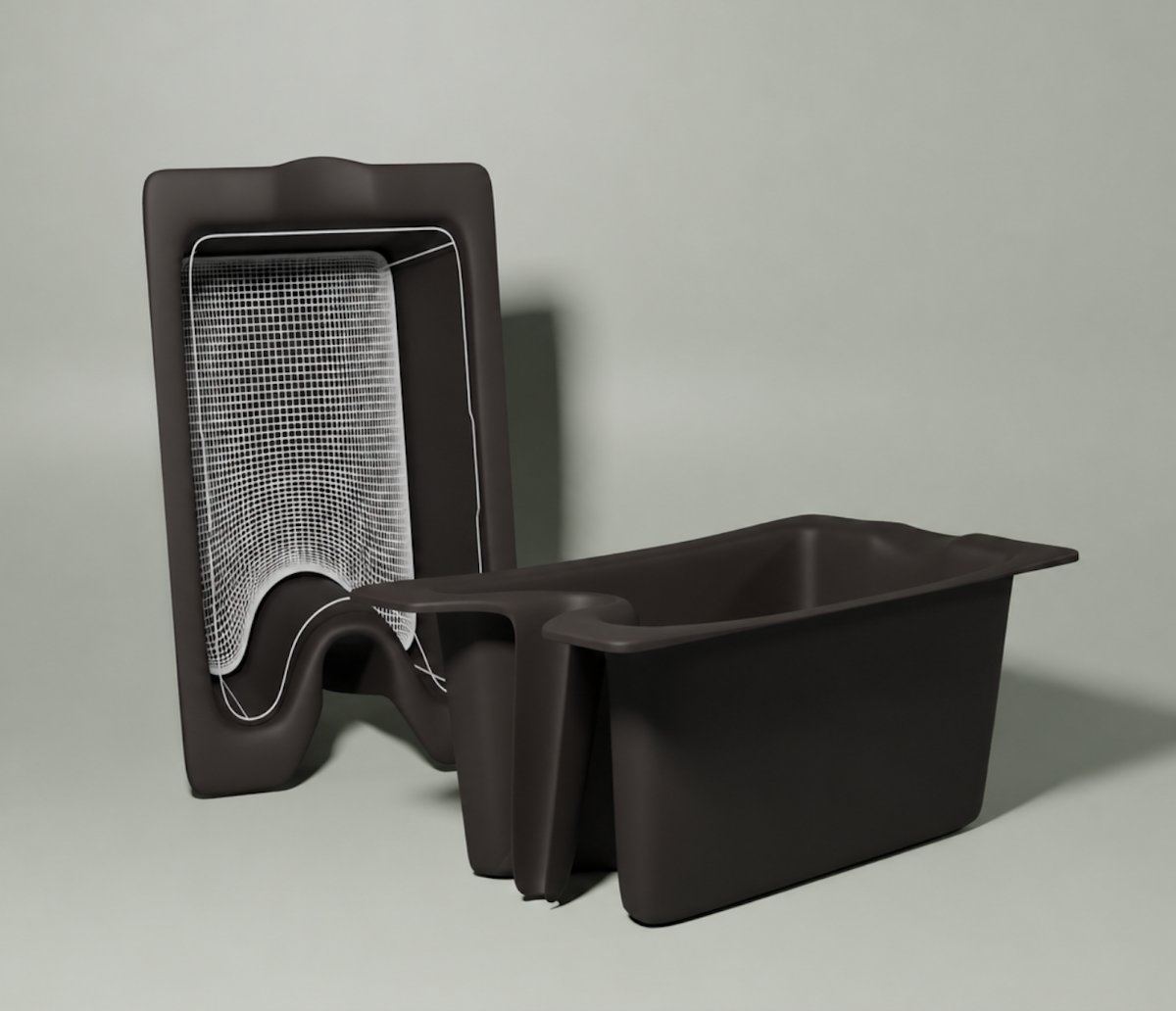
Exploded studio render of the Vattenkanna vessel with its mesh strainer lifted out beside it
Vessel, mesh strainer.
Wireframe render of four Vattenkanna units nested together, showing the stacking geometry
Four units nest for flatpack.
Four Vattenkanna units nested together in the dark colourway, shown stacked for flatpack shipping
Four units, nested.